
▶ Read transcript
Here’s what you need to know about Japan’s new lodging tax before you book your next trip. Starting April 1st, 2026, twenty local governments across Japan began charging visitors a lodging tax, with Hokkaido and Hiroshima among the most prominent. The tax ranges from 100 to 500 yen per person per night, scaled to the cost of your accommodation. For a family of four on a ten-day trip, that can add up to a noticeable amount, even if it won’t break most travel budgets. The reason behind it is real — Japan has been struggling with overtourism for years, and this tax channels money directly back into the roads, transit systems, and cultural sites that millions of visitors are straining. One important heads-up: this charge is collected separately at check-in or check-out and may not show up on third-party booking sites. Always confirm your final total directly with your hotel or ryokan before you arrive.
She had booked her ryokan in Niseko six months in advance, budgeting down to the last yen. Then, checking in on a crisp April morning in 2026, she noticed a small line item on her bill she hadn’t seen before. A lodging tax. It wasn’t enormous, but it was new, and it was everywhere across Hokkaido.
That quiet surprise at the front desk is now a reality for millions of visitors traveling through Japan. Starting April 1, 2026, twenty local governments across the country introduced a new lodging tax, with Hokkaido and Hiroshima among the most high-profile adopters. The goal is straightforward: use tourism revenue to fix the very infrastructure that tourism is straining.
Why Japan Introduced a Lodging Tax Across 20 Prefectures in 2026
Japan has been wrestling with a paradox for years. Its popularity as a travel destination has surged dramatically, drawing tens of millions of visitors annually. But the roads, transit systems, waste management, and cultural sites supporting that flood of tourists have struggled to keep pace.
Overtourism became a genuine crisis in places like Kyoto, Fuji Five Lakes, and the Dotonbori district of Osaka. Narrow alleys packed with selfie sticks. Sacred shrines cordoned off because crowds were damaging the grounds. Local residents increasingly frustrated by the noise and congestion in their own neighborhoods.
The lodging tax is Japan’s structured response. Rather than capping visitor numbers outright, local governments are channeling money from the tourism economy back into the communities bearing its weight. It’s a model that cities like Amsterdam, Barcelona, and Venice have experimented with, though Japan’s tiered, prefecture-specific approach gives it a distinct character.
According to Kyodo News, twenty local governments introduced the new tax simultaneously on April 1, 2026, signaling a coordinated national push rather than isolated municipal experiments.
How Hokkaido’s Tiered Tax Structure Actually Works
Hokkaido’s implementation is prefecture-wide, meaning it applies whether you’re staying in Sapporo’s sleek city hotels or a remote onsen inn near Lake Toya. The tax is calculated per person, per night, and scales with the price of your accommodation.
| Accommodation Cost Per Night | Lodging Tax Per Person |
|---|---|
| Under ¥6,000 | ¥200 |
| ¥6,000 to ¥99,999 | ¥100 – ¥500 (tiered) |
| ¥100,000 or more | ¥500 (maximum tier) |
Time Out Asia reports that Hokkaido’s tax ranges from ¥100 to ¥500 per person per night, depending on the cost of your stay. For a family of four in a mid-range hotel, that could add up to ¥1,600 per night, or roughly $10 to $11 USD.
It’s not a number that will derail most travel budgets. But across a ten-day trip, it becomes noticeable. And for budget travelers staying in guesthouses priced under ¥6,000 per night, the ¥200 per person charge actually represents a higher percentage of their total accommodation cost.
Hiroshima’s framework follows a similar tiered logic. The broader national pattern suggests that Japan’s central government encouraged, though did not mandate, this coordinated rollout. Each of the 20 prefectures retains some autonomy over how funds are allocated locally.
The Infrastructure Problem That Made This Tax Necessary
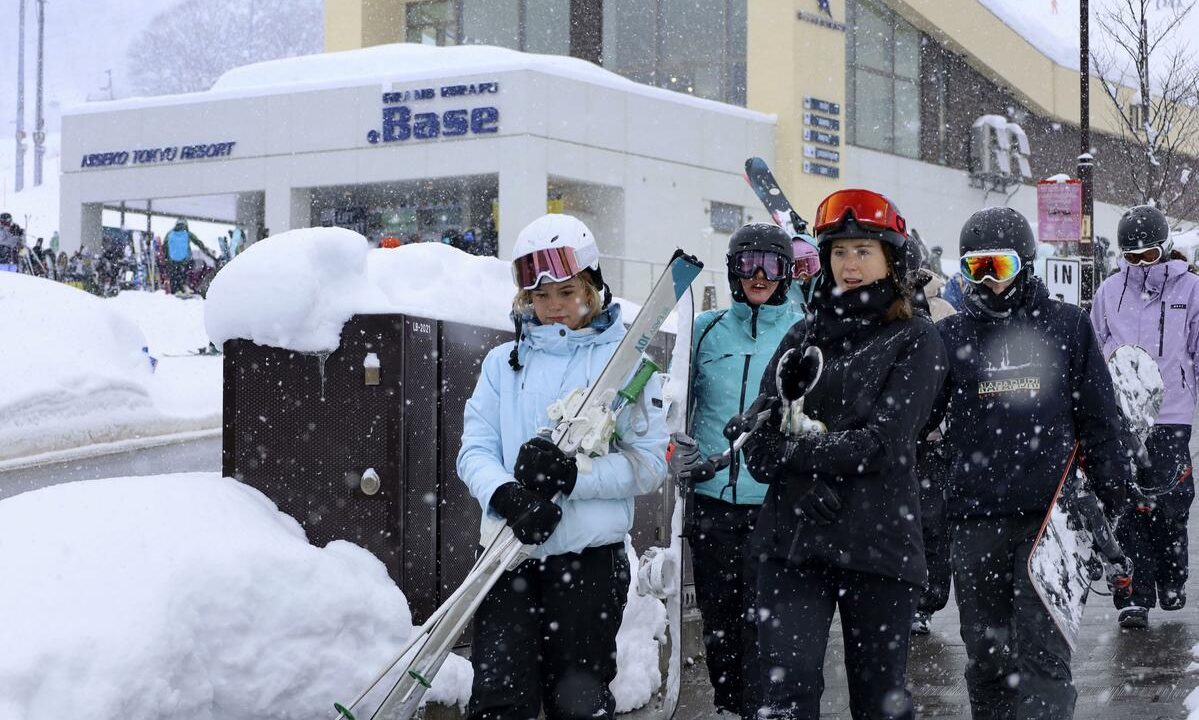
Hokkaido alone draws millions of visitors each year. In winter, ski resorts like Niseko attract Australian, Singaporean, and increasingly European tourists chasing powder snow. In summer, lavender fields in Furano and the wild coastlines of the Shiretoko Peninsula pull a different crowd entirely.
That seasonal surge puts enormous pressure on roads, public transport, and waste facilities built for a much smaller resident population. Hokkaido’s rural municipalities, in particular, often lack the tax base to fund upgrades independently.
“The new lodging tax represents a direct link between the revenue generated by tourism and the communities that absorb its costs. It’s a mechanism for making tourism pay its own way.”
— Tourism policy analyst perspective, paraphrased from regional coverage
The funds are earmarked for tourism infrastructure improvements: better signage in multiple languages, upgraded trailheads and national park facilities, improved public transit connections between rural destinations, and waste management systems capable of handling peak-season volumes.
There’s also a subtler goal embedded in the policy. By attaching a visible cost to accommodation, local governments hope to gently shift traveler behavior. Visitors who see the tax itemized on their bill become more aware of their impact. It’s a psychological nudge as much as a fiscal tool.
The Straits Times notes that Hokkaido’s system charges between 100 yen and 500 yen per visitor, framing it explicitly as a mechanism for managing the pressures of high tourist volumes in the region.
What the 20-Prefecture Rollout Signals for Japan’s Tourism Strategy
Japan is not the first country to introduce accommodation taxes, but the scale and coordination of this April 2026 rollout is significant. Eighteen local governments joined Hokkaido and Hiroshima in implementing the levy simultaneously. That kind of synchronized action suggests a national framework operating quietly behind the scenes.
Japan’s tourism authorities have long debated how to balance the economic benefits of inbound tourism against the social and environmental costs. The lodging tax framework offers a politically viable middle path. It doesn’t restrict access, doesn’t require complex visitor management systems, and generates revenue that local governments can deploy with considerable flexibility.
For travelers, the practical implication is simple: Japan is becoming slightly more expensive to visit, and deliberately so. The country is signaling that it values quality tourism over volume tourism. That’s a meaningful shift for a nation that spent decades actively courting mass international arrivals.
What Travelers Should Expect When Booking in Hokkaido Now
If you’re planning a trip to Hokkaido in 2026 or beyond, the lodging tax will appear as a separate line item on your accommodation bill. It is not included in prices listed on most booking platforms, so the total you see when searching is not the total you’ll pay at checkout.
For a solo traveler staying five nights in a ¥15,000-per-night hotel in Sapporo, the additional tax might amount to ¥2,000 to ¥2,500 for the entire stay. Negligible in the context of a full international trip, but worth factoring into tight budgets.
Ryokans and boutique inns are required to collect the tax and remit it to the prefectural government. Most properties have already updated their billing systems. If you’re using a travel agent or package tour operator, confirm whether the tax is included in their quoted price or added separately on arrival.
The broader experience of visiting Hokkaido is unlikely to feel different in the short term. The tax revenue will fund infrastructure improvements that take months or years to materialize. But over time, visitors should notice better-maintained hiking trails, cleaner public facilities, and more multilingual support services across the prefecture.
The Larger Question: Can a Tax Fix Overtourism?
Lodging taxes are not a cure-all. Venice has charged tourist fees for years, yet the city still struggles with cruise ship crowds and resident displacement. Barcelona’s accommodation levies haven’t resolved tensions between locals and the tourism industry.
Japan’s version has the advantage of being tiered and geographically distributed. By spreading the tax across 20 prefectures rather than concentrating it in a single city, the policy acknowledges that overtourism is a national pattern, not just a Kyoto problem.
The real test will come in how the revenue is spent. If funds flow visibly into community infrastructure, public transit, and environmental protection, local residents and travelers alike will see the logic. If the money disappears into general prefectural budgets with little transparency, the tax risks becoming just another travel expense with no clear benefit.
Japan’s tourism sector generated trillions of yen annually before the pandemic, and post-2023 recovery has been robust. The lodging tax, even at ¥500 per person per night at its maximum, represents a modest fraction of that economic activity. But multiplied across millions of visitor nights per year, it adds up to a substantial infrastructure fund.
The country that perfected the art of the quiet, considered travel experience is now asking visitors to contribute, quietly and considerately, to keeping that experience intact. Whether a few hundred yen per night is enough to solve what decades of mass tourism have strained is the question Japan will spend the next several years answering.
Frequently Asked Questions

You Might Also Like

Hilton Just Partnered With YOTEL and It Changes How Cities Get Explored
Two of the hospitality world’s most recognizable forces are joining hands — and the result…
Riyadh Air Eyes Bangladesh as Twelve Million Passengers Reshape Middle East Routes
Twelve million passengers. That’s the scale of the aviation market connecting Bangladesh to the rest…
Thailand Bets Its Economic Future on a Water Fight
Thailand is staking its tourism recovery on Songkran 2026, but soaring fuel costs and shifting…
Leave a Reply