
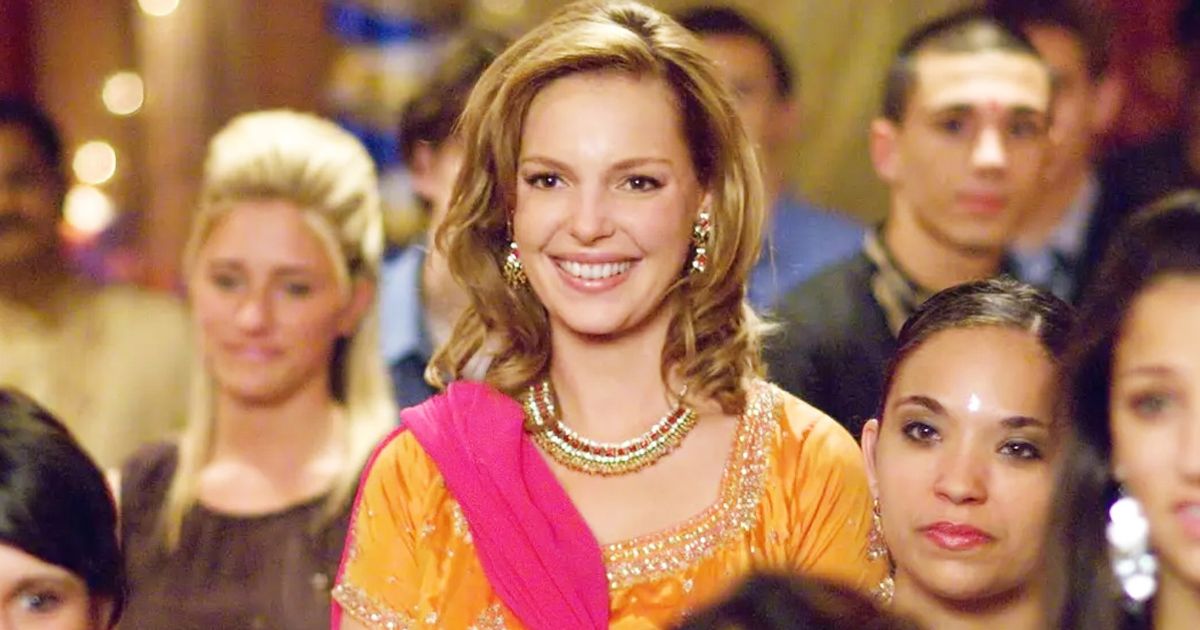
A 2008 romantic comedy starring Katherine Heigl is currently trending on Netflix — and not everyone rewatching it is feeling the warm nostalgia they expected. 27 Dresses, the film that once felt like a perfectly charming Valentine’s Day staple, is getting a second look from modern audiences, and some of what they’re finding hasn’t held up particularly well.
The film follows Jane, a perpetual bridesmaid who has served in 27 weddings while secretly pining for her boss. It was a box office success in its time and helped cement Heigl’s status as one of Hollywood’s go-to rom-com leads. But cultural tastes — and expectations around how women are portrayed on screen — have shifted considerably since then.
So what exactly is making viewers uncomfortable the second time around? Quite a bit, as it turns out.
Why 27 Dresses Is Trending on Netflix Right Now
The film’s reappearance on Netflix’s trending charts is a reminder of how the platform’s algorithm can resurrect titles from another era and drop them in front of a completely new audience. For younger viewers discovering it for the first time, and for older fans returning to it with fresh eyes, the experience of watching 27 Dresses in the mid-2020s is a noticeably different one than it was at the time of its release.
The 2000s were a prolific decade for the romantic comedy genre, but they were also a period when certain storytelling shortcuts were treated as totally acceptable — shortcuts that tend to land very differently now. 27 Dresses leans into several of them hard.
The Tropes That Haven’t Aged Well
The most frequently cited issue is the film’s central premise itself: Jane is a woman who has dedicated enormous amounts of her time, money, and emotional energy to other people’s happiness — specifically, to making brides feel special — while completely neglecting her own needs and desires. The film frames this as endearing selflessness. Many modern viewers read it as a troubling portrait of a woman who has been conditioned to believe her own happiness is secondary.
Then there’s the behavior of James Marsden’s character, Kevin, the journalist who discovers Jane’s secret and initially plans to write an exposé about her without her knowledge or consent. The film eventually pivots this into a romance. The idea that a man deceiving a woman as part of a professional scheme can be redeemed simply by declaring his feelings is a trope that 2000s rom-coms returned to repeatedly — and one that contemporary audiences have grown far less patient with.
A few specific elements that viewers and critics have flagged:
- Jane’s selflessness is played as a personality quirk to be celebrated rather than a pattern worth examining
- Kevin’s deception — writing about Jane without her knowledge — is treated as a minor obstacle rather than a genuine breach of trust
- The film’s sister subplot relies heavily on the idea that women are naturally competitive and petty with each other, especially over men
- Jane’s emotional growth is largely driven by external male validation rather than her own self-realization
- The “makeover” and appearance-focused humor reflects beauty standards of the era that feel dated and at times mean-spirited
The Broader Problem With 2000s Rom-Com Storytelling
It would be unfair to single out 27 Dresses entirely — the film is very much a product of its genre and its moment. The mid-2000s rom-com formula was built on a specific architecture: a woman with a flaw that isn’t really a flaw, a man who initially behaves badly but is forgiven, a misunderstanding that drives the third-act conflict, and a grand gesture that resolves everything.
What made these films feel breezy at the time was precisely the fact that audiences weren’t expected to interrogate the logic too closely. The genre operated on a kind of agreed-upon suspension of disbelief. That agreement has largely expired.
| Trope | How It Appears in 27 Dresses | Why It’s Problematic Now |
|---|---|---|
| Selfless woman as ideal romantic lead | Jane prioritizes everyone else’s weddings over her own life | Frames self-neglect as an admirable feminine trait |
| Deceptive love interest redeemed by love | Kevin plans to exploit Jane’s story for his column | Normalizes dishonesty as an acceptable start to romance |
| Female rivalry and pettiness | Jane’s sister competes with her for the same man | Reduces women to competitors rather than allies |
| Appearance-based humor | The 27 bridesmaid dresses are mocked for being unflattering | Relies on body and style shaming for laughs |
| Male validation as character growth | Jane’s confidence increases as Kevin pursues her | Suggests women need romantic attention to value themselves |
Does Any of It Still Work?
Honest answer: yes, some of it does. Katherine Heigl’s performance is genuinely warm and funny, and the film has real charm in its lighter moments. James Marsden’s comedic timing remains one of the most underappreciated assets in Hollywood. The wedding montage sequence, in particular, still delivers.
The question isn’t really whether 27 Dresses is enjoyable — plenty of people clearly still find it so, given its trending status. The more interesting question is what it reveals about the assumptions baked into mainstream romantic comedies of that era, and how much those assumptions shaped the way audiences understood relationships, gender roles, and what women were supposed to want.
Watching it now is a little like reading an old magazine. The entertainment is still there. But so is the evidence of a different cultural moment — one that looked at women like Jane and called it romantic.
What This Moment Says About How We Watch Old Films
The renewed attention on 27 Dresses is part of a larger pattern. Streaming platforms have made it easier than ever to revisit films from the 1990s and 2000s, and audiences are doing exactly that — often with a more critical lens than the original theatrical run would have invited.
That doesn’t necessarily mean these films need to be dismissed or condemned. It means they work as a kind of cultural record, capturing what audiences accepted, expected, and even celebrated at a particular point in time. 27 Dresses is a very clear snapshot of 2008 — for better and, increasingly, for worse.
Frequently Asked Questions
What is 27 Dresses about?
The 2008 romantic comedy stars Katherine Heigl as Jane, a woman who has been a bridesmaid 27 times while secretly longing for her own love story, and James Marsden as a journalist who enters her life under false pretenses.
Why is 27 Dresses trending on Netflix?
The film has resurfaced on Netflix’s trending charts, drawing both returning fans and new viewers — many of whom are noticing how certain elements of the story have aged poorly by modern standards.
What specific tropes in the film are considered problematic now?
Viewers have pointed to the framing of female selflessness as romantic, a love interest who deceives the protagonist, female rivalry played for drama, and a character arc driven by male validation rather than genuine self-growth.
Is the film still worth watching?
Many viewers still find it entertaining, particularly for Heigl and Marsden’s performances. The conversation around it now tends to focus on enjoying it while also acknowledging what it reflects about its era.
Were these tropes common in 2000s rom-coms generally?
Yes — the patterns seen in 27 Dresses were widespread across the genre during the mid-2000s, including deceptive love interests, appearance-based humor, and female characters defined largely by their romantic circumstances.
Has Katherine Heigl spoken about the film recently?
No statements from Heigl regarding the current Netflix trending moment are confirmed in the available source material.


Leave a Reply