
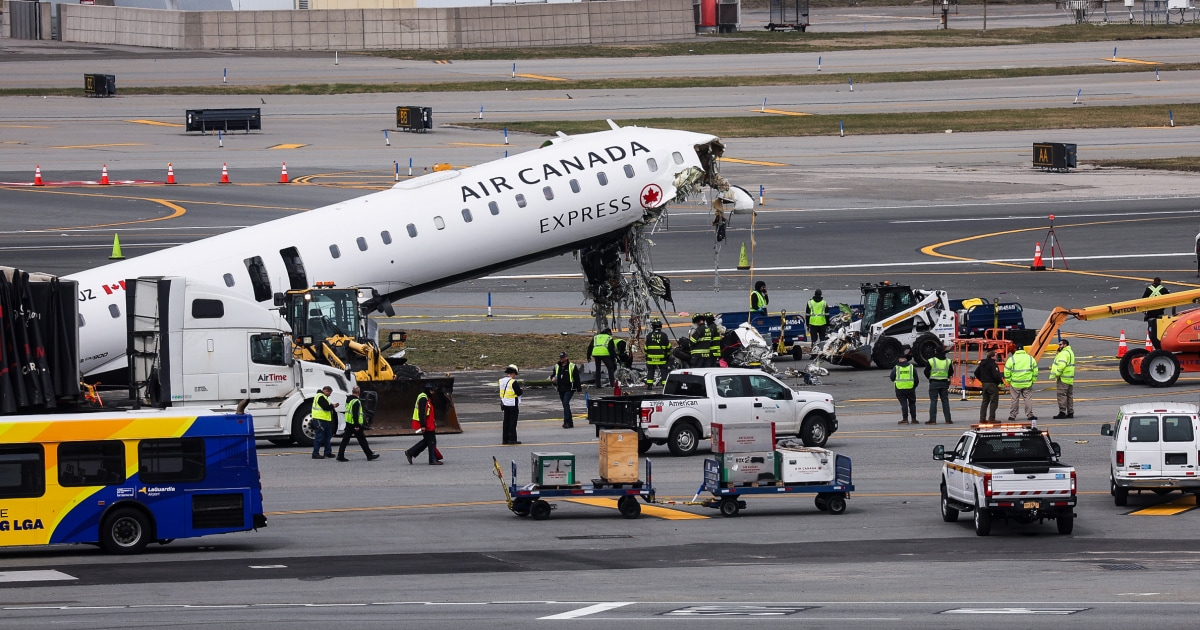
A runway alerting system that was supposed to prevent exactly this kind of disaster failed to issue a single warning — and people died as a result. That is the central, deeply troubling finding emerging from federal investigators as they pick through the wreckage of a ground collision at New York’s LaGuardia Airport, where an Air Canada Express flight arriving from Montreal struck a local emergency vehicle on the runway.
The National Transportation Safety Board is now leading the investigation, and its preliminary findings have zeroed in on a critical technical failure: the sophisticated alerting technology meant to protect aircraft and ground crews from exactly this kind of collision simply did not work. No warning reached air traffic controllers. No alert reached the flight crew. The impact happened without any electronic signal that something was wrong.
For the millions of travelers who cross the Canada-United States air corridor every year, this incident has forced an uncomfortable question to the surface — how safe are the systems we trust with our lives at some of the busiest airports in North America?
What Happened at LaGuardia and Why It Has Aviation Officials Alarmed
The collision involved an Air Canada Express flight that had arrived from Montreal and was operating on transborder routes — the heavily traveled air corridors connecting Canadian cities to U.S. destinations. During ground operations at LaGuardia, the aircraft struck an emergency vehicle. The result was catastrophic.
What makes this incident particularly alarming to safety experts is not just the collision itself, but the systemic failure that preceded it. Modern airports of LaGuardia’s size and traffic volume are equipped with runway alerting systems specifically designed to prevent this kind of event. These systems monitor aircraft and vehicle positions in real time and are supposed to trigger warnings the moment a dangerous conflict is detected.
In this case, that layer of protection appears to have been completely absent. Investigators are now working to determine whether the failure was a hardware malfunction, a software issue, or a gap in how the system was configured or monitored.
The Key Facts Investigators Are Working With
As the NTSB investigation continues, here is what has been confirmed and what is known about the circumstances surrounding the collision:
- The flight involved was an Air Canada Express service arriving from Montreal, Canada
- The collision occurred at LaGuardia Airport in New York
- The aircraft struck a local emergency vehicle during ground operations
- The runway alerting system failed to issue any warning before the collision
- Neither air traffic controllers nor the flight crew received an alert
- The NTSB is leading the federal investigation into the incident
- The collision has had downstream effects on transborder aviation routes between Canada and the United States
| Factor | Status | Significance |
|---|---|---|
| Runway Alerting System | Failed — no warning issued | Core safety layer did not function |
| Air Traffic Controller Warning | None received before impact | Controllers had no opportunity to intervene |
| Flight Crew Alert | None received before impact | Pilots had no electronic warning of conflict |
| NTSB Investigation | Active and ongoing | Federal body deconstructing final seconds of flight |
| Impact on Transborder Routes | Significant disruption confirmed | Thousands of passengers affected across Canada-U.S. corridor |
What This Means for Travelers on Canada-U.S. Routes Right Now
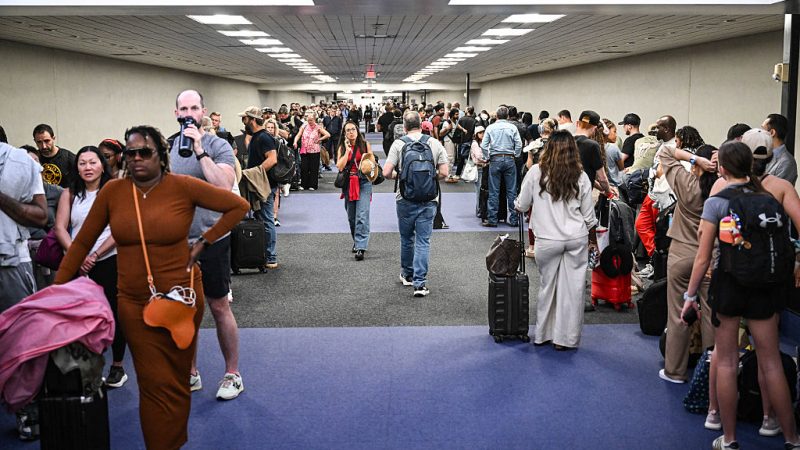
If you have a flight booked between Canada and the United States — particularly through New York — this investigation directly affects your travel picture. The collision has sent disruption through the transborder route network, grounding thousands of passengers and creating cascading delays across a corridor that handles enormous daily traffic volumes.
Beyond the immediate delays, the incident has raised broader questions about operational safety during periods of high traffic and infrastructure strain. LaGuardia is one of the most congested airports in the country, and the pressure that places on ground operations, air traffic control, and safety systems is well documented.
Aviation safety advocates have long argued that runway incursion technology — the category of system that failed here — must be treated as a non-negotiable last line of defense, not a supplementary tool. When that system doesn’t fire, there is nothing left standing between a routine ground operation and a fatal collision.
For travelers, the practical advice right now is straightforward: check with your airline for any schedule changes on transborder routes, allow extra time at affected airports, and monitor updates from the NTSB as the investigation moves forward. Disruption is likely to continue while safety protocols are under review.
Where the Investigation Goes From Here
The NTSB’s work now focuses on reconstructing the final seconds of the flight and the moments immediately before impact. Investigators will be examining the alerting system’s technical logs, the communication records between the flight crew and air traffic control, and the broader operational conditions at LaGuardia at the time of the collision.
The findings will likely trigger a wider review of runway alerting systems at high-traffic airports across the country. When a safety system of this kind fails at a major international gateway, regulators cannot treat it as an isolated event — they are compelled to ask whether the same vulnerability exists elsewhere.
Aviation safety protocols across the Canada-U.S. transborder corridor are now under intense scrutiny, and the pressure on federal regulators to produce answers — and concrete changes — is significant. The NTSB typically releases preliminary findings relatively quickly, with full investigative reports taking longer to compile.
For the travel and tourism industry, the collision has underscored how quickly a single catastrophic event at a major hub can ripple outward, disrupting routes, stranding passengers, and forcing a reckoning with the infrastructure that keeps one of the world’s busiest air corridors functioning.
Frequently Asked Questions
What caused the ground collision at LaGuardia Airport?
An Air Canada Express flight arriving from Montreal struck a local emergency vehicle during ground operations. Federal investigators have identified a failure in the runway alerting system as a central factor.
Why didn’t the safety system warn anyone before the collision?
Preliminary findings indicate the runway alerting system failed to issue any warning to air traffic controllers or the flight crew. Investigators are working to determine the exact cause of that failure.
Who is investigating the incident?
The National Transportation Safety Board is leading the federal investigation and is currently reconstructing the final moments before the collision.
Are Canada-U.S. flights still being disrupted?
The collision caused significant disruption to transborder routes, grounding thousands of passengers. Travelers should check with their airlines for current schedule information.
Will this lead to changes in airport safety protocols?
A formal review of aviation safety protocols is underway, but specific policy changes have not yet been confirmed. The NTSB’s findings are expected to drive regulatory action.
Is LaGuardia Airport still operating normally?
This has not yet been fully confirmed in available investigative updates. Travelers with upcoming flights through LaGuardia should monitor airline communications closely.



Leave a Reply