
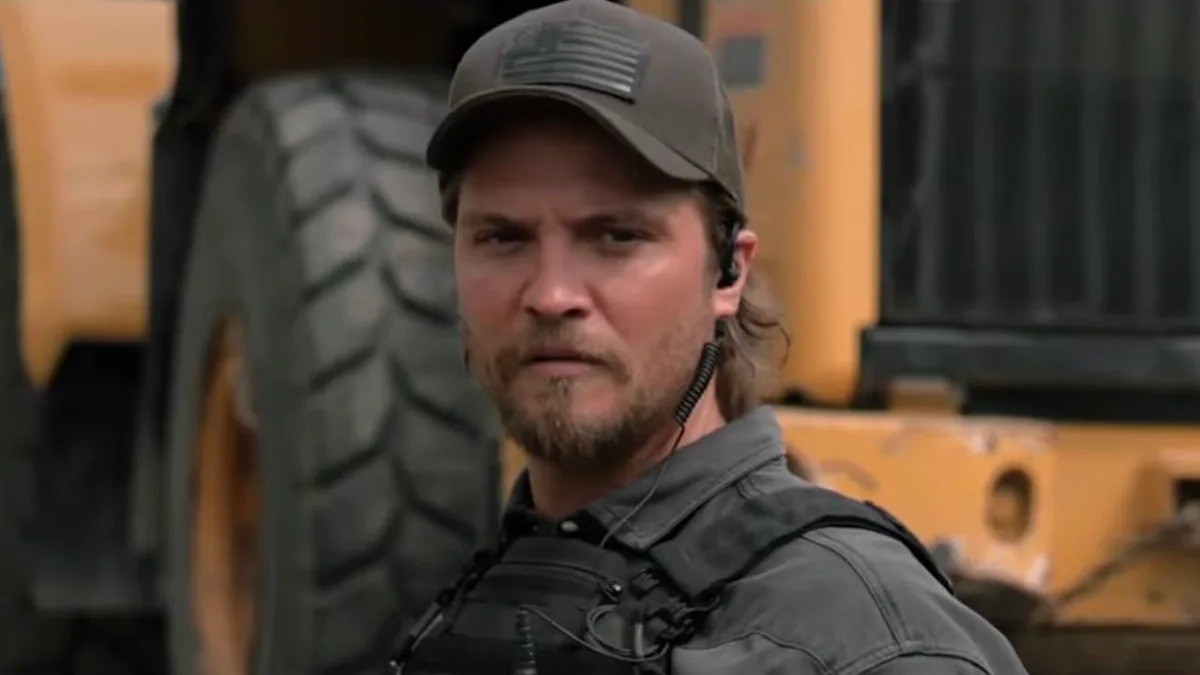
The conventional wisdom holds that moving to the country is the ultimate escape — clean air, open land, and neighbors who mind their own business. Luke Grimes found the opposite. The Yellowstone and Marshals actor relocated from Los Angeles to a small town in Montana, only to discover that his arrival was not welcome, according to multiple published interviews and his own public statements in early 2026.
Grimes, 41, who played ranch heir Kayce Dutton across five seasons of the Paramount Network hit Yellowstone, told podcast host Joe Rogan that someone left a blunt written message directed at him — a gesture he interpreted as a warning from locals who resent the influx of celebrities and wealthy out-of-staters into their communities, as reported by Fox News.
What Grimes Said — and How He Said It
Grimes did not downplay the situation. Speaking on The Joe Rogan Experience, he said residents are “not happy” that he moved to town — and that the resentment was communicated to him directly, not merely implied. According to Taste of Country, Grimes described the note as blunt, reflecting a community frustration that goes well beyond one neighbor’s opinion.
Grimes moved to Montana with his wife, country singer Katelyn Jae, after years of filming Yellowstone on location in the state. He has described the move as a deliberate rejection of the Hollywood lifestyle — a choice driven by a desire for authenticity, not publicity. That context makes the local backlash particularly sharp: Grimes positioned himself as someone who genuinely wanted to belong, only to find the door partially closed.
The Broader Pattern: Montana’s Celebrity Transplant Problem
Grimes is far from alone. Montana has become a destination of choice for wealthy coastal transplants — a migration that accelerated sharply after 2020 and was amplified by the cultural reach of Yellowstone itself. The show, which premiered in 2018 and ran for five seasons, drew an average of more than 11 million viewers per episode at its peak, according to Paramount Network data, and is widely credited with sparking a tourism and relocation boom across the state.
Real estate data has tracked the consequences in hard numbers. Montana home prices rose faster than almost any other state during the 2021–2023 period, pricing out multi-generational residents in counties like Gallatin, Ravalli, and Flathead. For longtime locals, the arrival of actors, tech executives, and remote workers is not a neutral demographic shift — it is the mechanism by which their land, their culture, and their affordability disappear.
Why the Resentment Runs Deep
The frustration Grimes encountered is not about him personally, community advocates in Montana have argued publicly. It is about what he represents. When a celebrity from a show that romanticized Montana ranch life then moves to Montana, the symbolism cuts both ways — and for many residents, it lands as appropriation, not admiration.
Local voices in affected Montana communities have described a social fracture between “old Montana” and “new Montana” — a divide that plays out in hardware stores, school boards, and county commission meetings, not just on celebrity doorsteps. The concern, as reported by Cleveland.com, is that high-profile arrivals normalize and accelerate a process that displaces the very culture they claim to seek.
Grimes’ Career Move and the ‘Marshals’ Factor
Grimes’ relocation coincides with a career transition. After Yellowstone concluded, he stars in Marshals, a new series that keeps him in the Western genre while carving out a separate identity from the Dutton family saga. The show has kept his public profile active even as he physically withdrew from Los Angeles.
That ongoing visibility may itself be part of what irritates some locals. Grimes has not gone quietly into rural life — he has spoken openly about the move in media interviews, on podcasts, and in entertainment press, which some Montana residents view as a continuation of the celebrity attention economy they were hoping to escape. For a community that resists being treated as a backdrop, hearing a television star publicly narrate his life among them lands poorly.
What Comes Next for Grimes — and for Montana
Grimes has not indicated any plans to leave. His public statements, while candid about the friction, suggest he intends to stay and work toward acceptance over time — a posture that itself reflects the patience of someone who genuinely believes in the move, not someone performing a lifestyle for a camera crew.
For Montana, the story has no easy resolution. The state cannot legislate who buys land within its borders, and cultural resentment, however legitimate, does not constitute policy. What the Grimes episode does is put a named face and a specific confrontation on a tension that had previously been discussed in the abstract — the note on the door becoming, in the national press, a symbol of something much larger than one actor’s relocation.
Whether that visibility helps or accelerates the problem is a question Montana communities are quietly debating heading into summer 2026.
Frequently Asked Questions

You Might Also Like
Since 1965, This Federal Agency Has Spent Nearly $6 Billion Keeping America’s History From Disappearing
What would disappear from your town if the institution preserving its oldest stories simply ran…
How Donald Judd Turned a Dying West Texas Ranch Town Into America’s Most Unlikely Art Economy
The conventional story of American small-town revival almost always involves the same ingredients: a broadband…
A $2.2M Price Cut on Birch Boulevard Reveals How West Sedona’s Luxury Market Is Quietly Shifting
A price cut at 45 Birch Boulevard in West Sedona to $2.2M signals a possible…
Leave a Reply