
The conventional story of American small-town revival almost always involves the same ingredients: a broadband expansion grant, a relocated Amazon warehouse, or a remote-work influx following a pandemic. Marfa, Texas rewrote that formula entirely — and did it fifty years before anyone was paying attention.
Located in Presidio County, roughly 190 miles southeast of El Paso and 60 miles north of the Mexican border, Marfa sits at an elevation of 4,688 feet in the Chihuahuan Desert. As of the 2020 U.S. Census, the city’s population stood at 1,981 — a figure that belies its outsized cultural footprint, according to data compiled by the U.S. Census Bureau.
A Sculptor, a Warehouse, and a Radical Idea
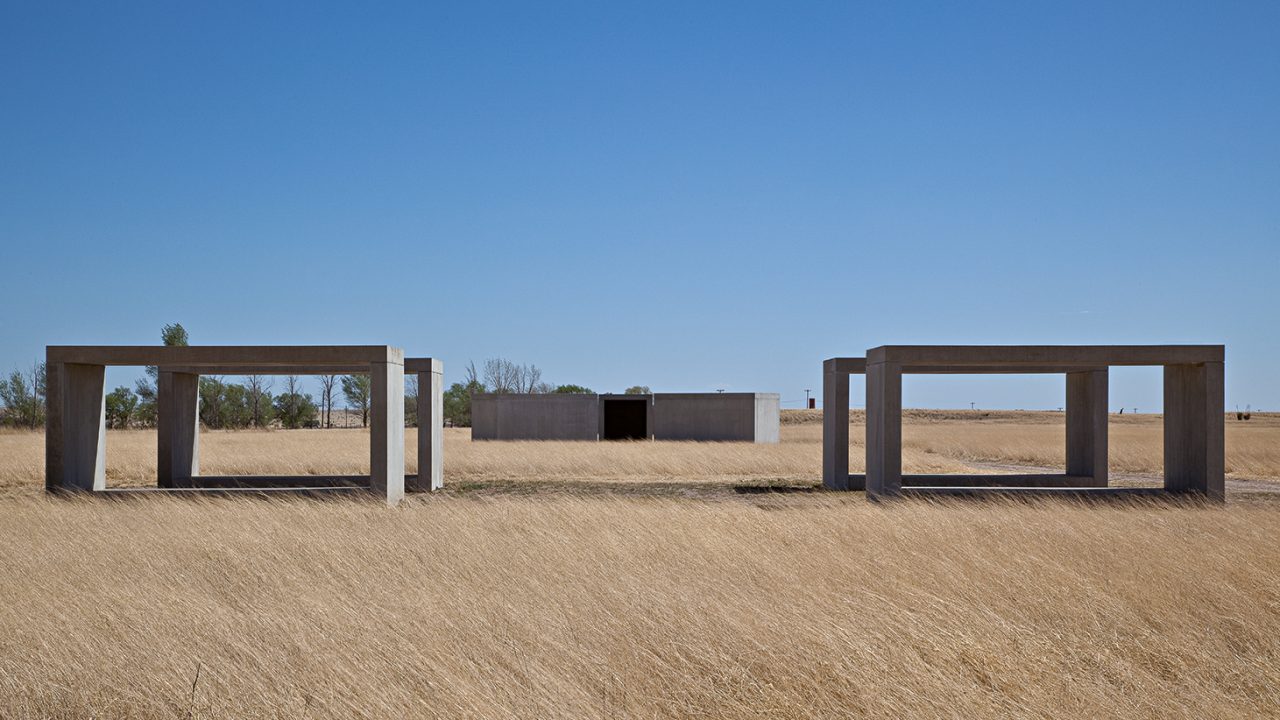
Donald Judd, the American minimalist sculptor, first visited Marfa in 1971. He was drawn by the landscape’s scale and the quality of the desert light — conditions he believed were impossible to replicate in a New York gallery. By 1973, he had purchased a significant block of property in town, including a former wool and mohair warehouse and two large artillery sheds on what had been Fort D.A. Russell, a decommissioned U.S. Army post.
Judd’s intention was not to build a tourist attraction. He wanted a permanent installation site — a place where large-scale works of art could exist in fixed relationship to architecture and light, undisturbed by the rotation cycles of commercial galleries. The Chinati Foundation, which Judd formally established as a nonprofit institution in 1986, now occupies approximately 340 acres and houses permanent large-scale installations by Judd himself, John Chamberlain, Dan Flavin, Roni Horn, Carl Andre, and others.
Judd died in February 1994, but the institution he built outlasted him and grew beyond what he publicly articulated as his vision. The Chinati Foundation today operates a museum, an artist-in-residence program, and an annual open house weekend that has become one of the most attended cultural events in the American Southwest.
The Economic Transformation Nobody Predicted
Presidio County, where Marfa serves as the county seat, was economically fragile for most of the twentieth century. Its economy depended on ranching, a shrinking railroad workforce, and limited border commerce. According to the Texas Department of Transportation, U.S. Highway 90 — which bisects Marfa — carries modest traffic volumes compared to major Texas corridors, yet the town’s commercial density along that strip has grown dramatically since the late 1990s.
By the early 2000s, Marfa had accumulated a concentration of contemporary art galleries, design-forward hotels, and internationally recognized restaurants unusual for a remote high-desert community of its size. The Judd Foundation, a separate entity from Chinati that manages Judd’s personal properties and estate, operates two Marfa properties open to the public: the Block, a city block of Judd-renovated buildings, and La Mansana de Chinati.
Property values in Marfa reflect the demand pressure. Zillow and local real estate records tracked by Presidio County show median home prices in Marfa that have, at various points in the past decade, exceeded the state median — a statistical anomaly for a town of under 2,000 in a county with a per-capita income significantly below the national average.
Prada Marfa and the Art Installation That Became a Landmark
Approximately 26 miles northwest of Marfa on U.S. Highway 90, near the unincorporated community of Valentine in Jeff Davis County, stands what may be the most photographed roadside artwork in the American Southwest: Prada Marfa.
The sculptural installation — created by Berlin-based artists Elmgreen and Dragset and permanently installed in October 2005 — is a replica of a Prada boutique facade, stocked with actual Prada products from the Fall/Winter 2005 collection. The structure was designed to never be repaired, allowing it to decay naturally into the landscape. After vandalism in 2005, the artists chose to restore it, and it has been maintained since.
The installation draws an estimated hundreds of thousands of visitors annually, according to travel data aggregators, making it one of the most-visited public artworks in Texas despite — or because of — its remote location. It has no admission charge, no operating hours, and no official visitor center.
The Marfa Lights and the Town’s Older Mystery
Before Donald Judd, before Prada Marfa, Marfa had already accumulated one singular attraction: the Marfa Lights. The phenomenon — unexplained moving lights observed at night in the desert east of town near the Chinati Mountains — has been documented since the late nineteenth century.
The Texas State Legislature officially recognized the Marfa Lights as a unique natural and cultural phenomenon in 2003. The Marfa Chamber of Commerce and the Texas Department of Transportation jointly maintain the Marfa Lights Viewing Area on U.S. Highway 90, approximately nine miles east of town. The site includes a paved parking area, informational plaques, and viewing platforms.
The Cost of Being Discovered: Displacement and Debate
The transformation of Marfa is not celebrated uniformly. Long-term residents and community advocates have raised documented concerns about housing affordability, the displacement of working-class Hispanic families who have lived in Presidio County for generations, and the conversion of residential properties into short-term vacation rentals.
Texas Public Radio and the Texas Observer have both published reporting on the tension between Marfa’s cultural economy and its legacy population. In a 2022 Texas Observer piece, local residents described a town where rents have climbed well beyond what ranch workers, school employees, or county staff can afford — a pattern consistent with art-driven gentrification documented in communities from Hudson, New York, to Bisbee, Arizona.
The Presidio County Housing Authority and various nonprofit coalitions have attempted to address affordability, with limited resources. The tension between cultural cachet and community preservation is, by 2026, one of the central unresolved questions in Marfa’s civic conversation.
What Marfa Tells Us About Replicability
Economic development professionals have studied Marfa as a case study for decades — and most conclude its model resists easy replication. The combination of factors that made Marfa work was specific: one artist of international stature, an unusually dramatic landscape, affordable property in the early 1970s, and a degree of isolation that paradoxically became an asset.
Marfa is, ultimately, a story about what happens when an individual with vision and resources bets on a place most people had written off — and wins. Whether that win belongs to the whole town, or primarily to those who arrived after the hard work was done, remains genuinely contested in Presidio County. The desert does not resolve that argument. It simply keeps the light remarkable.
Related: April Is Mussoorie’s Quietest and Most Beautiful Month — Here’s How Locals Actually Spend It
Frequently Asked Questions

You Might Also Like
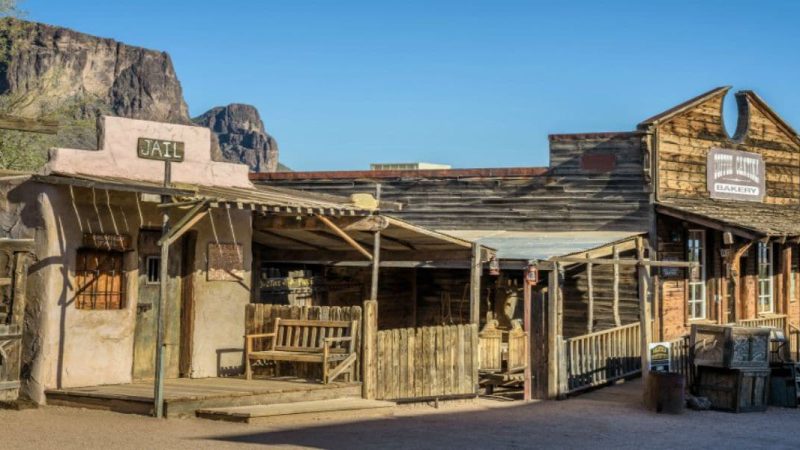
I Visited Bannack, Montana for $6 — Found Banks, Newspapers, Murder Trials
3,800+ ghost towns scatter the American West — most cost $0 to enter. Rhyolite, Bannack,…
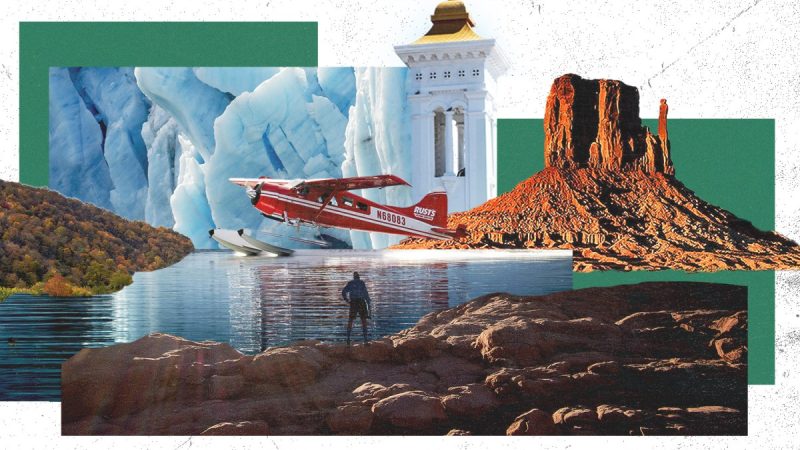
6 Secret U.S. Towns Under 6,000 People You’ve Never Visited
6 real American towns—from Presidio County, TX (pop. 1,789) to Cochise County, AZ (pop. 5,193)—offer…
He Left Austin’s $2,100 Rent and Found a 3BR House for $1,050
A man left Austin's $2,100/month apartment and moved to a 3BR house in Fayetteville, AR…
Leave a Reply