
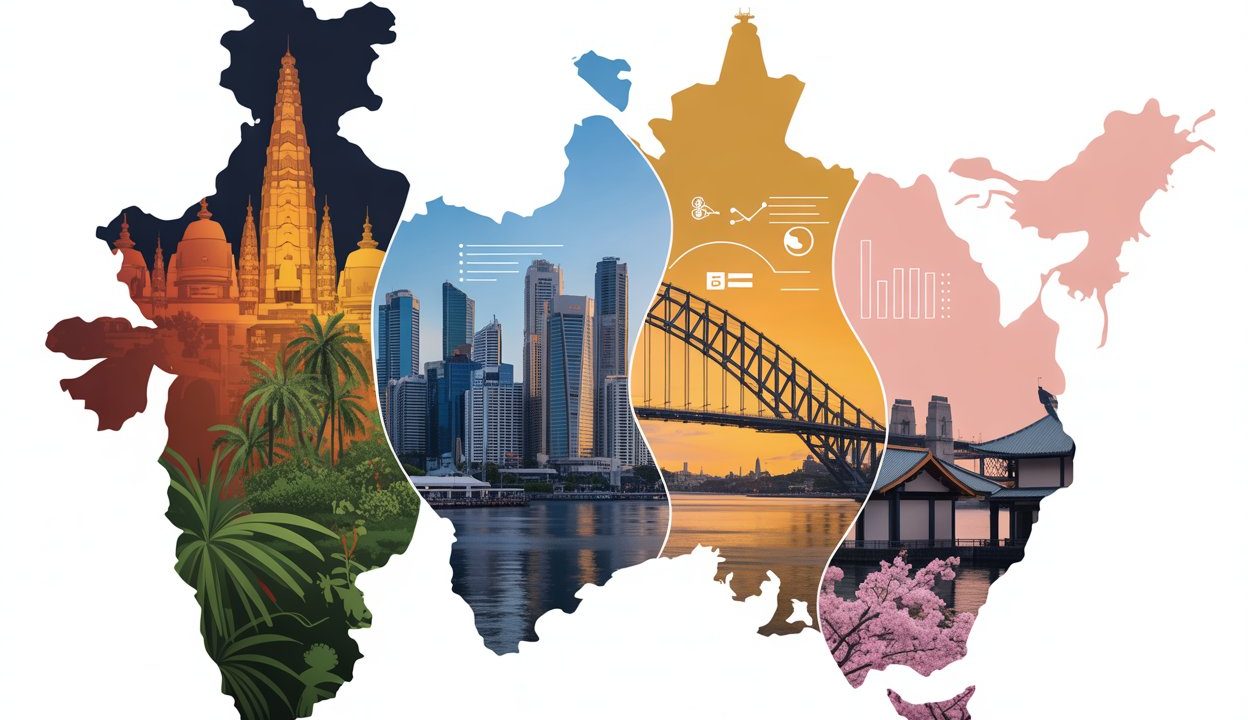
More than 1,300 CFOs and treasurers across the Asia-Pacific region have sent a clear signal: mid-sized companies are struggling to access the flexible financial tools they need to keep cross-border business moving. That finding sits at the heart of Visa’s 2025–2026 Growth Corporates Working Capital Index, a wide-ranging survey that now includes India alongside Singapore, Australia, and Japan — and it has real consequences for how corporate travel gets funded, approved, and executed.
The companies in focus are not small startups or global giants. They sit in the middle — firms with annual revenues between $50 million and $1 billion, a segment Visa calls “Growth Corporates.” These businesses are large enough to operate internationally but often too small to access the sophisticated treasury tools that Fortune 500 companies take for granted. For industries like hospitality, manufacturing, and technology, where face-to-face negotiations and supplier visits are still essential, that financial gap creates real friction.
India’s inclusion in this year’s index is notable. It places one of the world’s fastest-growing major economies alongside three of the most established business travel markets in APAC — and raises questions about whether the financial infrastructure supporting cross-border corporate activity is keeping pace with demand.
Why Mid-Sized APAC Firms Are Caught in a Liquidity Gap
The companies surveyed by Visa occupy a peculiar position in the corporate ecosystem. They are active enough internationally to require regular executive travel — for client negotiations, supplier management, and market expansion — but their working capital structures often weren’t designed with that kind of agility in mind.
Business travel is not just a line item on an expense report. For a mid-sized manufacturer in India sending a procurement team to Japan, or a Singapore-based technology firm opening a new client relationship in Sydney, travel spending represents a meaningful liquidity event. Flights, hotels, ground transport, client entertainment — these costs can accumulate quickly, and they typically land on the books before any revenue from the trip materializes.
When working capital tools are rigid or inaccessible, companies face a choice: limit travel and limit growth, or stretch their cash position in ways that create risk elsewhere. Neither option is attractive for firms in an expansion phase.
What the Visa Working Capital Index Actually Measures
The Working Capital Index is designed to assess how well mid-sized companies in key APAC markets are equipped to manage liquidity, financial flexibility, and operational agility. By surveying CFOs and treasurers — the people actually responsible for these decisions — Visa’s research captures ground-level reality rather than theoretical best practice.
| Market | Key Industries Covered | Revenue Range of Surveyed Firms |
|---|---|---|
| India | Technology, Manufacturing, Hospitality | $50 million – $1 billion annually |
| Singapore | Technology, Manufacturing, Hospitality | $50 million – $1 billion annually |
| Australia | Technology, Manufacturing, Hospitality | $50 million – $1 billion annually |
| Japan | Technology, Manufacturing, Hospitality | $50 million – $1 billion annually |
The survey’s focus on CFOs and treasurers — rather than general managers or travel managers — reflects the reality that working capital decisions shape travel policy from the top down. When a CFO determines that cash reserves need to be protected, travel budgets are often among the first casualties, even when those trips would generate long-term returns.
How Business Travel and Working Capital Are Directly Connected
It might not be immediately obvious why a payment network like Visa is publishing research on working capital for mid-sized firms. The connection runs deeper than card acceptance rates.
Corporate travel spending is one of the most visible expressions of a company’s working capital health. Firms that have access to flexible credit instruments — extended payment terms, virtual card solutions, or dynamic credit lines — can authorize travel without disrupting day-to-day operations. Those without those tools often operate on tighter constraints, which means fewer trips, slower relationship-building, and reduced ability to compete for international contracts.
- Supplier management: Physical visits to manufacturing partners in different APAC countries remain critical for quality control and relationship maintenance.
- Client negotiations: High-value deals in sectors like technology and hospitality still close faster in person than through digital channels alone.
- Market expansion: Entering a new APAC market almost always requires boots on the ground before revenue begins to flow.
For all three use cases, the ability to fund travel without straining liquidity is a direct competitive advantage.
What India’s Inclusion in the Index Signals for the Region
Adding India to an index that previously focused on Singapore, Australia, and Japan is not a minor editorial decision. It reflects the growing weight of India’s mid-sized corporate sector in regional business activity and acknowledges that the financial challenges these firms face are both real and measurable.
India’s business travel market has expanded significantly as its technology and manufacturing sectors have grown. Mid-sized Indian firms are increasingly operating across borders — sourcing from Southeast Asia, selling into Australia and Japan, and competing with regional players who may have better access to working capital tools.
Observers note that the gap between what large multinationals can access and what Growth Corporates can access is not just a financial inconvenience — it shapes strategic decisions about which markets to enter, which partnerships to pursue, and how aggressively to grow.
What Comes Next for Growth Corporates Across APAC
The publication of the Working Capital Index is intended to give CFOs and treasurers a benchmark — a way to assess where their firm stands relative to peers in the same revenue band and the same markets. For business travel specifically, that kind of data can shift internal conversations about how travel budgets are structured and funded.
Financial solutions that extend payment windows, automate expense reconciliation, or provide real-time visibility into travel spending are increasingly available to mid-sized firms — but adoption varies significantly across the four markets covered. The index provides a foundation for understanding those gaps and, in principle, for addressing them.
For companies in India, Singapore, Australia, and Japan that are weighing their next phase of regional expansion, the message from the data is consistent: liquidity flexibility is not a luxury. For mid-sized firms competing in APAC’s fast-moving markets, it is increasingly a prerequisite for growth.
Frequently Asked Questions
What is Visa’s Growth Corporates Working Capital Index?
It is a survey-based research report covering CFOs and treasurers at mid-sized companies across APAC, focused on how well those firms can manage liquidity and working capital to support operations including cross-border business travel.
Which countries are included in the 2025–2026 index?
The index covers four APAC markets: India, Singapore, Australia, and Japan, with India being a notable addition to the group.
What size of company does the index focus on?
The research targets companies with annual revenues between $50 million and $1 billion, a segment Visa refers to as “Growth Corporates.”
How many respondents were included in the survey?
The index is based on responses from over 1,300 CFOs and treasurers across the covered markets.
Why does working capital matter specifically for business travel?
Travel costs are incurred before any revenue from the trip is realized, meaning firms with limited working capital flexibility may restrict travel even when those trips would support growth.
Which industries are most affected by these working capital challenges?
The index specifically highlights hospitality, manufacturing, and technology as sectors that rely heavily on executive travel and are therefore directly exposed to working capital constraints.



Leave a Reply