
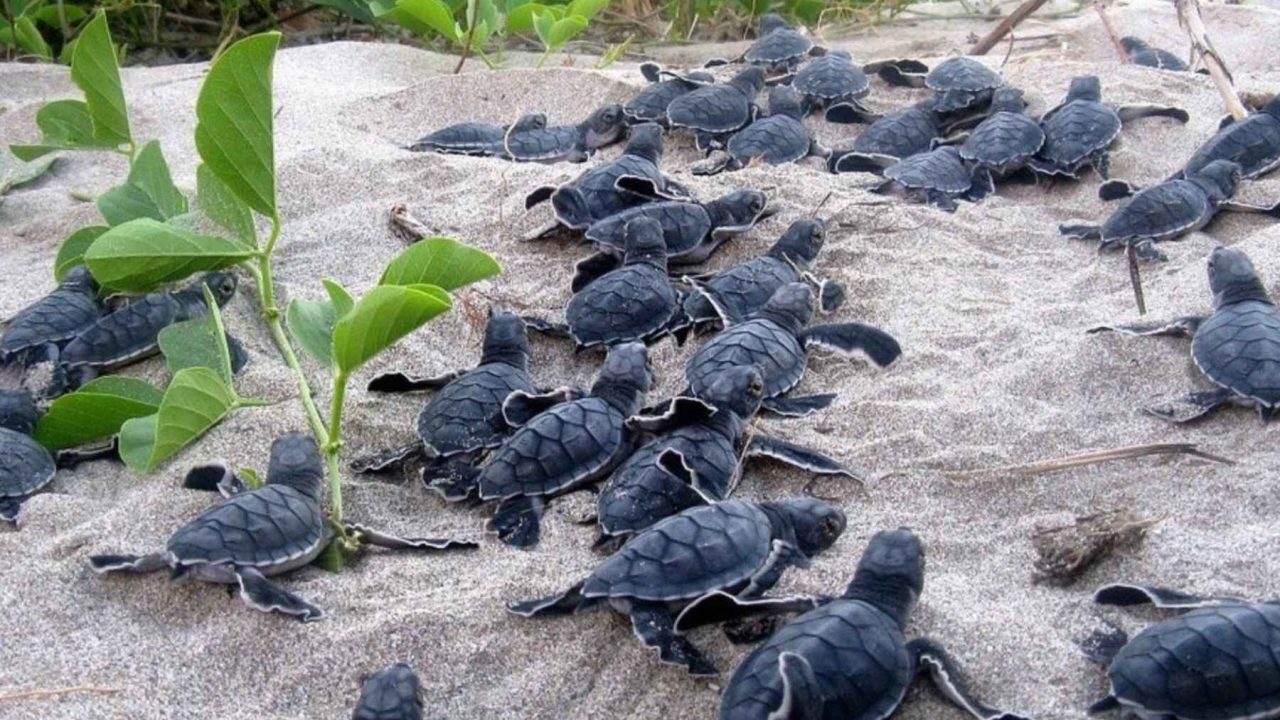
On a moonlit night on Sal Island, a field researcher pressed herself against the volcanic sand and held her breath. Ahead of her, a loggerhead sea turtle nearly a meter wide was dragging herself above the tide line. Behind her came another. Then another.
To anyone watching from that shoreline, it looked like a conservation triumph. Cabo Verde has become one of the most significant loggerhead nesting grounds on the planet, with tens of thousands of females returning to its beaches every year. The turtles had come back in force.
But a 17-year study published February 11, 2026, complicated that ending in ways scientists are still working to understand.
What 17 Years of Tracking on Sal Island Actually Reveals
The research team, led by Fitra Nugraha from Queen Mary University of London and working alongside local conservation groups, spent from 2008 to 2024 following individual loggerhead females across multiple breeding seasons on Sal Island. They recorded arrival dates, clutch sizes, egg counts, and the length of time each female waited before returning the following year.
What they found beneath the surface abundance was deeply counterintuitive. The average gap between a female’s breeding seasons had roughly doubled, stretching from approximately two years to approximately four years. Each turtle was effectively skipping an entire reproductive cycle between visits.
The number of nests per female fell. The number of eggs per clutch fell. The turtles were arriving earlier in the season than ever before, driven by warming sea surface temperatures in the Atlantic. But they were producing considerably less when they got there.
| Nesting Metric | Early Study Period (2008–2014) | Late Study Period (2018–2024) |
|---|---|---|
| Average gap between breeding seasons | ~2 years | ~4 years |
| Nests per female per season | Higher | Declining |
| Eggs per clutch | Higher | Declining |
| Timing of arrival on nesting beaches | Later in season | Earlier in season |
Warmer Atlantic Waters Are Reshaping the Loggerhead Breeding Cycle
The connection to ocean temperature was one of the study’s central findings. Rising sea surface temperatures around Cabo Verde were statistically linked to both the earlier arrival of nesting females and shorter gaps between individual clutches within a single season.
On the surface, this sounds encouraging. Earlier arrivals and more frequent nesting within a single season might suggest a population thriving under warmer conditions. The data told a more complicated story.
Loggerhead sea turtles are ectotherms, meaning their internal processes are tightly coupled to ambient temperature. Warmer water accelerates certain physiological cycles. It can pull females toward nesting behavior before their bodies are fully prepared to support a productive clutch.
The result is a turtle that nests more frequently within a season but deposits fewer viable eggs each time. Then it waits significantly longer before returning the following year, drawing down energy reserves it needs more time to replenish.
“The turtles are working harder for less return.”
— Kirsten Fairweather, Scientific Coordinator, Associação Projeto Biodiversidade
Why Nesting Counts Alone Cannot Measure Population Health
This is where the study’s findings become particularly important for conservation science. Cabo Verde hosts tens of thousands of nesting females every year. Standing on a beach like Santa Maria on Sal Island, where pale sand stretches for four kilometers along the southern coast, you would have no reason to suspect a problem. The turtles keep arriving.
But raw nesting counts can be misleading. More turtles on the beach does not automatically translate to more viable offspring entering the ocean. If each female is producing fewer eggs per visit and disappearing for four years instead of two, actual reproductive output may be quietly declining. This erosion can happen even as observed nesting events hold steady or climb.
This is the critical distinction that 17 years of individual tracking makes visible. Short-term observations see crowds on the beach and declare success. Only a longitudinal study, following the same individuals across nearly two decades, can detect what is happening to their reproductive capacity over time.
How a Doubled Inter-Breeding Gap Signals Deeper Reproductive Strain
The study’s authors were careful to frame their findings in terms of observable trends rather than imminent collapse. The population is not in freefall. But the reproductive efficiency of individual females appears to be under significant and measurable strain, and the mechanism driving that strain is ocean temperature.
Warmer sea surface temperatures arrived earlier each year during the study period, correlating directly with the progressive shift in nesting timing. The turtles did not choose to change their schedule. Their biology responded to environmental cues that were themselves shifting year by year.
What makes the pattern concerning is its self-reinforcing logic. If females are consistently depleting their reserves faster than recovery allows, the doubling of inter-breeding intervals may not represent a stable new equilibrium. It may be a warning signal of further erosion ahead.
Protecting the Beach Without Addressing Ocean Temperature
The researchers from Queen Mary University of London and Associação Projeto Biodiversidade did not frame their findings as a reason to abandon current conservation efforts. Local groups in Cabo Verde have spent years shielding nesting beaches from poaching, artificial lighting, and coastal development. That work remains essential.
But protecting the beach is only part of the equation. If ocean temperatures governing these turtles’ physiology continue rising, the behavioral and reproductive changes documented across 17 years may deepen further. The turtles cannot adapt their biology out of thermodynamics.
There is something quietly striking in what Kirsten Fairweather said about the study’s central conclusion. Working harder for less return is not merely a description of an animal’s reproductive output. It is a description of what climate stress looks like from the inside. A creature with no mechanism to stop it, and no awareness that anything has changed.
The beaches of Sal Island are still full of turtles. The water is still warm, the sand still pale, the Atlantic still vast and indifferent. Each night, the loggerheads keep arriving. The question the data is quietly asking is whether the scene on the beach measures abundance, or simply records the effort of animals working harder and harder for less and less.

You Might Also Like

Delhi Metro Blue Line: 5 Upgrades Changing How Millions Travel
Delhi Metro is upgrading 70 Blue Line trains by November 2027. Here are 5 major…

Cloud 9 May Finally Crack the Universe’s Dark Matter Secret
Cloud 9 is a hydrogen gas cloud with 5 billion solar masses of dark matter…

Social Security July 2026 Payment Dates: Exact Deposit Dates by Birthday, Who Gets Paid When, and What to Do if a Payment Is Late, With the Official SSA Schedule
Knowing your exact payment date helps you plan bills, groceries, and everything in between. This…
Leave a Reply