
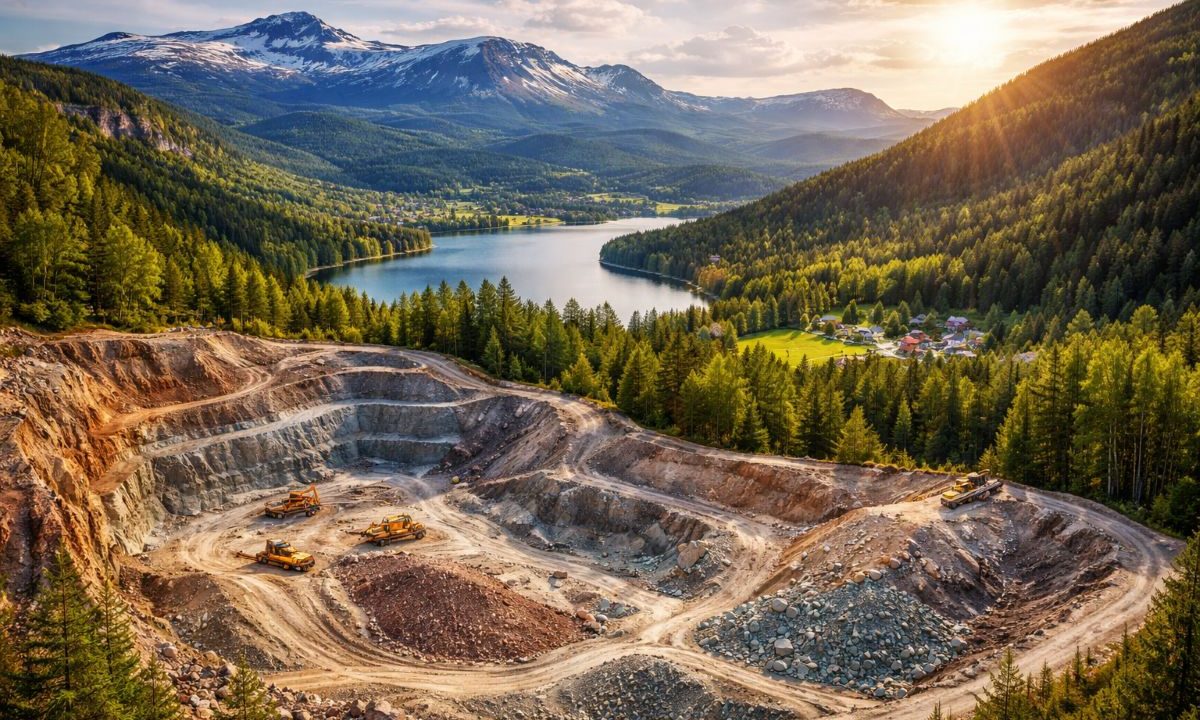
Beneath an ancient volcanic formation in southern Norway, geologists have confirmed the existence of what is now recognized as Europe’s largest known deposit of rare earth elements — and the numbers are staggering. Updated estimates place the Fensfeltet deposit at up to 15.9 million metric tons of rare earth oxides, a figure roughly 80 percent larger than what was previously believed.
The site sits approximately 150 kilometers southwest of Oslo, embedded within a geological formation shaped by volcanic activity millions of years ago. What was once a quiet corner of Norwegian countryside is now drawing attention from governments, industries, and travelers alike — for very different reasons.
The discovery carries consequences that stretch well beyond mining boardrooms. It is already being described as a transformational force for the region, with potential ripple effects on infrastructure, tourism, and Europe’s long-term economic independence from external rare earth suppliers, particularly in Asia.
(function(){var wrp=document.getElementById(“paap_stat_69de50d590faf6.30796031”);if(!wrp)return;var ids=[“paap_stat_69de50d590faf6.30796031_c0″,”paap_stat_69de50d590faf6.30796031_c1”];var dur=1800;function ease(t){return 1-Math.pow(1-t,3);}function anim(){ids.forEach(function(id){var el=document.getElementById(id);if(!el)return;var tgt=parseFloat(el.getAttribute(“data-target”))||0;var pfx=el.getAttribute(“data-prefix”)||””;var sfx=el.getAttribute(“data-suffix”)||””;var dec=parseInt(el.getAttribute(“data-decimals”))||0;var st=null;function step(ts){if(!st)st=ts;var p=Math.min((ts-st)/dur,1);var v=ease(p)*tgt;el.textContent=pfx+v.toFixed(dec)+sfx;if(p<1)requestAnimationFrame(step);}requestAnimationFrame(step);});}if("IntersectionObserver" in window){var obs=new IntersectionObserver(function(e){e.forEach(function(en){if(en.isIntersecting){anim();obs.disconnect();}});},{threshold:0.2});obs.observe(wrp);}else{anim();}})();
What the Fensfeltet Discovery Actually Means
Rare earth elements are not rare in the way gold or diamonds are rare. But extracting them in meaningful quantities from a single concentrated deposit — especially one located within a stable, accessible European country — is genuinely unusual. These materials are essential components in electric vehicle batteries, wind turbines, smartphones, and defense technologies.
For years, Europe has been heavily dependent on imports to meet demand for these critical minerals. The Fensfeltet deposit changes that equation significantly. With reserves now confirmed at nearly 16 million metric tons of rare earth oxides, Norway is positioned to become a central player in Europe’s push for supply chain independence.
The volcanic geology beneath the site is what makes this possible. Ancient carbonatite rock formations — the type associated with rare earth concentration — created ideal conditions for mineral accumulation over geological timescales. That same dramatic geological history is now part of what makes the location compelling to visitors, not just engineers.
Key Facts About the Fensfeltet Deposit
Here is what has been confirmed about the site and its broader significance:
- Location: approximately 150 kilometers southwest of Oslo, Norway
- Deposit type: ancient volcanic formation, specifically carbonatite geology
- Confirmed reserve estimate: up to 15.9 million metric tons of rare earth oxides
- Scale increase: approximately 80 percent larger than prior estimates
- Regional status: now recognized as Europe’s largest known rare earth reserve
- Strategic context: part of Europe’s broader effort to reduce dependency on Asian rare earth suppliers
| Detail | Confirmed Information |
|---|---|
| Deposit Name | Fensfeltet |
| Location | ~150 km southwest of Oslo, Norway |
| Reserve Size | Up to 15.9 million metric tons of rare earth oxides |
| Revision Scale | Approximately 80% larger than previous estimates |
| European Ranking | Largest known rare earth deposit on the continent |
| Geological Origin | Ancient volcanic formation |
Why Travelers and the Tourism Sector Are Watching Closely
This is where the story takes an unexpected turn. Major mineral discoveries of this scale do not just attract investors — they reshape the regions around them. Infrastructure investment follows. Roads improve. Rail connections get upgraded. Accommodation and hospitality sectors expand to serve new waves of workers, researchers, and visitors drawn by curiosity and economic opportunity.
The Fensfeltet region, previously known primarily to geology enthusiasts and hikers exploring Norway’s quieter inland landscapes, is now entering a new chapter. The ancient volcanic formation that hosts the deposit is itself a draw — the kind of dramatic, story-rich geological site that has fueled geo-tourism movements across Europe and beyond.
For international travelers already drawn to Norway for its fjords, northern lights, and Viking heritage, a site that combines geological wonder with one of the most consequential mineral discoveries of the decade adds a compelling new reason to venture inland and off the beaten path.
Industry observers note that large-scale extraction projects of this nature typically bring significant economic activity to surrounding communities — employment, hospitality demand, and increased visibility on the international map. Whether that translates into a formal tourism corridor around Fensfeltet remains to be seen, but the groundwork is being laid.
What Happens Next for Fensfeltet and the Region
The immediate next steps involve the transition from geological confirmation to development planning. Identifying a deposit and extracting it are two very different phases, and the path from one to the other involves environmental review, regulatory processes, infrastructure assessment, and investment commitments.
Norway has a well-established track record with large-scale natural resource development, most notably in its North Sea oil and gas sector. That institutional experience will likely shape how the Fensfeltet project proceeds — methodically, with significant public and governmental oversight.
For the travel and tourism sector, the timeline is less defined but the direction is clear. As awareness of the site grows and development activity increases, the region southwest of Oslo will attract new categories of visitors — from industry professionals and journalists to geology tourists and curious travelers who want to stand at the edge of something historically significant.
Europe’s push for critical mineral independence is accelerating, and Fensfeltet is now at the center of that effort. The ancient volcano beneath southern Norway kept its secret for millions of years. The world found out — and it is paying attention.
Frequently Asked Questions
Where exactly is the Fensfeltet deposit located?
The Fensfeltet deposit is located approximately 150 kilometers southwest of Oslo, Norway, within an ancient volcanic geological formation.
How large is the Fensfeltet rare earth deposit?
Updated estimates confirm the deposit holds up to 15.9 million metric tons of rare earth oxides, making it roughly 80 percent larger than previously believed.
Why is this discovery significant for Europe?
It is now recognized as Europe’s largest known rare earth reserve, giving the continent a major domestic source of minerals critical to electric vehicles, wind turbines, and defense technologies — reducing dependency on external suppliers, particularly in Asia.
What type of geology created this deposit?
The deposit formed within an ancient volcanic formation, the kind of carbonatite geology associated with rare earth element concentration over millions of years.
Will the Fensfeltet site become a tourist destination?
When will extraction at Fensfeltet begin?
This has not yet been confirmed in available information. The project is in the geological confirmation phase, with development planning, environmental review, and regulatory processes still ahead.


Leave a Reply