
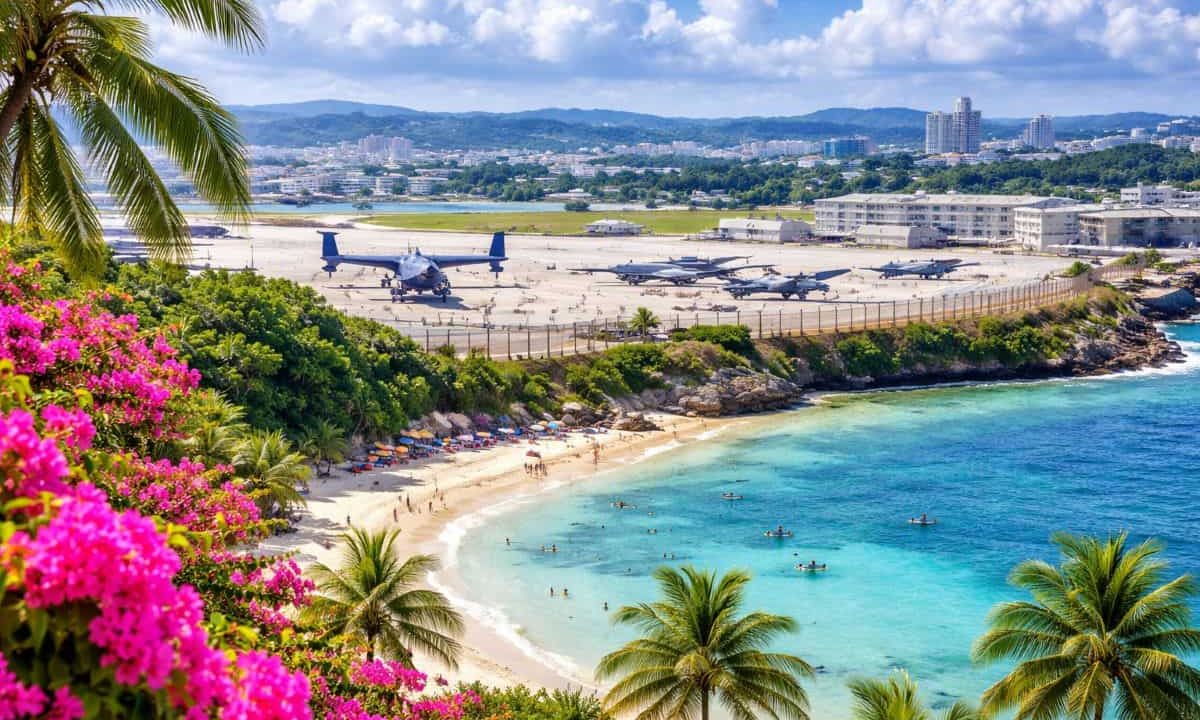
More than thirty years have passed since Japan and the United States reached a landmark agreement promising the eventual return of land occupied by Marine Corps Air Station Futenma — and Okinawa is still waiting. What was once expected to take five to seven years has stretched across three decades, leaving an island’s tourism ambitions suspended in a kind of permanent holding pattern.
The Futenma base sits in the middle of Ginowan City, one of the most densely populated urban areas in Okinawa. The land beneath it was once envisioned as the foundation for something entirely different: resort developments, cultural districts, and eco-tourism zones that could redefine what Okinawa means to the world. Instead, that vision remains largely unrealized, caught between geopolitical realities and an agreement that has proven far harder to execute than anyone originally anticipated.
For a place that depends heavily on tourism as an economic engine, the indefinite delay carries consequences that go well beyond politics. Okinawa’s potential as a global travel destination has been shaped — and constrained — by a military footprint that many residents were told would eventually be lifted.
The Promise That Set Okinawa’s Tourism Vision in Motion
The agreement between Japan and the United States that promised the return of the Futenma base land generated genuine optimism when it was reached. Policymakers and planners believed the timeline was realistic. Five to seven years felt achievable, and that confidence gave Okinawa’s leaders and developers something to plan around.
Early visions were ambitious. The land, once returned, could be transformed into a centerpiece for urban renewal. Planners imagined resort developments that would attract international visitors, cultural districts that could showcase Okinawa’s distinct Ryukyuan heritage, and eco-tourism zones that would position the island as a sustainable travel destination for a new generation of travelers.
Those plans were not idle fantasies. Okinawa already draws visitors from across Japan and from neighboring countries in Asia. Its beaches, coral reefs, unique cuisine, and blend of Japanese and Ryukyuan culture give it a genuine and differentiated appeal. The return of Futenma’s land was seen as an opportunity to accelerate and deepen that appeal in ways that the current urban layout simply does not allow.
What the Delay Has Cost Okinawa’s Travel Economy
The practical costs of this prolonged wait are difficult to quantify precisely, but the broad outlines are clear. Land that could have been redeveloped for hospitality, recreation, and cultural tourism has remained off-limits. Urban planning in Ginowan City has had to work around a large and immovable presence rather than incorporating that space into a coherent vision for growth.
The intersection of geopolitics and travel development is rarely discussed in tourism coverage, but it matters enormously in places like Okinawa. Decisions made in Washington and Tokyo — driven by alliance commitments, regional security concerns, and diplomatic negotiations — directly shape what visitors can experience and what investors are willing to fund.
| Element | Original Expectation | Current Status |
|---|---|---|
| Timeline for land return | Five to seven years after agreement | Unresolved after more than thirty years |
| Resort development | Planned as part of post-return urban renewal | Unrealized |
| Cultural districts | Envisioned to showcase Okinawan heritage | Unrealized |
| Eco-tourism zones | Planned to attract sustainable travel visitors | Unrealized |
| Urban renewal in Ginowan City | Expected to follow land return | Constrained by ongoing base presence |
Why This Story Matters to Anyone Who Cares About Okinawa
If you have ever traveled to Okinawa, or if it sits somewhere on your list of places to visit, this situation is part of the context you are moving through without necessarily knowing it. The island’s layout, its urban character, and the tourism infrastructure available to you have all been shaped by this unresolved agreement.
Okinawa is not a place that lacks appeal. It consistently draws visitors who come for its beaches, its food, its history, and its pace of life. But the scale and character of what it could offer — particularly in and around Ginowan — has been constrained in ways that most travel guides do not explain.
For local residents, the weight of this delay is even more immediate. Communities near the base have lived with noise, congestion, and land-use restrictions for generations. The promise of a different future — one anchored in tourism, culture, and open urban space — has been renewed and deferred so many times that skepticism about it ever arriving is entirely understandable.
- Resort developments were planned to attract international visitors and boost Okinawa's hospitality economy significantly.
- Cultural districts designed to showcase Okinawa's distinct Ryukyuan heritage were part of the post-return blueprint.
- Eco-tourism zones were envisioned to position Okinawa as a leading sustainable travel destination in Asia.
- The Futenma base land remains under U.S. military occupation with no confirmed return date established.
- Urban planning in Ginowan City continues to work around the base rather than incorporating the land into development.
- Tourism growth in the affected area has been constrained by the ongoing military presence and unresolved land status.
What Happens Next for Futenma and Okinawa’s Future
The path forward remains deeply uncertain. The original agreement has proven far more complicated to implement than its architects anticipated, and the geopolitical environment that shapes U.S.-Japan alliance decisions continues to evolve in ways that do not always favor a quick resolution.
Advocates for the land’s return argue that the human and economic costs of continued delay are real and accumulating. They point to the tourism potential that remains locked behind a fence line and the communities that have waited across multiple generations for a promised transformation that has not come.
What seems clear is that Okinawa’s tourism future — at least in the Ginowan area — cannot be fully written until this question is resolved. The island will continue to attract visitors and continue to grow in its own way. But the vision of a redeveloped, tourism-centered urban landscape where the Futenma base currently stands remains exactly what it has been for thirty years: a dream deferred.
Frequently Asked Questions
What is Marine Corps Air Station Futenma?
It is a U.S. military installation located in Ginowan City, Okinawa, Japan, whose land return to Japan was agreed upon more than thirty years ago but has not yet occurred.
How long ago was the agreement to return the Futenma land reached?
The agreement was reached more than thirty years ago, with an original expectation that the land would be returned within five to seven years.
What was planned for the Futenma land after its return?
Planners envisioned resort developments, cultural districts celebrating Ryukyuan heritage, and eco-tourism zones that could redefine Okinawa’s appeal to global travelers.
Has any part of the planned development moved forward?
Based on available information, the anticipated transformation remains largely unrealized, as the land has not yet been returned.
Does the situation affect visitors to Okinawa today?
Yes, in the sense that the urban layout and tourism infrastructure around Ginowan City continue to be shaped by the base’s presence rather than the open development that was originally envisioned.
Is there a confirmed new timeline for the land return?
This has not been confirmed in available reporting, and the situation remains unresolved after more than three decades.


Leave a Reply