
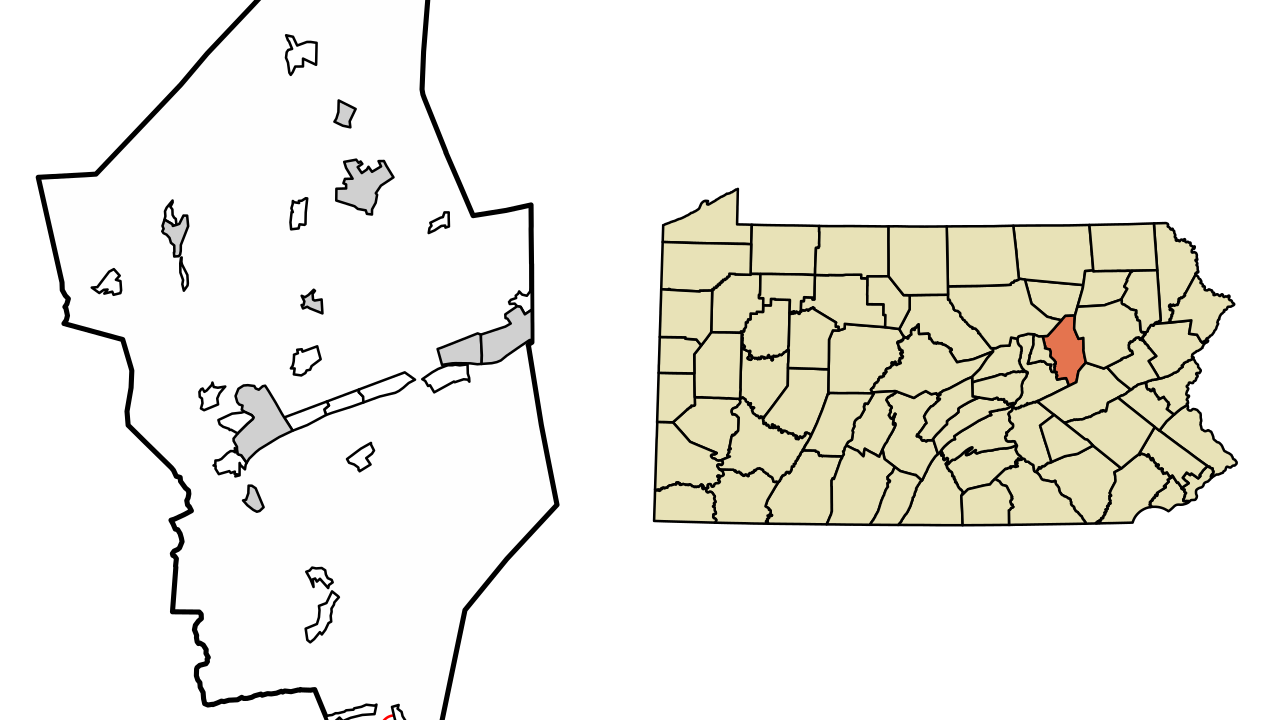
Roughly 1,000 people called Centralia, Pennsylvania home in 1961. By the 2020 U.S. Census, that number had fallen to five. The cause was not economic collapse, a natural disaster, or a pandemic — it was a coal mine fire that ignited beneath the town on May 27, 1962, and has not been extinguished since.
Located in Columbia County along the anthracite coal belt of eastern Pennsylvania, Centralia sits approximately 100 miles northwest of Philadelphia and 115 miles northeast of Harrisburg. What remains of it — a few occupied homes, a church, cracked roadways, and steam vents rising from the earth — has become one of the most documented ghost towns in the United States.
How a Trash Fire Started a Six-Decade Catastrophe
The fire’s origin traces to a municipal decision. According to the Pennsylvania Department of Environmental Protection (DEP), the Centralia borough council authorized the burning of a trash dump located in an abandoned strip mine pit adjacent to the Odd Fellows Cemetery in the spring of 1962. The dump sat atop a web of underground anthracite coal seams — one of the most energy-dense coal types in the world.
Firefighters believed they had extinguished the blaze. They had not. Burning material had already fallen through a gap in the pit’s clay barrier into an unsealed mine tunnel below. By the time the underground spread was confirmed, the fire had worked its way into a labyrinth of old coal shafts that had been mined in the region since the mid-1800s.
Early suppression attempts included flushing the tunnels with water, drilling boreholes, and excavating the fire’s perimeter. According to the Pennsylvania DEP, multiple remediation projects between 1962 and 1978 spent approximately $3.3 million in combined state and federal funds without stopping the spread. By the late 1970s, the fire occupied an estimated 195 acres underground.
The Federal Buyout That Emptied a Borough
The human cost became undeniable in 1981, when 12-year-old Todd Domboski fell into a steam vent that opened beneath him in his grandmother’s backyard. He was pulled out by a cousin before disappearing into the void, but the incident made national news and accelerated government action.
In 1984, the U.S. Congress allocated $42 million for a voluntary relocation program. The vast majority of Centralia’s residents accepted buyout offers and relocated, primarily to the neighboring towns of Mount Carmel and Ashland. Homes and buildings were demolished after purchase. By 1990, most of the borough’s built environment had been cleared.
Pennsylvania Governor Robert Casey invoked eminent domain in 1992, allowing the state to condemn all remaining properties. A small group of holdout residents challenged the condemnation in court and reached a settlement with the state — they were permitted to remain in their homes for the duration of their lives, after which the properties would revert to the Commonwealth of Pennsylvania.
Route 61 and the Road That Had to Be Buried
State Route 61 once carried traffic directly through Centralia. By the early 1990s, sinkholes had opened in the asphalt and steam vents were visible from the road surface. Pennsylvania officials closed the section in 1993 and rerouted traffic. The abandoned stretch — roughly a mile long — sat untouched for nearly three decades.
Over the years, artists and visitors began covering the road’s surface with graffiti, earning it the informal name “Graffiti Highway.” By the late 2010s, the location had become a notable attraction, drawing thousands of visitors annually and generating concerns about trespassing, injury liability, and overcrowding in the otherwise-quiet area.
In April 2020, the Pennsylvania Department of Transportation covered the abandoned stretch with fill material, effectively burying it. The closure eliminated a major draw for urban explorers and graffiti artists, though the fire underground continues to generate visible steam throughout the surrounding area.
The Cultural Footprint: Silent Hill and Beyond
Centralia’s visual landscape — smoke rising from cracked earth, abandoned foundations, cleared lots where neighborhoods once stood — bears a striking resemblance to the fictional town of Silent Hill, a fog-shrouded, fire-beneath-the-ground horror setting from the Konami video game franchise launched in 1999. The creators of the game franchise have cited Centralia’s documented imagery as an influence on the setting’s design in multiple interviews.
The 2006 film adaptation Silent Hill, directed by Christophe Gans and distributed by TriStar Pictures, drew even more direct visual and narrative parallels. The movie depicts a town consumed by an underground fire, with ash falling perpetually from the sky and residents trapped in a liminal zone. According to box office records tracked by Box Office Mojo, the film earned approximately $97.6 million worldwide against a reported production budget of $50 million.
Documentary filmmakers, journalists, and academic researchers have studied Centralia extensively. It has been covered by outlets including the New York Times and featured in geography and environmental policy curricula at multiple universities as a case study in municipal hazard management and the long-term consequences of abandoned mine infrastructure.
What Happens to Centralia Now
The Pennsylvania DEP continues to monitor the fire through a network of boreholes and temperature sensors. The agency’s most recent assessments indicate the fire now covers an estimated 400 acres underground and has migrated in a predominantly northeast direction from its origin point. Remediation at this scale is considered economically and technically unfeasible.
The remaining five residents continue to live under the lifetime-occupancy agreement established in the 1990s. When the last resident passes, the Commonwealth of Pennsylvania will take ownership of all remaining parcels. The borough’s official charter remains technically active, though it functions with no public services, no school, and no commercial infrastructure.
According to geologists who have studied the site — including researchers cited in reporting by StateImpact Pennsylvania — the coal seam beneath Centralia contains enough fuel to sustain combustion for an estimated 250 additional years under current conditions. The fire that began as a burning trash heap in 1962 may still be burning in 2276.
Visitors to the Centralia area can legally access portions of the borough by public road, though all privately owned land and the former Graffiti Highway section remain off-limits. The St. Ignatius Cemetery, located on the hillside above town, remains maintained and accessible. Steam can be observed rising from hillside vents along Route 61 on cold mornings. There are no visitor facilities, no admission fees, and no official tourism infrastructure — just the evidence of what a fire beneath the ground can do to a place over sixty-three years.
Related: Before You Book Mussoorie This Summer, Here’s What’s Changed About Staying There in 2026

Leave a Reply