
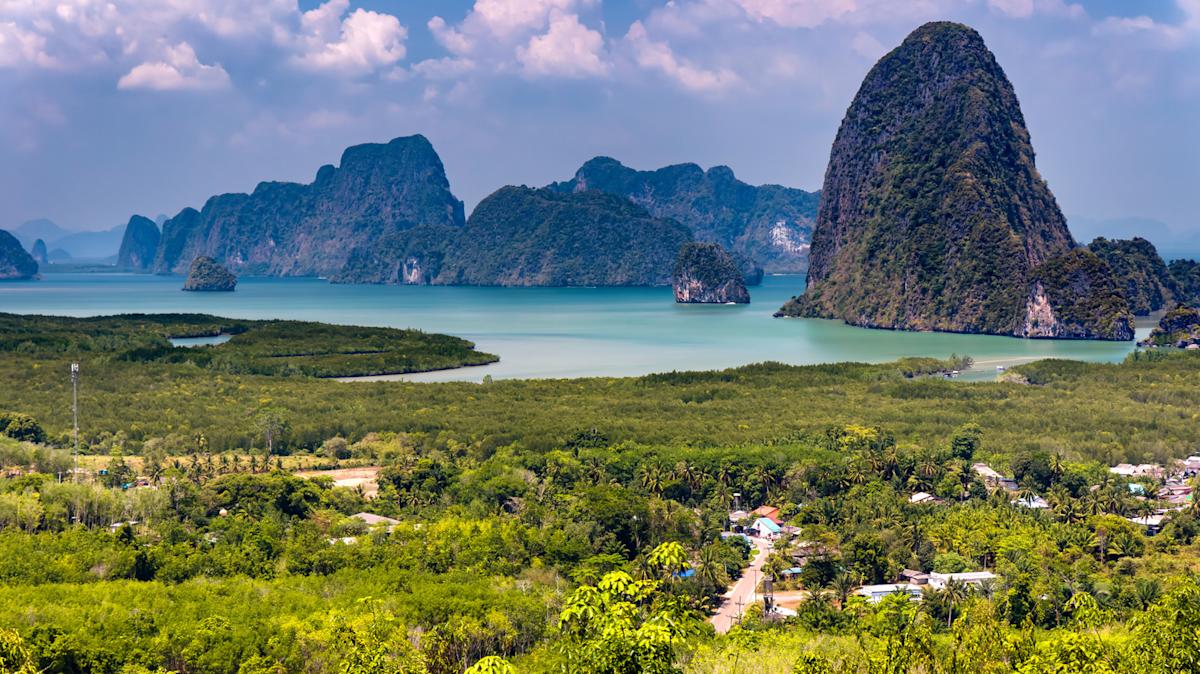
Two destinations. One coastline. And a decision that could shape your entire Thailand trip in 2026. Phang Nga and Krabi sit side by side on the Andaman Sea, yet they offer experiences so different that choosing the wrong one for your travel style could mean missing everything you came for.
In 2026, both provinces are drawing attention as contrasting entry points to Thailand’s most dramatic coastal scenery. Phang Nga is built around offshore protected islands and seasonal access windows. Krabi leans into limestone cliffs, rock climbing, and beach clusters where rules are communicated directly to visitors on the ground. Neither is better in an absolute sense — but one is almost certainly a better fit for how you travel.
Here’s what actually separates them, and how to figure out which one belongs on your itinerary.
The Big-Picture Difference Between Phang Nga and Krabi
The core contrast is straightforward: Phang Nga is organised around marine sanctuaries, while Krabi is centred on limestone terrain and beach access. These aren’t just aesthetic differences — they shape everything from how you book your trip to when you can actually go.
In Phang Nga, the headline attractions are the Similan Islands and Surin Islands, both of which are managed as protected offshore areas. Access to these environments is structured around defined open and closed seasonal periods, along with advance-style entry procedures. That means you can’t simply show up and expect to get on a boat — timing and planning matter significantly.
Krabi operates differently. The dramatic karst limestone formations, the famous rock-climbing routes, and the beach clusters scattered across the province are largely accessible on a more flexible, day-by-day basis. Rules and guidelines are communicated directly to visitors when they arrive, rather than being built into a pre-planned access structure.
For some travellers, Phang Nga’s framework feels reassuring. For others, Krabi’s on-the-ground flexibility is exactly what they want. Knowing which camp you fall into is the first real step in planning.
Phang Nga vs Krabi in 2026: What Each Destination Actually Offers
| Feature | Phang Nga | Krabi |
|---|---|---|
| Primary draw | Offshore protected islands | Limestone cliffs and beach clusters |
| Key sites | Similan Islands, Surin Islands | Karst formations, rock climbing routes |
| Access structure | Seasonal open/closed periods, advance planning | More flexible, ground-level rules communicated on arrival |
| Seasonal sensitivity | High — monsoon season shapes access windows | Lower — more activities available across seasons |
| Best for | Travellers who prefer structured, pre-planned itineraries | Travellers who prefer flexible, activity-based exploration |
| Adventure style | Marine sanctuary diving and island exploration | Rock climbing, beach hopping, limestone adventure |
Why the Monsoon Season Changes Everything in Phang Nga
If you’re considering Phang Nga, the monsoon calendar isn’t a footnote — it’s the foundation of your entire trip plan. The Similan Islands and Surin Islands operate within defined open and closed periods tied directly to seasonal conditions. During the closed season, access to these protected areas is simply not available, regardless of what any travel booking platform might suggest.
Travellers who do their research ahead of time tend to find this structure helpful rather than limiting. The seasonal framework signals clearly when the classic turquoise-water island experience is actually on offer, which eliminates the guesswork that can derail trips to less structured destinations.
For anyone who has ever arrived somewhere expecting perfect conditions only to find grey skies and closed facilities, the advance-planning model Phang Nga uses has obvious appeal. You either go during the right window, or you don’t go — and there’s a certain clarity in that.
What Krabi’s Limestone Landscape Means for Adventurous Travellers
Krabi’s identity in 2026 is firmly tied to its dramatic physical landscape. The limestone karst formations that define the province aren’t just scenic backdrops — they’re active adventure destinations. Rock climbing is one of the most prominent activities, with the limestone cliffs providing routes accessible to both beginners and experienced climbers.
The beach clusters spread across Krabi add another layer of variety. Unlike a single-island destination, Krabi offers multiple distinct beach environments within reach of each other, which means a multi-day stay can feel genuinely varied rather than repetitive.
Rules and guidelines for accessing specific areas are communicated directly to visitors on the ground. This approach suits travellers who prefer to adapt their plans in real time rather than committing to a fixed itinerary weeks in advance. It also means that first-time visitors should pay attention when local operators or site managers explain what’s permitted — the on-the-ground communication model puts more responsibility on the individual traveller to stay informed.
Which One Should You Actually Choose?
The honest answer is that it depends entirely on what kind of trip you want to have. These two destinations are not interchangeable, and treating them as such is the most common planning mistake travellers make on the Andaman coast.
- Choose Phang Nga if your priority is accessing world-class marine environments, you’re comfortable planning well in advance, and you want a trip shaped by protected natural areas with clear seasonal frameworks.
- Choose Krabi if you want flexibility, you’re drawn to land-based adventure like rock climbing alongside beach time, and you prefer discovering the rules of each place as you go rather than booking around fixed access windows.
- Consider both if your itinerary is long enough — the two provinces are geographically close, and a combined trip is entirely practical for travellers with ten days or more.
What 2026 has clarified is that both destinations have matured in how they manage visitor access. Phang Nga’s protected island system and Krabi’s on-the-ground communication model represent two different philosophies for sustainable tourism — and both are worth respecting rather than working around.
Frequently Asked Questions
What is the main difference between Phang Nga and Krabi?
Phang Nga is oriented around offshore protected marine areas like the Similan and Surin Islands, while Krabi is centred on limestone cliffs, rock climbing, and beach clusters with more flexible on-the-ground access.
Can you visit the Similan Islands year-round?
No. The Similan Islands operate within defined open and closed seasonal periods tied to the monsoon season, so access is not available year-round and advance planning is required.
Is Krabi better for spontaneous travellers?
Based on how access is structured, Krabi suits travellers who prefer flexibility, as rules and guidelines are communicated directly on the ground rather than through advance booking systems.
Is rock climbing available in Krabi?
Yes. Rock climbing on the limestone karst formations is one of Krabi’s most prominent activities, described as accessible to a range of experience levels.
Can you visit both Phang Nga and Krabi on the same trip?
The two provinces are geographically close, making a combined itinerary practical for travellers with sufficient time.
Which destination is better for first-time visitors to Thailand’s Andaman coast?
This depends on travel style — Phang Nga suits those who prefer structured, pre-planned itineraries, while Krabi is better suited to flexible, activity-driven travellers. Neither is objectively superior for first-timers.




Leave a Reply