
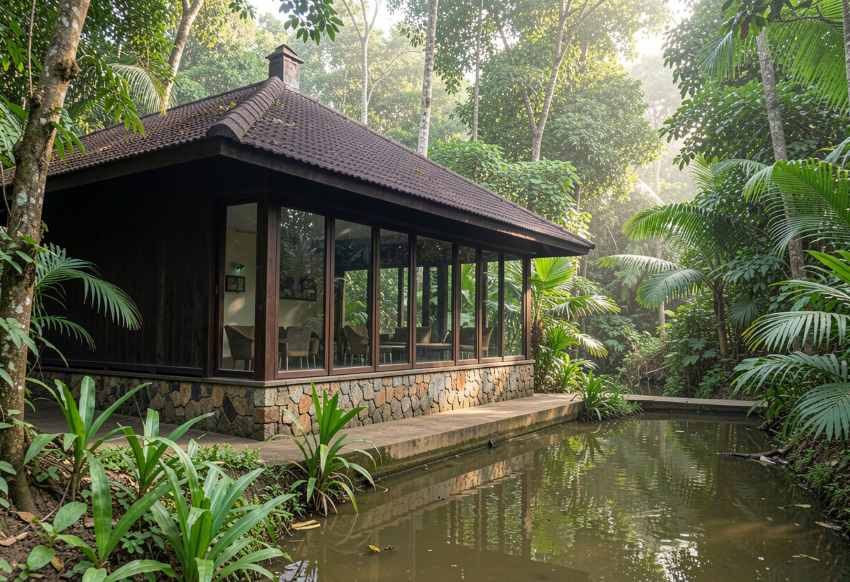
A 20,000-hectare forest tucked across the districts of Khammam and Kothagudem in Telangana has quietly become one of India’s most promising new destinations for birdwatchers — and a freshly built observation cabin at its heart is the reason why.
The Puligundala site, located within the Kanakagiri reserve forest block, has long been a haven for wildlife. But a dedicated bird-watching cabin, constructed as part of a broader 2025 eco-tourism initiative, is now opening that natural richness to visitors in a way that’s careful, considered, and genuinely exciting for anyone who loves birds and wild places.
This isn’t just another tourist attraction tacked onto a forest. The facility is designed from the ground up around one principle: let people experience nature without disturbing it.
What Puligundala Actually Is — and Why It Matters
The Kanakagiri reserve forest block is a vast stretch of protected land spanning two districts in Telangana state. At 20,000 hectares, it holds the kind of biodiversity that researchers and conservationists spend careers searching for. Puligundala is one of the key sites within this block — a peaceful, relatively undisturbed setting that has now been formally developed as part of the state’s eco-tourism vision.
The 2025 eco-tourism initiative driving this project reflects a growing recognition across India that sustainable travel and wildlife conservation can work together rather than against each other. By bringing visitors into controlled, thoughtfully designed spaces, the forest gets economic support while the wildlife stays protected.
For birdwatchers specifically, Puligundala represents something rare: a purpose-built space where serious observation is the entire point, not an afterthought.
Inside the Bird-Watching Cabin: How It Works
The cabin at Puligundala isn’t a simple wooden shed. It has been meticulously designed to allow visitors — whether casual nature lovers, dedicated birdwatchers, or field researchers — to observe avian life in its most authentic form.
The key feature is a set of specially installed glass windows. These allow unobstructed views of the surrounding habitat while keeping visitors concealed from the birds outside. The result is that species behave naturally, going about their lives without the stress of human presence, while observers can study habits, feeding patterns, and behaviours up close.
The cabin’s location was chosen deliberately. It sits near a pond along the Puligundala-Bendalapdu route — a spot that naturally draws bird activity, making sightings more reliable and more varied across different times of day and seasons.
Within the cabin, visitors use binoculars or cameras through the glass to capture or study what they see. The structure is quiet, contained, and designed to leave no footprint on the ecosystem around it.
| Feature | Detail |
|---|---|
| Forest Block | Kanakagiri reserve forest block |
| Districts Covered | Khammam and Kothagudem, Telangana |
| Total Forest Area | 20,000 hectares |
| Facility Type | Dedicated bird-watching cabin |
| Key Design Feature | Specially installed glass windows for undisturbed observation |
| Location Advantage | Positioned near a pond along the Puligundala-Bendalapdu route |
| Initiative | 2025 eco-tourism development program |
Who This Is Really For
The obvious audience is birdwatchers — and India has a growing, passionate community of them. But the cabin’s design speaks to a broader range of visitors.
- Researchers and field scientists who need stable, low-disturbance vantage points to document species behaviour
- Wildlife photographers who benefit from the concealment the glass windows provide, allowing natural shots without flash or movement frightening birds away
- Casual nature enthusiasts who want a genuine wildlife encounter without trekking deep into protected territory
- Eco-tourists drawn to sustainable travel experiences that connect them to India’s forest ecosystems
The cabin essentially lowers the barrier to meaningful wildlife observation. You don’t need to be an expert birder or carry specialist gear. The structure does the hard work of bringing you close enough to see something real.
The Bigger Picture: Eco-Tourism and Conservation in Telangana
The Puligundala cabin doesn’t exist in isolation. It’s one piece of a larger 2025 eco-tourism push in Telangana aimed at showcasing the biodiversity within the state’s protected forest areas. Officials behind the initiative have framed it as a way to highlight what already exists in these forests — abundant, diverse wildlife that most people never get to see — while creating a sustainable reason to protect it.
That logic matters. When local communities and state governments see economic value in a living forest, the case for conservation becomes much stronger. Eco-tourism, done carefully, turns wildlife into an asset rather than an obstacle.
The Kanakagiri reserve forest block, with its 20,000 hectares of habitat, is well positioned to support this kind of model. The forest is large enough to absorb visitor activity at a managed scale without the pressure that overwhelms smaller protected areas.
Supporters of the initiative point to the careful design of the cabin itself as evidence that this isn’t just tourism dressed up in green language — the entire structure is built around minimising human impact while maximising the quality of the experience.
What Comes Next for Puligundala
The bird-watching cabin represents the opening phase of what is described as a broader eco-tourism development at the Puligundala site. As part of the 2025 initiative, the expectation is that the site will continue to grow as a destination for nature-based travel in Telangana.
For visitors planning a trip, the site’s position near a natural pond along the Puligundala-Bendalapdu route gives it year-round appeal, with different bird species likely active across different seasons. Specific visitor booking details, seasonal access information, and any associated fees had not been confirmed in available reporting at the time of publication.
What is clear is that Telangana has identified Puligundala as a flagship location for demonstrating that conservation and tourism can share the same space — and the new cabin is the first, most visible proof of that commitment.
Frequently Asked Questions
Where exactly is Puligundala located?
Puligundala is situated within the Kanakagiri reserve forest block, which spans the districts of Khammam and Kothagudem in Telangana, India.
What is the bird-watching cabin designed to do?
The cabin allows visitors to observe bird species through specially installed glass windows without disturbing the birds or the surrounding ecosystem.
How large is the Kanakagiri reserve forest block?
The forest block covers approximately 20,000 hectares across the two districts.
Who can visit the Puligundala bird-watching cabin?
The facility is open to birdwatchers, researchers, wildlife photographers, and general nature enthusiasts — it is designed to be accessible to both experts and casual visitors.
Is Puligundala part of a larger tourism project?
Yes, the cabin is part of Telangana’s 2025 eco-tourism initiative, which aims to promote sustainable travel and highlight the biodiversity found within the state’s protected forests.
What are the entry fees or booking details for the cabin?
This information had not been confirmed in available reporting at the time of publication — prospective visitors should check with local tourism authorities for current access details.




Leave a Reply