
▶ Read transcript
Here’s what you need to know about Pune’s Karve Road infrastructure plans.
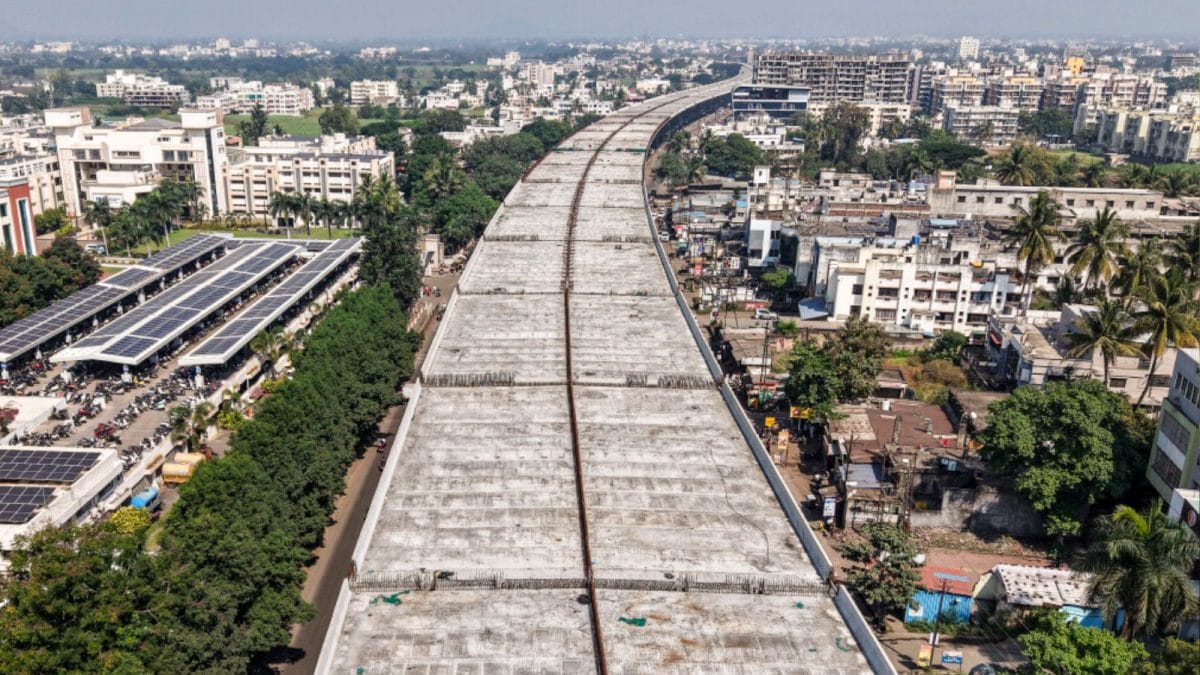
The Pune Municipal Corporation is moving to build two flyovers on Karve Road, one of the city’s most congested routes, before metro construction makes traffic conditions significantly worse. The two targeted locations are Karve Statue Chowk and Ambedkar Chowk, both notorious bottlenecks where multiple major roads converge and daily gridlock is already the norm.
What makes this project notable is the timing. Planners are racing to get infrastructure in place before peak metro construction hits the corridor, recognizing that metro projects typically shrink usable road space and create their own surge of pedestrian and feeder traffic near stations.
Before any construction begins, PMC is conducting detailed traffic, land, and environmental studies. The design at Ambedkar Chowk isn’t even finalized yet, with officials still deciding between a traditional flyover and a grade separator.
If you travel through Pune regularly, keep an eye on survey announcements from PMC, as design decisions over the next few months will directly affect your commute for years to come.
The window for action on Pune’s most congested arterial road is narrowing fast. With metro construction already intensifying across the city, the Pune Municipal Corporation (PMC) has announced plans to build two major flyovers on Karve Road before gridlock becomes permanent. The clock is ticking, and the decisions made in the coming months will shape how Pune moves for the next generation.
Karve Road is not just another busy street. It is a critical lifeline connecting Karvenagar to the Mumbai highway, threading through some of Pune’s most densely populated and commercially active neighborhoods. Every morning and evening, the road transforms into a slow-moving river of vehicles, a problem that metro construction activity is set to intensify significantly.
Why Karve Road’s Two Chowks Became Pune’s Most Urgent Infrastructure Flashpoints
Karve Statue Chowk and Ambedkar Chowk are not random choices. They are the two points on Karve Road where traffic habitually seizes. Multiple arterial roads converge at each intersection, and the volume of vehicles passing through daily far exceeds what the existing surface-level infrastructure can handle.
The PMC’s decision to focus on these specific nodes reflects years of traffic data and resident complaints. According to reports from Indian Express, the flyovers are expected to ease traffic on the road that connects Karvenagar to the Mumbai highway, one of the most heavily used corridors in Maharashtra’s second-largest city.
What makes the timing critical is the overlap with metro expansion. Construction activity for Pune’s metro network already reduces effective road width and disrupts signal timing at several points. Adding two major flyovers before peak metro construction hits Karve Road is, in practical terms, a race against the city’s own development agenda.
| Location | Type of Infrastructure | Primary Purpose | Current Status |
|---|---|---|---|
| Karve Statue Chowk | Flyover | Reduce intersection congestion | Feasibility study planned |
| Ambedkar Chowk | Flyover or Grade Separator | Eliminate bottleneck at major junction | Detailed survey initiated |
PMC’s Study Process: Traffic, Land, and Environmental Surveys Before a Single Beam Is Laid
Unlike infrastructure projects that rush to the construction phase, PMC is conducting a thorough preparatory process. According to News18, detailed traffic, land, and environmental studies are being planned before any construction begins.
At Ambedkar Chowk specifically, the Times of India reported that the PMC will conduct a detailed survey to assess whether a flyover or a grade separator is the better solution. A grade separator, which uses underpasses or staggered road levels instead of an elevated structure, can sometimes cause less disruption during construction. The choice between the two formats at Ambedkar Chowk will depend on what the feasibility data reveals.
This methodical approach matters because Karve Road sits within a dense urban fabric. Utility lines, commercial properties, pedestrian pathways, and existing drainage systems all complicate any elevated construction. Getting the environmental and land surveys right upfront reduces costly redesigns later and, critically, limits the duration of construction disruption for daily commuters.
The three-pronged study process, covering traffic patterns, land acquisition needs, and environmental impact, mirrors how successful flyover projects in cities like Bengaluru and Hyderabad have reduced post-construction litigation and community opposition. Pune appears to be learning from those precedents.
How Metro Expansion on Karve Road Changes the Urban Mobility Equation
Pune’s metro network is not a distant promise. Lines are actively being developed, and Karve Road sits in a zone where metro infrastructure will intersect with existing road networks. The flyovers are not just a congestion fix. They are a strategic preparation for a multimodal future.
When metro stations open near major intersections, they generate their own surge of pedestrian and feeder vehicle traffic. Without elevated road infrastructure already in place, the area around metro stations can become more congested than before the transit system arrived. Pune’s planners appear to be addressing this paradox directly.
The Swarajya Mag report notes that the PMC’s flyover plans are explicitly framed around spur development alongside metro expansion. The language is significant. It signals that PMC views these flyovers not as emergency fixes but as foundational elements of a longer-term transit integration strategy.
This connects to a broader pattern visible in Indian urban planning over the last decade. Cities that built elevated road infrastructure in coordination with metro lines, rather than reactively after congestion peaked, tend to achieve better commute time reductions. Chennai and Navi Mumbai offer instructive comparisons, where coordinated investments produced measurable travel time savings across the urban network.
“PMC plans two new flyovers at Karve Putla Chowk and Ambedkar Chowk. The move comes ahead of metro construction, signaling coordinated urban infrastructure planning for Pune’s busiest corridor.”
— Pune Mirror
What the Karve Road Project Means for Travelers Visiting or Moving Through Pune
For visitors to Pune, Karve Road is often unavoidable. The corridor connects the city’s western residential zones to key transit hubs and commercial centers. Anyone traveling between Pune’s older city core and its newer western districts passes through or near this road.
During the construction phase of the flyovers, travel times on Karve Road are likely to increase before they improve. This is the standard infrastructure construction trade-off, and Pune’s commuters know it well from previous projects. However, the PMC’s commitment to detailed pre-construction studies suggests an attempt to minimize the duration of that disruption.
For long-term travelers, digital nomads, and expats considering Pune as a base, the flyover project is a signal worth noting. Pune has consistently ranked among India’s most livable cities, and infrastructure investments like this reinforce its trajectory. The combination of metro expansion and elevated road infrastructure suggests that western Pune’s connectivity is improving, not deteriorating.
The Timeline Ahead: Surveys, Approvals, and When Construction Could Begin
The PMC has not yet published a confirmed construction start date as of April 2026. The feasibility and environmental studies must be completed first, and those results will determine the final project scope. Given typical Indian municipal infrastructure timelines, the studies phase could take several months, pushing construction into late 2026 or 2027.
What accelerates the process is political and administrative will. Pune’s municipal leadership has framed this project with urgency, specifically citing the need to get ahead of metro construction disruption. That framing creates pressure to move the study phase quickly rather than let it stretch indefinitely.
The city’s track record on flyover construction provides some context. Pune has completed several elevated road structures in the past decade, including projects in areas like Hadapsar and Kothrud, demonstrating that the municipal machinery can execute at scale when priorities align.
Urban infrastructure rarely waits for the perfect moment. Pune is choosing to build now, under pressure, with studies still underway, because waiting for ideal conditions on a road as critical as Karve would be more costly than acting with urgency. That calculus, more than any technical specification, is what defines whether this city is serious about its urban future.
Frequently Asked Questions

You Might Also Like

5 Reasons the Embraer-Colombia CIAC Deal Changes Latin American Aviation
Embraer and Colombia's CIAC signed an MoU at FIDAE 2026. Here are 5 reasons this…
Jodhpur Airport Is Closing Its Runway and Regional Travel Feels It
One of Rajasthan’s most important air travel gateways is about to go quiet — and…
Why Travelers at Changi, Dubai & Atlanta Are No Longer Dreading Layovers
The layover — long dreaded as the most tedious stretch of any long-haul journey —…
Leave a Reply