
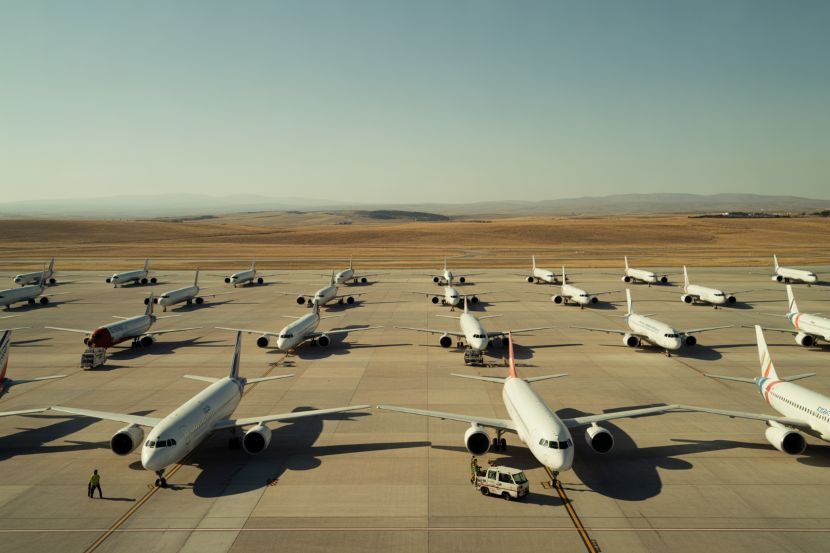
A remote airfield in eastern Spain — better known for its dry climate and quiet skies than for international aviation — has quietly become one of the most strategically important aircraft parking lots on the planet. As Middle East conflicts continue to disrupt flight routes and force airlines to ground portions of their fleets, carriers including Qatar Airways have turned to Teruel Airport as a safe harbor for their aircraft.
It’s an unusual picture: wide-body jets sitting idle in the Spanish interior, far from the busy hubs of Doha, Dubai, or London. But for airlines navigating airspace restrictions and reduced passenger demand driven by regional instability, Teruel offers something increasingly rare — a reliable, low-cost place to store expensive aircraft safely until normal operations can resume.
The situation is a reminder of just how far the ripple effects of geopolitical conflict can reach. When airspace closes or flight demand collapses in one part of the world, the consequences show up thousands of miles away, in places you’d never expect to find a parked Boeing or Airbus.
Why Airlines Are Grounding Aircraft Over Middle East Tensions
The ongoing conflict in the Middle East has created serious operational headaches for international airlines. Airspace restrictions over conflict zones force carriers to reroute flights, adding hours to journey times and significant costs to operations. In some cases, routes become commercially unviable altogether — airlines simply can’t justify flying a half-empty plane on a longer, more expensive path.
For an airline like Qatar Airways, which operates one of the most geographically exposed hub networks in the world, these disruptions aren’t minor inconveniences. They translate directly into decisions about which aircraft to fly and which to temporarily retire from service.
When demand drops and routes get canceled, airlines face an immediate logistical problem: where do you put the planes? Keeping aircraft at major international airports is expensive. Gates, ground handling, and parking fees add up fast. The answer, increasingly, is specialist storage facilities — and Teruel has become one of the most sought-after options in Europe.
What Makes Teruel Airport the Right Place to Park a Jet
Teruel Airport wasn’t always a commercial facility. It was originally a military airbase before being repurposed into what it is today — a dedicated aircraft storage and maintenance hub. That repurposing turned out to be a smart long-term bet, because the airport’s natural conditions are nearly perfect for keeping grounded planes in good condition.
The key factors that make Teruel stand out as an aircraft storage site:
- Dry climate: The region’s low humidity significantly reduces the risk of corrosion and moisture damage to parked aircraft over extended periods.
- Remote location: Distance from busy commercial airports means lower parking costs and less congestion, making it practical for long-term storage.
- Established infrastructure: The airport was specifically repurposed for storage and maintenance, so it already has the facilities and expertise airlines need.
- Operational flexibility: Airlines can store aircraft for short or long periods, depending on how quickly demand recovers or route restrictions are lifted.
These aren’t trivial advantages. Aircraft stored in humid, coastal environments can deteriorate quickly without intensive maintenance. Teruel’s climate does a lot of the preservation work naturally, reducing costs and protecting the asset value of grounded jets.
A Snapshot of the Situation: What We Know
| Factor | Detail |
|---|---|
| Airlines involved | Qatar Airways and several other international carriers |
| Storage location | Teruel Airport, eastern Spain |
| Reason for storage | Middle East conflict causing airspace restrictions and flight cancellations |
| Airport background | Former military airbase repurposed as an aircraft storage and maintenance hub |
| Key environmental advantage | Dry, low-humidity climate ideal for long-term aircraft preservation |
| Nature of the measure | Described as temporary, dependent on resolution of regional disruptions |
Who Feels This — and How
For passengers, the immediate effect is already visible: flight cancellations, route changes, and in some cases higher fares on alternative routes as airlines consolidate capacity. If you’ve been trying to book travel through the Middle East or on carriers with heavy regional exposure, you may have already noticed fewer options or longer connection times.
For the airlines themselves, the financial pressure is real. Every grounded aircraft represents a depreciating asset that still requires maintenance, insurance, and eventual return-to-service costs. Parking planes in Teruel is a cost-management decision, but it’s not a free one. Airlines are essentially paying to wait out a situation they can’t control.
For Teruel Airport and the surrounding region in eastern Spain, the influx of stored aircraft is actually a form of economic activity. Maintenance crews, ground handlers, and support staff are needed to keep parked aircraft airworthy and ready for reactivation — which means jobs and revenue for a facility that sits well outside Spain’s main tourism and commercial corridors.
The broader aviation industry is watching closely. Periods of mass aircraft storage — as seen during the COVID-19 pandemic, when Teruel and similar facilities became household names in aviation circles — tend to reveal how vulnerable airline networks are to sudden external shocks. The Middle East conflict is proving that lesson again.
What Happens When the Skies Reopen
The storage arrangement at Teruel is described as a temporary measure, directly tied to the ongoing situation in the Middle East. As long as airspace restrictions remain in place and flight demand stays suppressed on affected routes, airlines have little reason to bring those aircraft back into service.
When conditions do improve — whether through a ceasefire, a diplomatic resolution, or simply a rerouting of traffic that makes operations viable again — airlines will need to move quickly to reactivate stored aircraft. That process isn’t instant. Planes that have been grounded for weeks or months require thorough inspections, system checks, and regulatory sign-offs before they can carry passengers again.
The speed of that return-to-service process will depend heavily on how long the storage period lasts. Short-term parking is relatively straightforward to reverse. Extended storage, by contrast, requires progressively more intensive work to bring an aircraft back to full operational status.
For now, the jets sit quietly in the Spanish sun — waiting, like everyone else, to see how the situation unfolds.
Frequently Asked Questions
Which airlines are storing aircraft at Teruel Airport?
Qatar Airways and several other international airlines have been identified as using Teruel Airport for aircraft storage amid Middle East disruptions.
Why is Teruel Airport used for aircraft storage instead of a major hub?
Teruel’s dry, low-humidity climate helps preserve aircraft from corrosion, and its remote location makes it a lower-cost option compared to busy international airports.
Is the aircraft storage at Teruel a permanent arrangement?
No — the move has been described as a temporary measure, intended to last only as long as flight disruptions from the Middle East conflict continue.
How does the Middle East conflict affect airlines operating in the region?
Ongoing conflict has led to airspace restrictions and significant flight cancellations, reducing route viability and forcing airlines to ground portions of their fleets.
Has Teruel Airport been used for mass aircraft storage before?
Yes — Teruel was repurposed from a former military airbase specifically to serve as an aircraft storage and maintenance hub, a role it has filled during previous periods of reduced flight demand.
When will the stored aircraft return to service?
This has not yet been confirmed and will depend on how quickly the situation in the Middle East resolves and airspace restrictions are lifted.


Leave a Reply