
▶ Read transcript
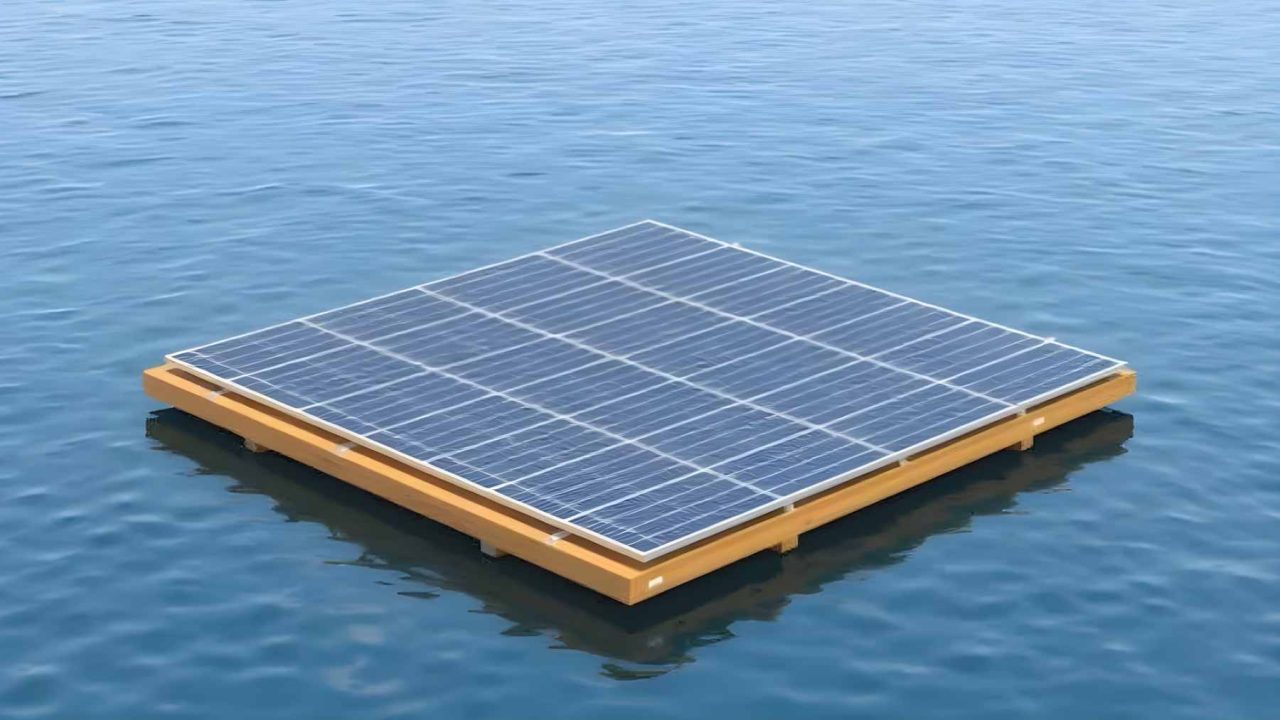
Here’s what you need to know about a new rain-powered electricity device coming out of China. Researchers at Nanjing University of Aeronautics and Astronautics have developed something called the W-DEG, a thin floating panel that harvests electricity from the impact of falling raindrops. In lab tests, a single unit produced a peak voltage of 250 volts and powered 50 commercial LEDs simultaneously. The device is remarkably cheap and lightweight, costing about a dollar forty per square foot and weighing 87 percent less than conventional droplet generators. It floats on water, so it doesn’t compete for land. However, skeptics point out a critical limitation: while the voltage is high, the current is extremely low, meaning actual usable power is in the microwatt range, nowhere near what’s needed for homes or the grid. The takeaway: keep an eye on this for niche applications like powering remote ocean sensors, but don’t expect it to replace your solar panels anytime soon.
Two hundred and fifty volts from a raindrop. That’s the peak output Chinese researchers recorded when testing a thin, floating panel that harvests electricity from the mechanical impact of falling water. The device, called the Water-integrated Droplet Electricity Generator (W-DEG), was developed at Nanjing University of Aeronautics and Astronautics. Its results, published in National Science Review with an online date of August 4, 2025, have split the energy community into two camps.
One side sees a breakthrough that could fill the gaps left by solar and wind. The other sees a laboratory curiosity decades away from mattering. Both sides have evidence. Neither is entirely wrong.
The Divide: Promising Breakthrough or Lab-Scale Stunt?
Renewable energy has an intermittency problem everyone acknowledges but few agree on how to solve. Solar panels go dark at night. Wind turbines stall in calm air. Batteries remain expensive. Into this gap steps a concept so counterintuitive it sounds like science fiction: generating electricity from rain.
The W-DEG doesn’t need sunlight or wind. It sits on water, uses a thin dielectric film with wire electrodes, and converts the kinetic energy of droplet impacts through contact electrification and electrostatic induction. A single unit kept 50 commercial LEDs illuminated under repeated droplet impacts. An integrated prototype of 10 units covered about 3.2 square feet (0.3 square meters).
Supporters call it a missing piece in the renewable puzzle. Critics call it a parlor trick that generates microwatts in a world that runs on megawatts. The debate is loud, technical, and far from settled.
| Feature | W-DEG | Conventional Droplet Generators | Rooftop Solar Panel |
|---|---|---|---|
| Weight (per m²) | ~0.5 kg | ~4.14 kg | ~10–12 kg |
| Cost (per sq ft) | ~$1.40 (9.9 yuan) | ~$2.75 (19.5 yuan) | ~$15–$25 |
| Sunlight required | No | No | Yes |
| Wind required | No | No | No |
| Deployment surface | Water (land-free) | Solid surfaces | Rooftops / ground |
The Case for W-DEG: Cheap, Light, and Land-Free
The strongest argument for W-DEG isn’t raw power output. It’s the niche it fills. The device is designed for “land-free” applications on water surfaces, where the water itself acts as both structural support and electrode. In a world where land use conflicts between agriculture, housing, and energy generation grow fiercer every year, a generator that floats on reservoirs, ponds, or coastal waters sidesteps the problem entirely.
Then there’s the cost advantage. At approximately 9.9 yuan (roughly $1.40) per square foot, W-DEG costs about half what conventional droplet electricity generators do. The weight reduction is even more dramatic: 0.5 kilograms per square meter versus 4.14 kilograms for older designs. That’s an 87% reduction in material weight.
Proponents also point to the complementary nature of rain energy. Solar panels perform worst during rainy weather. A hybrid system pairing photovoltaic cells with rain-harvesting technology could theoretically generate power regardless of conditions. The physics are sound: raindrops carry kinetic energy, and triboelectric nanogenerators have been converting mechanical motion into electricity for over a decade.
For remote sensors, buoys, aquaculture monitoring equipment, and IoT devices in maritime environments, even small amounts of continuous power matter enormously. These devices often run on watch batteries that corrode in saltwater. A self-powered floating sensor network could transform ocean monitoring.
The Skeptics’ Rebuttal: Microwatts Don’t Power Cities
Critics don’t dispute the science. They dispute the scale. Lighting 50 LEDs is impressive for a laboratory demonstration. It is not impressive compared to the 1.21 gigawatts a modern nuclear plant produces, or even the 400 watts a single residential solar panel delivers on a sunny afternoon.
The 250-volt peak figure also needs context. Voltage without substantial current produces very little usable power. Triboelectric generators are notorious for high voltage but extremely low current output. Charging a smartphone, let alone powering a home, would require arrays orders of magnitude larger than the 3.2-square-foot prototype.
“High voltage and low current is the signature of triboelectric devices. The energy per droplet is real but tiny. Scaling this to grid-relevant levels remains an unsolved engineering challenge.”
— Common critique from energy researchers
Durability is another concern. Floating on water exposes the device to waves, biofouling, UV degradation, and debris. The study tested repeated droplet impacts, but real-world conditions on a reservoir or ocean surface are far harsher than a controlled lab drip. Long-term reliability data simply doesn’t exist yet.
There’s also the rain dependency itself. Many regions that need clean energy most, such as arid parts of sub-Saharan Africa or the Middle East, receive minimal rainfall. The technology’s geographic applicability is inherently limited to wet climates.
What the Published Research Actually Shows
The study in National Science Review reports specific, verifiable results. A single W-DEG unit powered 50 commercial LEDs under repeated droplet impacts. The 10-unit integrated prototype covered 0.3 square meters. Peak output reached approximately 250 volts under certain test conditions.
These numbers are real but narrow. The researchers themselves frame W-DEG as a device for small electronics, not grid-scale power. The paper emphasizes the “land-free” deployment advantage and the cost and weight reductions over prior triboelectric designs.
Compared to conventional droplet electricity generators, the improvements are substantial. The 87% weight reduction and roughly 50% cost reduction represent genuine engineering advances within the triboelectric field. But the field itself remains niche. No droplet generator, anywhere in the world, has yet produced power at a scale relevant to residential or commercial electricity consumption.
You manage a network of 200 water-quality sensors across fish farms in a tropical region with 1,800 mm annual rainfall. Each sensor needs microwatt-level power. Your current battery replacement costs $12,000 per year, and corroded batteries occasionally leak into the water.
China’s broader clean energy portfolio provides useful context. The country leads globally in solar panel manufacturing, wind turbine deployment, and rare earth mineral processing. It also operates the Experimental Advanced Superconducting Tokamak (EAST), a fusion reactor that recently sustained plasma for 1,000 seconds. W-DEG exists within an ecosystem of aggressive energy research, not as a standalone silver bullet.
Where Rain Energy Fits in the Renewable Spectrum
The honest answer lies between the extremes. W-DEG is neither a revolution nor a gimmick. It occupies a specific, defensible niche: low-power applications in wet environments where solar and wind are impractical.
Consider aquaculture farms in southern China, where annual rainfall exceeds 1,500 millimeters. Floating sensor arrays monitoring water quality, temperature, and fish health currently rely on batteries or tethered power cables. A self-sustaining W-DEG network could eliminate both. The economics work at $1.40 per square foot. The weight works at 0.5 kg per square meter. The power output works for sensors that draw microwatts.
Scaling beyond this niche would require breakthroughs in current density that the triboelectric field hasn’t achieved in over a decade of research. That doesn’t mean it won’t happen. It means investors and policymakers shouldn’t bank on it happening soon.
The technology also raises an interesting design question for hybrid systems. Solar panels integrated with rain-harvesting layers could theoretically produce power in both sunshine and storms. Several research groups, including teams at Soochow University and the Ocean University of China, have explored this concept. W-DEG’s lightweight, low-cost design makes it a stronger candidate for integration than heavier predecessors.
What This Means for the Future of Distributed Energy
The broader implication extends beyond rain. W-DEG represents a trend toward harvesting ambient energy from every available source. Piezoelectric floors capture footstep energy. Thermoelectric generators convert waste heat. Triboelectric devices harvest motion, vibration, and now rain. None of these will replace coal plants individually. Collectively, they could power the trillions of IoT devices expected to blanket the planet by 2035.
The International Energy Agency projects that connected devices will exceed 75 billion by 2030. Most will need power. Many will operate in locations where wired electricity and even solar panels are impractical: underwater, inside machinery, on remote buoys, beneath forest canopies. Ambient energy harvesting, including rain, fills that gap.
China’s investment in W-DEG also reflects a strategic pattern. By funding research across fusion, solar, wind, and now triboelectric rain harvesting, China builds optionality. If any of these technologies achieves a breakthrough, Chinese institutions hold the foundational patents and manufacturing expertise. The $1.40-per-square-foot cost already reflects China’s dominance in low-cost materials manufacturing.
For the rest of the world, the lesson isn’t that rain will replace the sun. It’s that the energy transition won’t be powered by a single technology. It will be powered by dozens of specialized solutions, each optimized for a specific environment and power requirement. W-DEG has found its environment. The question is whether anyone else will bother competing for it.
Fifty LEDs don’t light a city. But fifty thousand floating sensors, each powered by nothing more than falling rain, could monitor one. Sometimes the smallest sparks matter most, not for the light they produce, but for the darkness they reveal we never needed to accept.




Leave a Reply