
▶ Read transcript
Here’s what you need to know about one of the biggest moments in ocean exploration in decades.
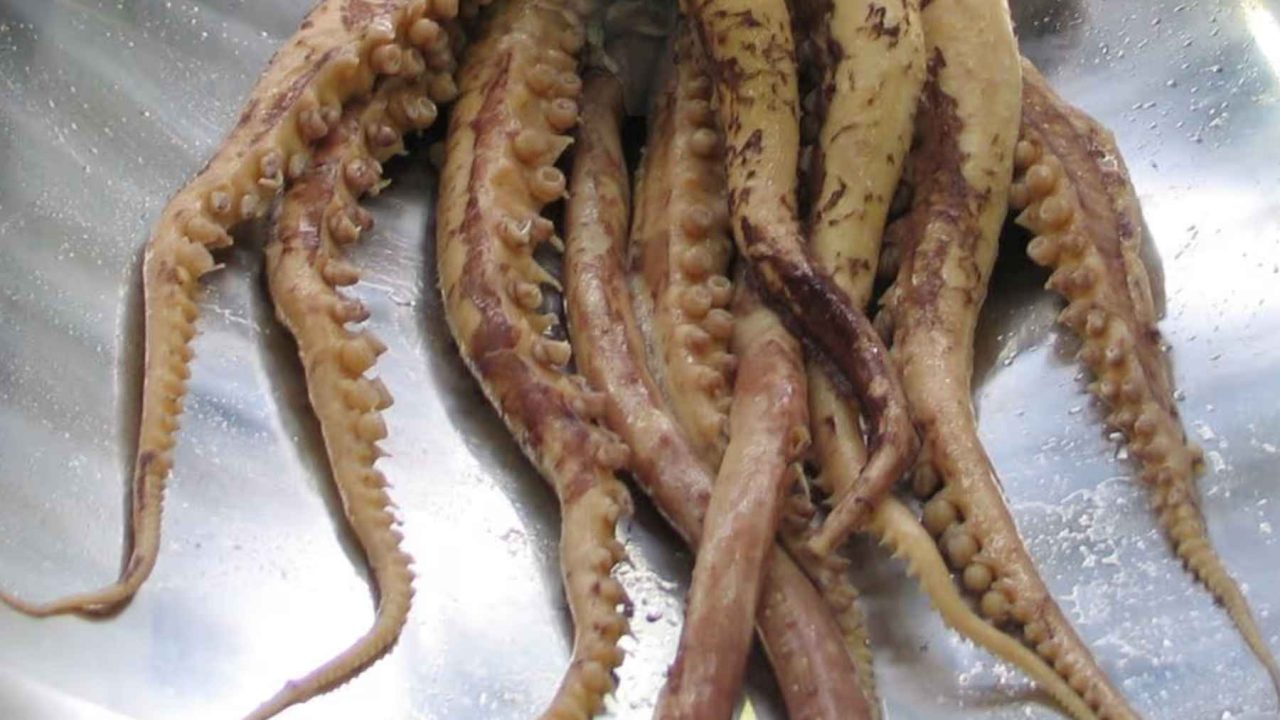
On March 9, 2025, a remotely operated vehicle captured the first ever live footage of a colossal squid in its natural habitat. The animal had been known to science for nearly a hundred years, but only through dead specimens, whale scars, and beaks found inside whale stomachs. Nobody had ever seen one alive, in the wild, on camera.
What the researchers actually filmed was a juvenile, just 12 inches long, translucent and almost delicate looking. The sighting happened at around 600 meters depth during a 35-day Ocean Census expedition near the South Sandwich Islands in the South Atlantic.
The footage matters because dead specimens could only tell scientists about anatomy. Live video reveals behavior, movement, and how the animal actually exists in its environment.
If this story sparks your curiosity, look into the Ocean Census initiative. They’re actively working to document species we’ve never seen before, and this is just the beginning.
More than 80 percent of Earth’s oceans remain unmapped, unobserved, and largely unknown. That statistic stopped being abstract on March 9, 2025, when a remotely operated vehicle descended into the South Atlantic and captured something no camera had ever recorded: a living colossal squid, drifting in the dark, exactly where science said it shouldn’t be.
For roughly a century, the colossal squid existed mostly as a rumor backed by evidence. Dead specimens. Scars on sperm whales. Beaks inside whale stomachs. The animal itself remained invisible, a ghost of the Southern Ocean that scientists could describe but never truly see.
That changed in a single afternoon of footage.
A Century of Speculation Without a Single Live Sighting
The colossal squid, Mesonychoteuthis hamiltoni, was formally described by scientists nearly 100 years before anyone filmed one alive in its natural habitat. Think about that timeline. Paleontologists have reconstructed entire dinosaur species from fragments of bone. Yet one of the largest invertebrates on the planet managed to evade every camera, every submersible, every deep-sea trawl designed to capture living footage.
Adults are estimated to reach about 23 feet (7 meters) in length and can weigh up to 1,100 pounds (500 kilograms). Their tentacle clubs carry roughly 22 to 25 rotating hooks, a biological weapon that makes them formidable predators in the deep. They are associated with the Southern Ocean, typically lurking around 3,300 feet (1,000 meters) below the surface, far beyond the reach of sunlight.
| Feature | Colossal Squid | Giant Squid |
|---|---|---|
| Scientific Name | Mesonychoteuthis hamiltoni | Architeuthis dux |
| Estimated Max Length | ~23 ft (7 m) | ~43 ft (13 m) |
| Estimated Max Weight | ~1,100 lbs (500 kg) | ~600 lbs (275 kg) |
| Tentacle Hooks | 22–25 rotating hooks per club | Suckers with serrated rings |
| Typical Depth | ~3,300 ft (1,000 m) | ~1,000–3,300 ft (300–1,000 m) |
| First Live Footage | March 9, 2025 | 2004 (still photos); 2012 (video) |
Human eyes can detect light down to roughly 1,640 to 1,970 feet (500 to 600 meters) in ideal conditions. Below that threshold, the ocean becomes a world that our biology was never designed to witness. Sending cameras down there is the only way in, and even cameras have struggled to find this particular animal.
The 35-Day Mission That Changed Everything
The footage came from an ambitious 35-day Ocean Census expedition operating near the South Sandwich Islands in the South Atlantic. The Ocean Census is a global initiative to accelerate the discovery of marine species, and this mission was one of its flagship deployments.
The tool that made the sighting possible was the Schmidt Ocean Institute’s remotely operated vehicle SuBastian. ROVs like SuBastian carry high-definition cameras, powerful lights, and precise maneuvering systems that allow researchers aboard a surface vessel to explore the deep in near-real time. The vehicle descended to almost 1,970 feet (600 meters) when it encountered the squid.
What appeared on the monitors was not a massive, tentacle-thrashing monster. It was a juvenile, barely 12 inches (30 centimeters) long, translucent and almost delicate-looking as it hovered in the water column. The contrast between the animal’s small size and its enormous scientific significance was immediate.
The depth of the sighting adds another layer of intrigue. At 600 meters, the squid was filmed at the very edge of the zone where sunlight disappears entirely. That’s shallower than the species’ typical adult habitat of 1,000 meters. Juveniles may spend time at lesser depths before migrating deeper as they grow, but this has never been confirmed with direct observation until now.
Why This Specific Footage Matters to Marine Science
Scientists had previously studied colossal squid almost exclusively through dead or dying specimens hauled up in fishing nets or found in the stomachs of sperm whales. Those encounters provided anatomy. They told researchers about the hooks, the beak, the enormous eyes adapted for near-total darkness. But they revealed almost nothing about how the animal actually behaves.
“The ocean is the last great frontier of exploration on Earth. We know more about the surface of Mars than we do about the deep sea.”
— Commonly cited by marine biologists studying deep-sea biodiversity
Live footage changes that entirely. Researchers can now study the squid’s swimming posture, its reaction to light and the ROV’s presence, and its behavior at a depth that doesn’t match the species’ expected adult range. Each second of video is a data point that no dead specimen could ever provide.
You are a marine scientist aboard a research vessel. ROV SuBastian’s cameras have just spotted what appears to be a juvenile colossal squid at 600 meters. You have limited battery time on the ROV and three choices for how to proceed.
The sighting also fits into a broader pattern of deep-sea discovery accelerating in recent years. In 2024, researchers in Japan filmed a snailfish living at a record-breaking 8,336 meters in the Mariana Trench, pushing the known boundary of vertebrate life deeper than ever recorded. The ocean is yielding its secrets, but only to those with the technology and persistence to go looking.
What the Footage Reveals About Juvenile Colossal Squid Behavior
The video shows the juvenile moving through the water with a quiet, almost ghostly composure. There is no frantic escape response, no ink cloud, no sudden burst of jet propulsion. The animal appears to tolerate the ROV’s presence at close range, which may reflect the fact that juveniles at this depth have few natural predators capable of threatening them quickly.
The squid’s transparency at this juvenile stage is also scientifically significant. Many deep-sea cephalopods use transparency as camouflage in the mesopelagic zone, where faint light still filters down from above. A transparent body casts almost no shadow, making the animal nearly invisible to predators looking upward. As the squid grows and descends into total darkness, pigmentation and bioluminescence become more relevant survival tools.
The location matters too. The South Sandwich Islands sit in the Southern Ocean, a region of intense biological productivity driven by cold, nutrient-rich upwelling currents. It is prime habitat for the prey species that colossal squid are thought to pursue, including Patagonian toothfish. Finding a juvenile here, at the edge of the light zone, suggests the species’ early life stages may be more tied to productive surface waters than previously assumed.
The Broader Race to Document the Deep Before It Changes
The 2025 sighting arrives at a moment when deep-sea exploration is both accelerating and increasingly urgent. Climate change is altering ocean temperatures and chemistry at every depth. Deep-sea mining proposals threaten ecosystems that have never been fully catalogued. Scientists are racing to document species before human activity reshapes the environments those species depend on.
The Schmidt Ocean Institute and the Ocean Census represent a new model of deep-sea science: long-duration, technology-intensive expeditions designed to find what previous generations of researchers simply couldn’t reach. The colossal squid footage is a direct product of that approach.
Every mission like this one produces not just headline discoveries but hundreds of smaller observations, species records, and environmental data points that feed into the larger picture of ocean health. The 35-day expedition that filmed the colossal squid almost certainly captured dozens of other significant findings that will take years to fully analyze.
The colossal squid spent a century as a legend precisely because the ocean is so vast and so deep that even a 1,100-pound animal can hide indefinitely. The fact that a 12-inch juvenile finally appeared on a monitor in 2025 is not the end of that story. It is the first real sentence of a chapter that science is only beginning to write.
Somewhere below 1,000 meters, in water so cold and dark it defies easy imagination, an adult colossal squid is moving through the black. No camera has found it yet.

Leave a Reply