
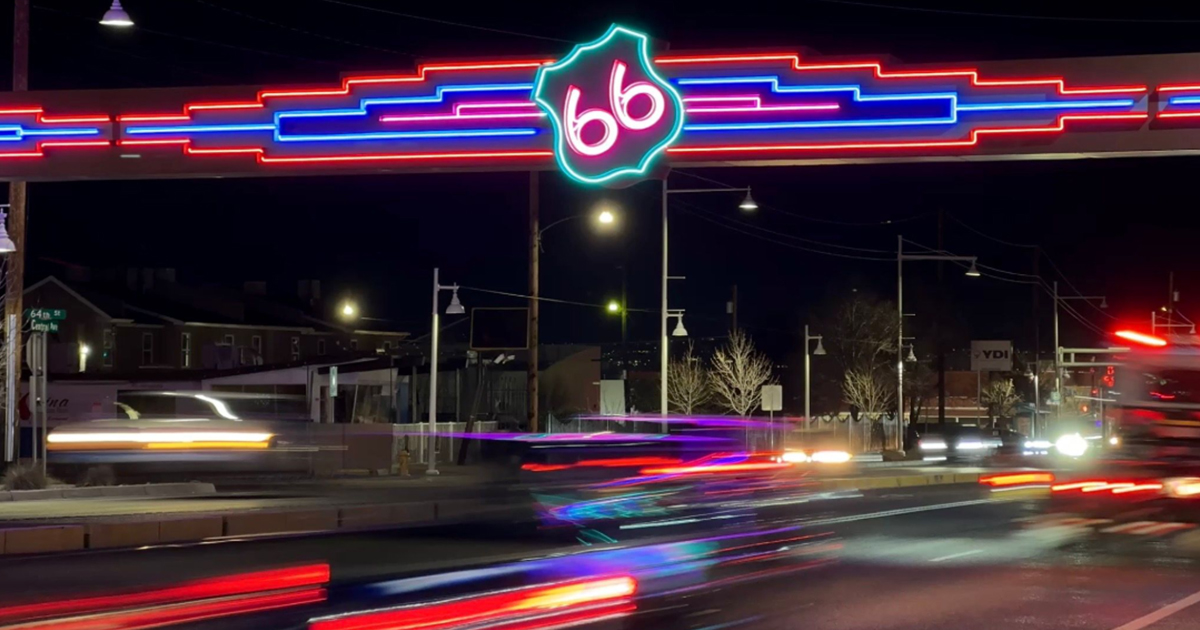
Roughly 40 million people travel some portion of Route 66 every single year. That number has held remarkably steady for decades. But 2026 is not a regular year on the Mother Road.
This year, America’s most mythologized highway turns 100. The centennial of Route 66 is drawing travelers, historians, preservationists, and road-trip romantics from every corner of the country and beyond. Events are being organized across eight states. Restoration projects are being funded. And for the first time in years, the full 2,400-mile stretch from Chicago to Santa Monica is getting the national spotlight it has always deserved.
The question worth asking isn’t whether Route 66 still matters. It’s why it matters more now than ever.
Why the Centennial Hits Different in 2026
There’s a particular kind of cultural nostalgia running through America right now. People are craving tangible experiences over digital ones. Long-distance road trips surged in popularity during the pandemic years, and that appetite never fully disappeared.
Route 66 sits perfectly at the intersection of that craving and genuine history. It was commissioned on November 11, 1926, as one of the original U.S. Highway System routes. It connected rural communities to economic opportunity, carried Dust Bowl migrants westward in the 1930s, and became a postwar symbol of freedom and mobility. John Steinbeck called it “the mother road” in The Grapes of Wrath, and the name stuck forever.
Now, 100 years after its official birth, the road is being celebrated with a scale of organized recognition it has rarely seen before.
The Official Events Rewriting the Route’s Story
The centennial isn’t a single event. It’s a year-long series of gatherings, exhibits, and commemorations spread across the entire length of the highway.
One standout is the Centennial Speaker Series, hosted by the Lebanon Laclede County Library and Route 66 Museum in Missouri. The series brings together historians, authors, and Route 66 veterans to share stories that rarely make it into mainstream travel coverage. It’s the kind of programming that turns a road trip into something closer to a graduate seminar in American history.
| State | Notable Stop | Centennial Activity |
|---|---|---|
| Illinois | Chicago (Start) | Centennial launch celebrations, Grant Park gatherings |
| Missouri | Lebanon | Centennial Speaker Series at Laclede County Library |
| Oklahoma | Tulsa | Historic neon sign restoration projects |
| Texas | Amarillo | Cadillac Ranch centennial photo events |
| New Mexico | Albuquerque | Heritage preservation grants and community festivals |
| Arizona | Lake Havasu / Seligman | Centennial drives and roadside attraction tours |
| California | Santa Monica (End) | Pier centennial ceremony and finish-line celebrations |
Arizona is leaning heavily into the moment. The stretch through Lake Havasu City and along the historic corridor near Seligman is drawing visitors who want the full sensory experience: vintage diners, hand-painted roadside signs, and the particular quality of desert light that photographers chase for hours.
Social media has amplified all of it. Travelers are posting real-time updates from the road, turning the centennial into a living, crowd-sourced documentary of one of America’s greatest highways.
Historic Preservation: Racing Against Time
The centennial has also sharpened the urgency of a problem that Route 66 advocates have wrestled with for decades: the road is disappearing.
Large sections were bypassed or decommissioned after the Interstate Highway System rendered them commercially obsolete. The federal government officially removed Route 66 from the U.S. Highway System in 1985. Since then, stretches of original pavement have crumbled, historic motels have collapsed, and irreplaceable roadside architecture has been lost to neglect and indifference.
“Route 66 isn’t just a road. It’s a living archive of 20th-century American life. Every diner that closes, every neon sign that goes dark, is a page torn from that archive.”
— Route 66 preservation advocate perspective, widely echoed across centennial events
The centennial has injected new momentum into restoration efforts. Preservation organizations are using the anniversary to raise funding and public awareness simultaneously. Several state-level projects are targeting neon sign restoration, vintage motel refurbishment, and the documentation of oral histories from people who lived and worked along the route for decades.
The National Park Service has maintained ongoing interest in Route 66 through its Route 66 Corridor Preservation Program. The centennial has renewed calls for expanded federal support, with advocates arguing that the road represents a unique form of cultural infrastructure that can’t be rebuilt once lost.
The Road Trip Resurgence and What It Means for Communities
The centennial isn’t purely symbolic. It carries real economic weight for the small towns strung along the highway like beads on a wire.
Places like Tucumcari, New Mexico; Elk City, Oklahoma; and Galena, Kansas exist in a complicated relationship with Route 66. The highway made them. The Interstate System nearly broke them. And now, the centennial is sending a new wave of travelers through their main streets, filling motel rooms and diner booths that have sat quiet for years.
Tourism boards across all eight states are coordinating centennial programming with unusual cohesion. The effort reflects a recognition that the highway’s power is greatest when experienced as a complete journey, not a series of isolated stops.
| State | Miles of Route 66 | Major Highlight | Entry Point | Best Known For | Centennial Events |
|---|---|---|---|---|---|
| Illinois | 301 miles | Chicago starting point | Grant Park, Chicago | Urban origins & neon diners | Chicago Centennial Kickoff Festival |
| Missouri | 317 miles | Historic downtown Springfield | St. Louis Gateway Arch | Meramec Caverns & roadside kitsch | Missouri Route 66 Heritage Weekend |
| Oklahoma | 432 miles | Longest remaining stretch | Quapaw | Blue Whale of Catoosa | Oklahoma Road Trip Rally 2026 |
| Texas | 178 miles | Cadillac Ranch | Shamrock | Texas Panhandle wide-open plains | Amarillo Centennial Car Show |
| New Mexico | 487 miles | Santa Fe detour & Pueblo culture | Glenrio | Adobe architecture & turquoise skies | New Mexico Route 66 Cultural Expo |
| Arizona | 401 miles | Historic Wigwam Motel | Lupton | Painted Desert & Grand Canyon proximity | Arizona Mother Road 100 Celebration |
| California | 315 miles | Santa Monica Pier finish | Needles | Pacific Ocean endpoint & Hollywood mystique | Santa Monica Centennial Finale Parade |
One innovative angle gaining traction this year: family road trips designed around grandparent-grandchild pairings. The U.S. has actively promoted multi-generational Route 66 journeys as a way to transmit living memory of the highway’s mid-century heyday. Grandparents who actually traveled Route 66 in the 1950s and 1960s are passing those stories to grandchildren who may never have left their home state.
It’s an unusually personal form of heritage tourism. And it’s working.
What Comes After the Centennial
The centennial’s most lasting impact may not be the events themselves. It may be the infrastructure of attention they leave behind.
Preservation organizations that struggled for funding before 2026 are gaining new members and donors. State tourism boards are developing Route 66 programming that extends beyond the centennial year. And a generation of travelers who drove the route for the first time in 2026 are already planning return trips to sections they missed.
The push for federal designation as a National Historic Trail has gathered renewed support in 2026. If successful, it would provide ongoing federal funding and protection for the corridor, transforming the centennial’s momentum into something structural and lasting.
There’s also a growing international dimension. Route 66 has always attracted European and Japanese travelers with a particular romance for American road culture. The centennial has amplified that appeal, with tour operators from Germany, the UK, and Japan running dedicated centennial packages for travelers who want to drive the full length of the Mother Road in its 100th year.
Why the Mother Road Still Has Something to Say
There is no shortage of highways in America. The country has more than 4 million miles of roads. But Route 66 occupies a singular place in the national imagination for reasons that have nothing to do with efficiency or engineering.
It was the road people drove when they were escaping something, searching for something, or simply moving toward a horizon they couldn’t quite name. It was democratic in a way that felt radical for its time, connecting tenant farmers and jazz musicians, veterans and vacationing families, all on the same stretch of asphalt.
That story doesn’t get old. If anything, a century of American history layered onto 2,400 miles of road makes it richer, stranger, and more worth driving than ever.
The centennial won’t save Route 66 by itself. But it might remind enough people that some roads are worth saving.
Frequently Asked Questions

You Might Also Like
Sri Lanka’s Ancient Ruins to Wild Coastlines Changed How I Travel
From UNESCO ruins at Polonnaruwa to Udawalawe's elephants and Mirissa's coast, one traveler's raw Sri…
Major Airlines Unite to Pull South Korean and U.S. Travelers Into China
A coordinated push by some of Asia’s biggest airlines is quietly reshaping how international travelers…

Seven Major Airlines Are All Pointing Passengers Toward One Vietnam Airport
Cam Ranh International Airport has landed in the top 10 cleanest airports in the world…
Leave a Reply