
▶ Read transcript
Here’s what you need to know about Russia’s fake tree strategy on the Ukrainian front line.
Since early March 2026, Russian forces have been deploying hollow decoy trees along the front — built from plastic mesh frames, spray foam, and paint. They look convincing from altitude, but they’re not hiding soldiers. They’re hiding antennas. Specifically, communication antennas that feed jamming equipment and drone control stations — the electronic infrastructure Ukraine has been actively hunting.
Ukrainian drone operators have increasingly prioritized these electronic warfare assets over tanks or troops, because destroying a jammer means Ukrainian FPV drones fly straighter and hit harder. The entire loop from detection to strike can close in minutes.
Here’s the catch though — the decoys keep getting found. Foam doesn’t move like real trees in the wind, and more importantly, antennas still emit radio frequency signals. No amount of paint stops RF triangulation.
The takeaway: if you’re following this conflict, pay attention to the electronic warfare layer — it’s quietly shaping every engagement on the ground.
Something strange started appearing along Russian-held treelines in early March 2026. Ukrainian drone operators scanning the front noticed objects that looked like trees, but weren’t quite right. The proportions were off. The bark texture didn’t move with the wind. And buried inside each one was a secret that had nothing to do with hiding infantry.
This wasn’t classic camouflage. Russia wasn’t trying to hide soldiers or tanks. It was trying to blind Ukraine’s most effective battlefield tool: the drone.
The discovery sent a ripple through Ukrainian military analysis circles. What looked like a low-budget theater prop turned out to be a window into one of the most urgent electronic warfare battles of the entire conflict.
How Russia Builds a Fake Tree in a War Zone
The construction process is almost disarmingly simple. Russian forces start with a plastic mesh frame, bent and shaped into the rough silhouette of a trunk and canopy. They coat that frame with construction foam, the same spray foam used to seal gaps around windows in apartment buildings. Then they paint it to match the surrounding terrain.
The result is a hollow, lightweight structure that can be assembled quickly and moved without heavy equipment. From a distance, or from a drone camera feed at altitude, it reads as a tree. Up close, it’s obvious. But drones rarely get up close before someone decides whether to strike.
Inside the hollow trunk or nested within the foam canopy sits the real payload: a communication antenna. These antennas can feed signals to jamming equipment that disrupts Ukrainian drone navigation, or they can serve as control nodes for Russian drone operations. Either way, they are high-value targets. And hiding them in plain sight, disguised as part of the landscape, is the whole point.
Why Antennas, Not Soldiers, Are the Real Target of Ukrainian Drones
To understand why Russia is going to these lengths, you need to understand what Ukrainian drone operators are actually hunting. It isn’t always tanks or troop concentrations. Increasingly, it’s the electronic infrastructure that makes Russian operations function.
Serhii Beskrestnov, a prominent Ukrainian signals analyst who tracks electronic warfare along the front, has stated that hunting electronic warfare systems, signals intelligence assets, and drone control points has become one of the most urgent tasks on the front line. Destroy the antenna, and you degrade the jamming. Degrade the jamming, and Ukrainian FPV drones fly straighter and hit harder.
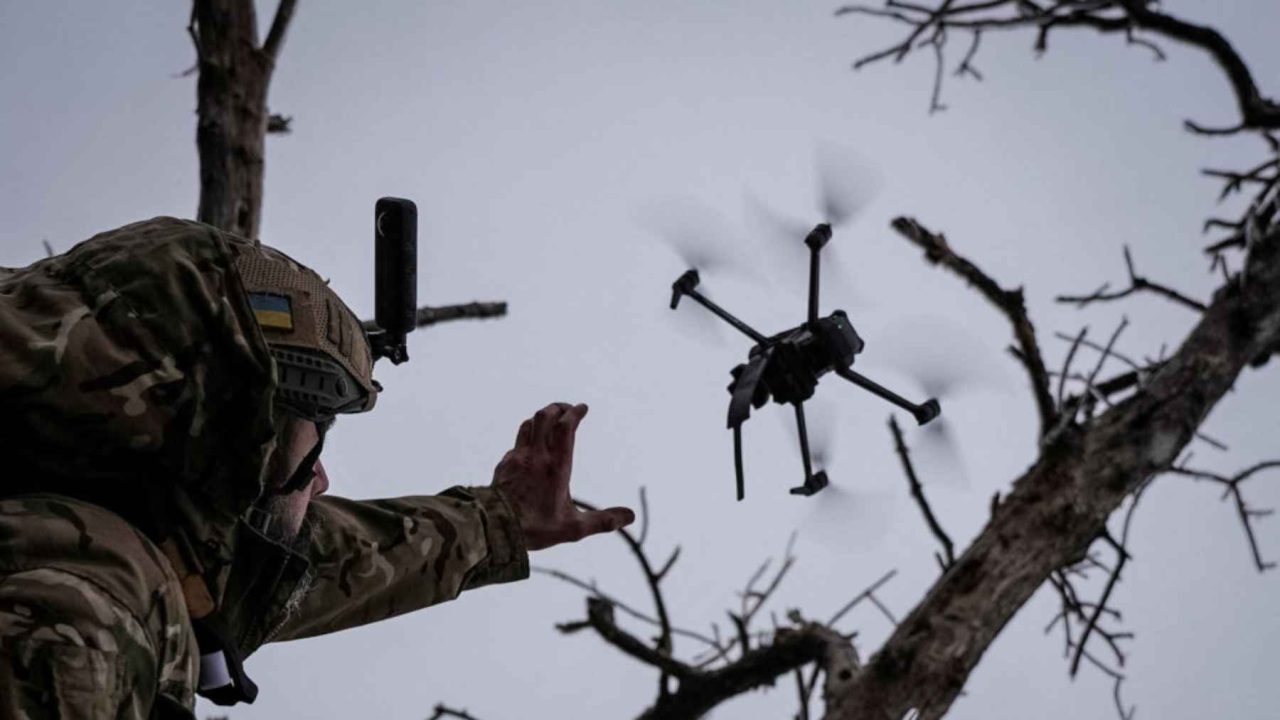
FPV drones, the first-person-view quadcopters that have become the signature weapon of this war, give operators a live video feed from the aircraft’s nose. Once a pilot spots something suspicious, they can steer directly toward it, pass coordinates to a strike team, or ram the target outright. The entire loop from detection to action can close in minutes.
Small camera-equipped quadcopters routinely scan treelines, rooftops, and field roads. They are cheap, fast, and relentless. Against this kind of persistent aerial surveillance, a camouflage net or a pile of branches offers limited protection. Something that looks like it belongs in the landscape is a more sophisticated answer.
| Concealment Method | Primary Purpose | Drone Vulnerability |
|---|---|---|
| Camouflage netting | Hide vehicles or personnel | Thermal imaging bypasses it |
| Underground bunkers | Protect troops and equipment | Antennas must still protrude above ground |
| Fake tree decoys | Hide antennas in plain sight | Shape inconsistencies visible on close inspection |
| Urban infrastructure | Blend signals into civilian backdrop | Difficult to strike legally in populated areas |
The Flaw in the Foam: Why the Decoys Keep Getting Spotted
Here is the uncomfortable truth for Russian planners: Ukrainian sources report that drones keep detecting the hidden antennas despite the camouflage. The fake trees are being found. Shape alone, it turns out, is not enough.
There are several reasons for this. First, the physical construction has tells. Foam and plastic mesh do not move the way organic material does. Real trees sway, flex, and catch light differently across the day. A static foam structure looks right in a still photograph but wrong in a video feed, especially when wind moves everything around it.
Second, and more critically, antennas emit radio frequency signals. A drone operator hunting for electronic emissions doesn’t need to see the antenna. Signal detection equipment can locate the source even when the visual disguise is working perfectly. The foam and paint protect against optical detection. They do nothing against RF triangulation.
You are a Ukrainian drone operator scanning a treeline. Your camera feed shows what appears to be a cluster of trees, but one of them looks slightly off — the bark texture is too uniform and it doesn’t sway in the wind. Your RF detection equipment is showing a faint signal from that direction. You have limited battery time remaining.
Third, experienced drone operators learn patterns. If fake trees start appearing in areas where real trees don’t grow, or where the tree density suddenly increases overnight, that inconsistency becomes a flag. The landscape itself becomes a clue.
The Broader Electronic Warfare Stakes Behind a Foam Tree
It would be easy to dismiss these decoys as a curiosity, a strange footnote in a brutal war. They are not. They are a symptom of how thoroughly electronic warfare has reshaped the battlefield in Ukraine.
Jamming equipment that disrupts FPV drone navigation has been one of Russia’s most effective countermeasures against Ukrainian drone swarms. When jamming works, drones veer off course, lose their video feed, or crash before reaching their targets. When it fails, Ukrainian strikes become far more precise and frequent.
“The hunt for electronic warfare systems, signals intelligence assets, and drone control points is one of the most urgent tasks along the front line.”
— Serhii Beskrestnov, Ukrainian signals analyst
The antenna inside a fake tree might be feeding a jammer that is, at that moment, causing Ukrainian drones to miss their targets kilometers away. Destroying that antenna doesn’t just eliminate one piece of hardware. It can open a corridor of airspace that was previously contested.
This is why Ukrainian drone operators are tasked specifically with finding and destroying these nodes. And this is why Russia is investing effort, even low-tech effort, in hiding them.
What This Tactic Reveals About the Future of Drone Warfare
The fake tree decoy is, at its core, a sign of desperation meeting ingenuity. Russia cannot easily harden its electronic warfare infrastructure against drone strikes. Armored shelters are expensive and heavy. Frequent repositioning reduces effectiveness. So the answer becomes: make the antenna invisible by making it unremarkable.
This logic will not stay confined to Ukraine. Every military watching this conflict is taking notes. The lesson is that drone surveillance has become so pervasive and so rapid that traditional concealment, netting, paint, shadows, is no longer sufficient for high-value electronic assets. The next layer of concealment has to be environmental mimicry: objects that don’t just hide, but belong.
The counter-response will evolve too. Ukrainian forces are already combining optical drone surveillance with RF detection. The combination is powerful: one system sees the landscape, the other hears what’s broadcasting inside it. A fake tree that looks convincing on camera but emits a strong signal stands out immediately when both feeds are overlaid.
The foam-and-mesh decoys are cheap. The technology being developed to defeat them is not. And that asymmetry, low-cost concealment forcing expensive counter-detection investment, is itself a form of warfare. Russia doesn’t need the fake trees to work perfectly. It just needs them to cost Ukraine time, attention, and resources to defeat.
In a war measured in meters and minutes, that may be enough. The question is whether Ukraine’s drone operators can keep finding needles in a forest that Russia is quietly, steadily filling with fakes.




Leave a Reply