
A travel executive from Singapore once described attending a major Asia-Pacific industry summit as ‘the one week a year where I actually believe the world can cooperate.’ She was sitting in a conference hall in Bangkok, surrounded by competitors, government ministers, and startup founders, all talking about the same problems. That feeling, she said, depended entirely on everyone being willing to speak freely.
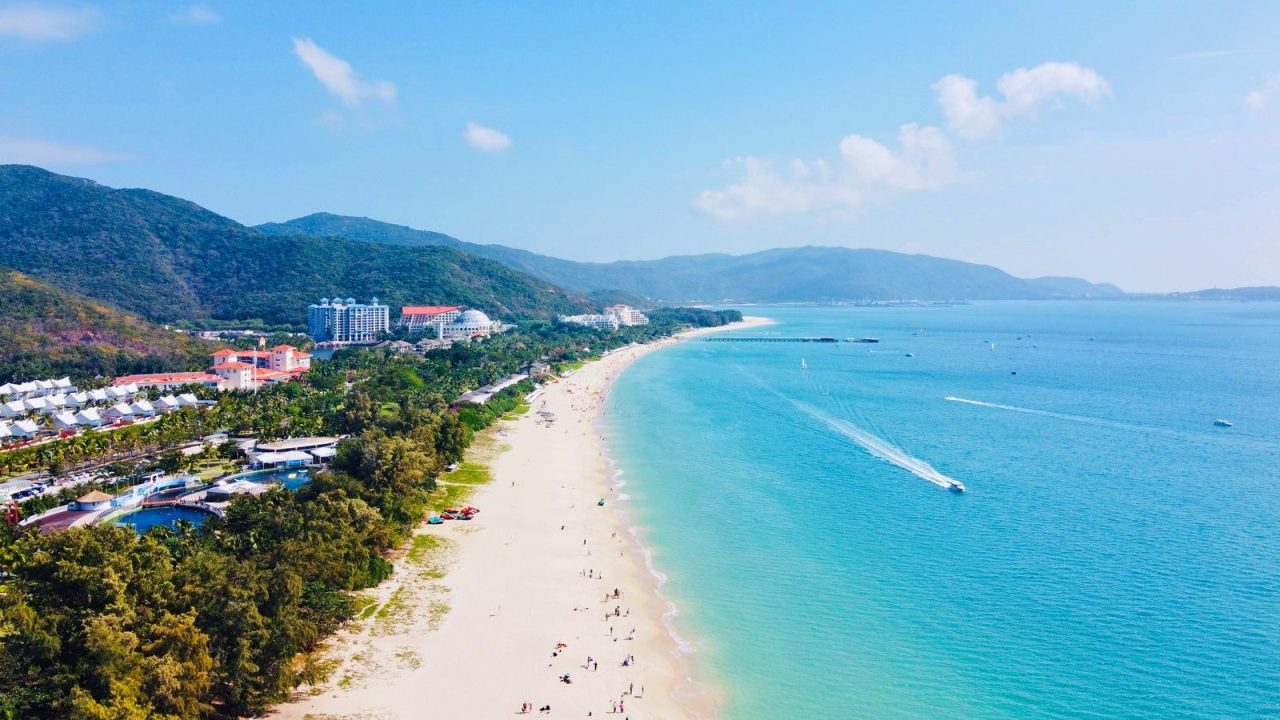
Now, the Pacific Asia Travel Association (PATA) has announced its 2027 Annual Summit will take place in Sanya, China, from May 17 to 19, 2027. The host is the Sanya Tourism Board, and the three-day programme will centre around a one-and-a-half-day conference addressing key challenges and opportunities across the Asia-Pacific travel industry. The question that follows is not small: Is Sanya the right room for those conversations?
The Setup: A Decision That Divides the Industry
PATA, founded in 1951, is one of the oldest and most respected not-for-profit travel associations in the world. It has spent over seven decades acting as a catalyst for the responsible development of tourism across the Asia-Pacific region. Its annual summits carry real weight. Decisions made in those conference halls shape airline routes, tourism policy, and investment flows across dozens of countries.
Choosing Sanya, a coastal resort city on Hainan Island often called ‘China’s Hawaii,’ is a statement. China is the world’s largest outbound tourism market and one of its most contested inbound destinations. Placing the summit there signals that PATA sees China not as a complication but as a centrepiece of the region’s travel future.
But not everyone reads it that way. Some industry observers are asking whether a summit meant to tackle the hard questions of global travel can do so freely when the host country controls so much of the conversation.
Side A: Sanya Is Exactly Where This Conversation Belongs
The strongest argument for hosting in Sanya begins with scale. China’s tourism sector represents a force that no serious industry summit can afford to ignore. Before the COVID-19 pandemic, Chinese travellers made nearly 155 million overseas trips in a single year. The country’s domestic tourism market moved hundreds of millions of people annually. Any conversation about the future of Asia-Pacific travel that excludes Chinese stakeholders at the table is simply incomplete.
Sanya itself is not a random pick. Hainan Island has been positioned by Beijing as a free-trade port, a designation that includes significant concessions on visa access for international visitors. The Chinese government has invested heavily in making Sanya a viable international meetings and conventions destination. Hosting the summit there gives PATA direct access to Chinese government tourism officials, resort developers, and airline executives who rarely travel to summits held elsewhere in the region.
| Factor | Pro-Sanya View | Concern |
|---|---|---|
| Market Access | Direct engagement with China’s tourism officials | Host-country dynamics may limit candid critique |
| Venue Infrastructure | Sanya has world-class resort facilities | Remote location may reduce attendance diversity |
| Geopolitical Signal | Demonstrates Asia-Pacific unity | May alienate delegates from Western markets |
| PATA’s Regional Mission | China is central to PATA’s core membership base | Non-regional voices may feel marginalised |
There is also a pragmatic argument about timing. The Asia-Pacific travel industry is rebuilding post-pandemic connectivity at a pace that requires active Chinese participation. Topics like sustainable aviation corridors, regional visa harmonisation, and overtourism management all require Chinese buy-in. Meeting in Sanya puts those conversations in the right timezone, in front of the right people.
Supporters also note that PATA has hosted summits across the region for decades, including destinations where political systems differ from Western democratic norms. The organisation’s mandate is regional cooperation, not political alignment. Sanya, in that reading, is simply the next logical host.
Side B: The Location Shapes What Gets Said
The counterargument is subtler but persistent among those who have attended international travel summits over many years. The concern is not that Sanya is an unpleasant place to meet. It is that the presence of a host government with significant authority over media, information, and public speech creates invisible pressure on the conversations that happen inside the room.
Travel industry summits are meant to address challenges openly. Overtourism, environmental degradation, labour exploitation in hospitality, the carbon footprint of aviation, and the ethics of promoting destinations with poor human rights records are all legitimate agenda items. In past summits held in more politically neutral settings, these topics have been raised directly by NGOs, journalists, and dissenting industry voices.
“The best industry summits are the ones where someone says the uncomfortable thing out loud, and nobody is fired for it.”
— A veteran Asia-Pacific tourism policy consultant, speaking generally about summit culture
Critics also point to attendance patterns. Delegates from Taiwan, for example, face complex political dynamics when travelling to mainland Chinese venues for international events. Representatives from countries with current diplomatic friction with Beijing may face visa complications or simply choose not to attend. A summit that loses those voices loses part of its credibility as a global forum.
Then there is the question of optics. At a time when global travel is navigating significant geopolitical headwinds, placing the industry’s most prominent Asia-Pacific summit inside China sends a message. Some in the industry believe that message is premature, given ongoing tensions over aviation rights, data privacy in tourism platforms, and competitive pressure from state-subsidised Chinese carriers.
The Data: What the Numbers Actually Say
Objective data helps cut through some of this. China’s share of Asia-Pacific inbound and outbound travel is not debatable. It is dominant. Chinese tourists represent the single largest national group in regional tourism spending, and Hainan’s free-trade port status has attracted genuine international investment in hospitality and meetings infrastructure.
PATA’s own membership base is heavily weighted toward Asia-Pacific governments, national tourism organisations, and private sector operators for whom China is either a primary market or a primary competitor. Hosting in Sanya serves the numerical majority of PATA’s stakeholders directly. That is not a political statement. It is a membership reality.
At the same time, data on past summit outcomes suggests that the most actionable policy changes tend to emerge from events where the broadest range of stakeholders participates. Narrowing the room, even unintentionally, has measurable effects on the quality of outcomes. PATA’s programme designers will need to account for that tension deliberately.
Verdict: Sanya Is the Right Call, With Conditions
The editorial position here is clear, with caveats. Choosing Sanya for the 2027 PATA Annual Summit is defensible and arguably correct. China’s centrality to Asia-Pacific tourism cannot be wished away by hosting summits in Bangkok or Bali year after year. Engaging Chinese tourism stakeholders on their own ground, in a city explicitly designed for international exchange, creates opportunities that remote diplomacy cannot replicate.
But the caveats are not decoration. PATA must build the 2027 programme with deliberate structural protections for open debate. That means actively recruiting delegates from countries with complex relationships with China, ensuring that panels include critical voices alongside promotional ones, and creating off-record sessions where sensitive topics like aviation competition and data sovereignty can be discussed without diplomatic consequence.
The summit’s credibility will be judged not by its location but by whether the uncomfortable conversations happen anyway. PATA has the institutional authority and the 70-year track record to make that happen. The question is whether it will use them.
Implications: What This Debate Tells Us About Travel’s Future
The argument over Sanya is, in miniature, the argument over the entire future of global travel governance. The industry is navigating a world where the largest markets are not always the most open ones, where sustainability requires international cooperation across political divides, and where the old Western-centric summit circuit no longer reflects where tourism’s centre of gravity actually sits.
PATA’s decision to go to Sanya is a bet that engagement beats avoidance. It is a bet that the Asia-Pacific travel industry is mature enough to have hard conversations in a complex political environment without losing its integrity. That is a reasonable bet. But it requires PATA to hold itself to a higher standard of programme design, not a lower one.
The 2027 summit will be watched carefully. Not just for what gets announced, but for what gets asked. In the end, the most important measure of any industry gathering is not the venue or the keynote speakers. It is whether the people in the room leave willing to say things they would not have said before they arrived.
If Sanya produces that kind of conversation, the debate over the location will be remembered as the small question. The bigger ones, about sustainable tourism, regional cooperation, and the ethics of travel in a fractured world, will be the ones that matter.



Leave a Reply