
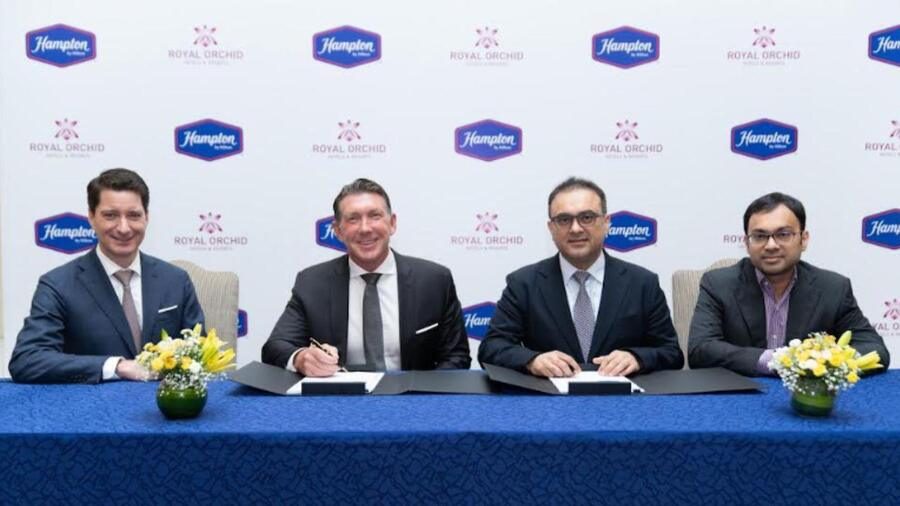
One hundred and twenty-five hotels. That is the scale of what Hilton and Royal Orchid Hotels Limited are planning to build across India — a partnership that signals just how seriously global hospitality brands are betting on the country’s surging middle class and its appetite for reliable, affordable accommodation.
The deal centers on Hampton by Hilton, Hilton’s mid-market brand, and it targets some of India’s fastest-growing states. If everything goes to plan, the last of those 125 properties will open by 2035 — making this one of the most ambitious branded hotel expansion programs the Indian market has seen in recent years.
For travelers, investors, and anyone watching India’s urban growth story, this partnership is worth paying attention to.
Why India, and Why Now
India’s hospitality sector has been on a sustained upward trajectory, driven by rapid urbanization, a growing business travel market, and a domestic tourism boom that shows no signs of slowing. The demand for branded mid-market hotels — properties that offer consistency and quality without the price tag of luxury — has outpaced supply in many cities and emerging towns across the country.
That gap is exactly what this Hilton-Royal Orchid partnership is designed to fill. Hampton by Hilton sits squarely in the mid-market segment, offering the kind of predictable, comfortable experience that business travelers and price-conscious tourists increasingly want. As more Indian cities develop economically and attract both domestic and international visitors, the logic behind planting 125 of these properties across the country becomes clear.
Royal Orchid Hotels Limited brings deep local knowledge and an established footprint in India, making it a natural partner for Hilton’s push into the country’s regional markets. The combination of a globally recognized brand with a locally experienced operator is a formula that has worked in other high-growth markets around the world.
Where the Hampton by Hilton Hotels Will Be Built
The partnership has a deliberate geographic focus. Rather than concentrating solely on India’s major metros, the development plan targets key states where economic activity and infrastructure investment are accelerating. The confirmed regions include:
- Goa — one of India’s most visited tourism destinations
- Maharashtra — home to Mumbai and a dense network of business hubs
- Karnataka — anchored by Bengaluru, India’s tech capital
- Tamil Nadu — a manufacturing and business powerhouse in the south
- Andhra Pradesh — a rapidly developing state with growing infrastructure
- Telangana — home to Hyderabad, one of India’s most dynamic cities
The emphasis on western and southern India reflects where much of the country’s economic momentum is currently concentrated. These states collectively represent a significant share of India’s GDP, and their cities are drawing both domestic migration and foreign investment at a notable pace.
| State | Region | Key Economic Driver |
|---|---|---|
| Goa | Western India | Tourism |
| Maharashtra | Western India | Business and finance |
| Karnataka | Southern India | Technology industry |
| Tamil Nadu | Southern India | Manufacturing and business |
| Andhra Pradesh | Southern India | Infrastructure development |
| Telangana | Southern India | Urban and economic growth |
What This Means for Travelers and the Broader Market
For the average traveler in India, the arrival of 125 Hampton by Hilton properties over the next decade means significantly more options in the mid-market space — a segment that has historically been fragmented, with quality varying wildly between properties.
Hampton by Hilton properties operate under consistent brand standards globally, which means guests can reasonably expect the same level of cleanliness, service, and amenities whether they are checking in for a business trip in Hyderabad or a weekend in Goa. That consistency is something independent hotels often struggle to deliver, and it is a major reason branded mid-market hotels tend to attract loyal repeat customers.
For the broader hospitality market, a commitment of this scale from a major global brand sends a signal that institutional confidence in India’s travel sector is high. It is also likely to spur competitive responses from other international hotel groups looking to establish or expand their own mid-market presence in the country.
Local economies in the targeted states stand to benefit as well. Hotel development of this scale generates construction jobs, creates ongoing employment in hospitality, and supports local supply chains for everything from food and beverage to maintenance and technology services.
What Comes Next for the Partnership
The 2035 completion target gives both companies roughly a decade to execute on a substantial pipeline. Phased development of this kind typically means properties will open in waves, with some markets likely to see their first Hampton by Hilton hotels earlier in the timeline than others.
The states identified — particularly Karnataka and Telangana, given the scale of their urban economies — are strong candidates for early openings, though the specific sequencing has not been confirmed. As individual properties move through planning, permitting, and construction, more details about specific locations and opening timelines are expected to emerge.
The partnership between Hilton and Royal Orchid Hotels represents a long-term commitment to India’s hospitality market rather than a short-term opportunistic play. A decade-long development program of 125 hotels requires sustained investment, operational coordination, and confidence that demand will continue to grow — all signals that both organizations see India’s travel economy as a durable, expanding opportunity.
Frequently Asked Questions
How many hotels are Hilton and Royal Orchid Hotels planning to build in India?
The partnership plans to develop 125 Hampton by Hilton hotels across India, primarily in western and southern regions.
When will all 125 Hampton by Hilton hotels in India be completed?
The full portfolio is expected to reach completion by 2035.
Which states in India are targeted for the Hampton by Hilton expansion?
The confirmed states are Goa, Maharashtra, Karnataka, Tamil Nadu, Andhra Pradesh, and Telangana.
What type of hotels are being built under this partnership?
The properties will be Hampton by Hilton hotels, which operate in the mid-market accommodation segment and cater to both business and leisure travelers.
Why is the expansion focused on western and southern India?
These regions are described as experiencing significant economic growth, with dynamic cities where business, tourism, and infrastructure are rapidly expanding.
Who is Royal Orchid Hotels Limited?
Royal Orchid Hotels Limited is Hilton’s local partner for this development program in India. Specific details about the company’s existing portfolio were not confirmed in the announcement.



Leave a Reply