
What’s Changing for Texas SNAP in 2026 — and What It Means for Your Family
If you’re on SNAP in Texas, 2026 has brought real changes to what you can buy at the grocery store. And if you’re wondering whether your monthly benefit is going up, you’re asking exactly the right question. Let’s walk through what’s happening, what it means for a household of three, and where the money actually goes.
The Big Rule Change: What You Can No Longer Buy
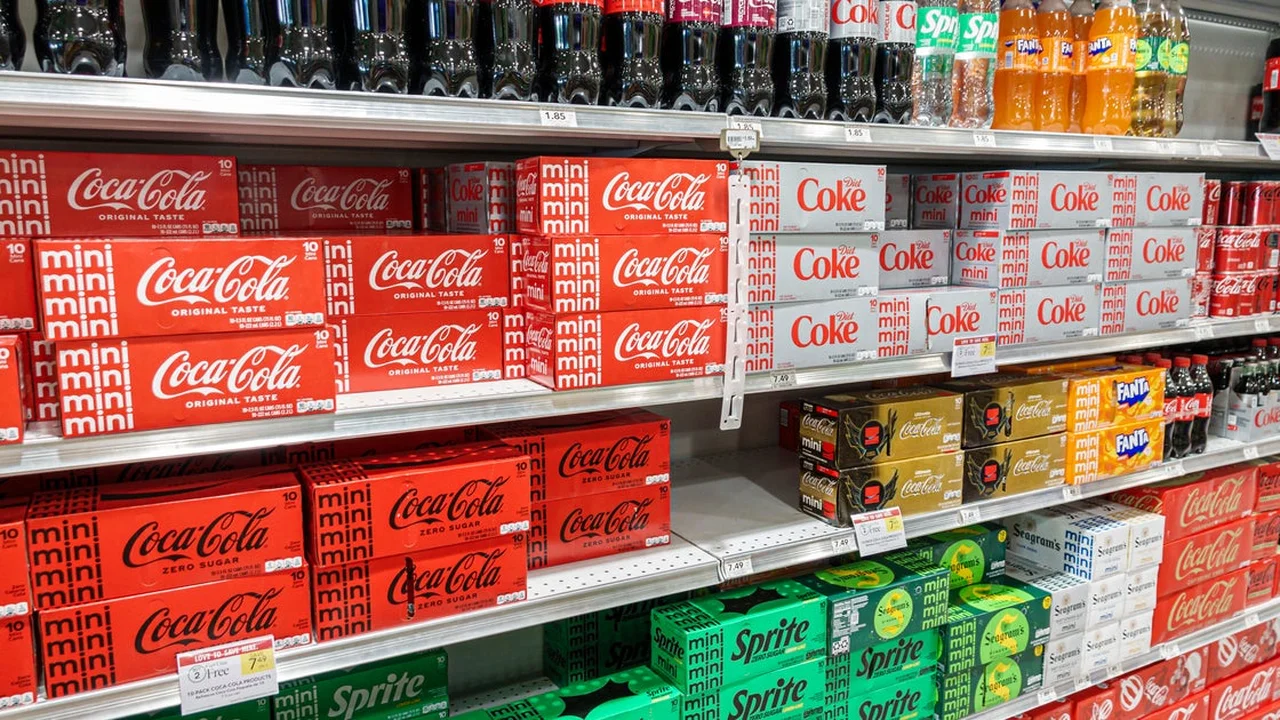
Starting April 1, 2026, Texas SNAP recipients can no longer use their Lone Star Cards to buy candy or sweetened drinks [1]. That’s not a rumor — it’s official Texas Health and Human Services Commission (HHSC) policy, and it took effect statewide [3].
So what does that cover? The restriction targets candy and sugary drinks specifically [8]. That means sodas, sweetened teas, energy drinks with added sugar — things in that category. You can still use your Lone Star Card for the full range of groceries that SNAP has always covered: fruits, vegetables, garden seeds, bread, dairy, meat, and more [2].
Texas is the first state to receive federal approval to move forward with restrictions like this [7]. That makes this a genuinely new kind of policy — there’s no long playbook to follow, and some questions about implementation are still being sorted out in the real world.
What People Are Asking at the Checkout Line
A lot of SNAP recipients are confused at the register, and that’s understandable. Some items feel obvious — a Coke is a sweetened drink. Others are less clear. One thing worth knowing: Zevia, a soda sweetened with plant-based stevia rather than sugar, has been discussed in community spaces as a possible alternative some shoppers are trying [4]. Whether specific products are covered ultimately comes down to how HHSC categorizes them — if you’re unsure about a particular item, the Texas HHS website at hhs.texas.gov is your best starting point.
Some recipients have raised fair questions about consistency. Why can you buy a boxed cake mix (which contains sugar) but not a candy bar? [10] These are real concerns people are voicing, and they point to the genuine complexity of drawing a line through the grocery store. The policy is what it is right now — knowing the rules protects your budget at checkout.
What You Can Still Buy
This is worth saying clearly, because the news coverage can make it sound like SNAP is getting gutted. It isn’t. The core of the program is unchanged [2]. Here’s what your Lone Star Card still covers:
- Fresh, frozen, and canned fruits and vegetables
- Meat, poultry, and fish
- Dairy products
- Bread, cereals, and grains
- Snack foods and non-alcoholic beverages that don’t fall under the new restrictions
- Garden seeds and plants that produce food
The goal of SNAP has always been to help people buy the food they need for good health [2]. The restrictions are aimed at narrowing what counts — not at reducing the dollar amount of your benefit.
Will SNAP Benefits Increase in 2026?
This is the question a lot of families are asking right now, and the honest answer is: benefit amounts are recalculated based on your household income and size, not by a flat annual raise. There’s no headline “2026 SNAP increase” for Texas that applies to everyone.
What matters is your specific household — how many people are in it, what your income is, and what you’re spending on housing and utilities. For a Texas household of three with a monthly income of about $2,666, the estimated SNAP benefit comes to around $212.57 per month.
That’s real grocery money — roughly $2,550 a year going toward food for your family.
Here’s what that actually adds up to for a household at this income level:
Here’s the full picture for a household at this income — what may be available across programs, and what won’t.
How Benefits Are Calculated (The Short Version)
SNAP isn’t a flat amount — it adjusts based on what’s called your “net income,” which is your income after certain deductions (like a standard deduction, earned income deduction, and housing costs if they’re high). The higher your income, the lower your SNAP benefit tends to be. The lower your income, the more you may receive.
That’s why the benefit amount above is specific to a household of three at that income level. Your number might be different — and plugging in your actual figures is the only way to know for sure.
The Cliff You Don’t Want to Fall Off
Here’s something that doesn’t get talked about nearly enough: what happens when your income goes up just a little.
For a household like the one we’re describing — three people, about $2,667 a month — there’s a sharp drop point right around $2,887 per month in household income. Cross that line, and SNAP eligibility may disappear entirely, wiping out roughly $2,550 in annual food benefits [1][2].
That’s not a gradual phase-out. It’s a cliff. You could get a modest raise at work — say, a few extra hours a week — and end up taking home less overall because of what you lose in benefits.
This is sometimes called the “benefits cliff,” and it’s a real factor families should think about when weighing a job change, a raise, or picking up extra shifts.
The math gets dramatic at that threshold. Cross that line by even a dollar and here’s what happens:
The Bigger Financial Picture
SNAP isn’t the only program a household of three at this income level may qualify for. The Earned Income Tax Credit (EITC) and Child Tax Credit (CTC) are two other federal programs worth knowing about. For a household at this income level, the estimated combined value of SNAP, EITC, and CTC could reach roughly $9,043 per year — that’s real money that can make a real difference in a tight budget.
The EITC alone could add an estimated $357.73 per month (or about $4,292 per year) for an eligible household at this income level. The CTC could add another $183.33 per month (roughly $2,200 per year). These aren’t automatic — you have to file taxes to claim them — but they’re significant.
One thing to understand: the same income threshold that affects your SNAP can ripple through these other programs. That marginal tax rate — the share of any extra dollar you earn that gets clawed back through reduced benefits and new taxes — is estimated at 75.6% for a household at this income level. Meaning for every extra dollar of wages, a large portion could be offset by reduced benefits or increased tax liability. That’s why understanding the full picture matters before making changes that affect your income.
What’s Happening at Food Banks
Even as these policy changes roll out, food banks across Texas are seeing rising demand [12]. If your family is stretching to make it between benefit reloads, local food banks — connected through the Feeding Texas network — can help bridge the gap [6]. They’re not a replacement for SNAP, but they’re a real resource. A family doesn’t have to be at rock bottom to use a food bank.
Check Your Eligibility
Every family’s situation is different. Your household size, income, housing costs, and other factors all affect what you may qualify for — and how much. The figures in this article reflect a specific household profile. Yours may be higher or lower.
Plug in your own numbers — household size, income, state — and see where you stand.
Frequently Asked Questions
Can I still buy juice with my Lone Star Card?
The restrictions target candy and sweetened drinks [1][3]. 100% fruit juice has not been explicitly named in the Texas HHS restriction announcements, but the specific product categories are defined by HHSC. Check hhs.texas.gov for the most current list.
Does the April 1 change reduce my monthly benefit amount?
No. The restriction limits what you can buy, not how much you receive [1][3]. Your dollar amount stays the same — it just can’t be spent on the newly restricted items.
What happens if I accidentally try to buy a restricted item?
The Lone Star Card system should decline the transaction for restricted items at the point of sale, similar to how alcohol is already handled. You’d need to pay for that item another way or leave it behind.
Is Texas the only state doing this?
Texas was the first to receive federal approval for this type of restriction [7]. Whether other states follow is a separate policy question — for now, this is specific to Texas SNAP recipients.
Sources
- SNAP Purchase Restrictions – Texas Health and Human Services (www.hhs.texas.gov).gov
- SNAP Food Benefits | Texas Health and Human Services (www.hhs.texas.gov).gov
- New SNAP Purchase Restrictions Take Effect April 1 (www.hhs.texas.gov).gov
- Starting April 1, 2026, new restrictions will limit what SNAP … (www.facebook.com)
- New 2026 Texas SNAP rules now in effect. Here's what recipients can no longer buy. (www.cbsnews.com)
- Feeding Texas Outlines Important SNAP Changes Starting April 1 (www.feedingtexas.org)
- Federal Approval Granted: Texas SNAP Junk Food Ban Takes Effect … (www.texaspolicyresearch.com)
- SNAP restrictions begin on April 1, 2026 – YouTube (www.youtube.com)
- What You Need to Know About the Texas SNAP Food Changes (salud-america.org)
- SNAP benefits will no longer cover candy or sugary drinks starting … (www.facebook.com)
- How new SNAP restrictions are affecting Texas residents – PBS (www.pbs.org)
- SNAP enrollment drops as Texas food banks face rising demand (www.kcentv.com)

Leave a Reply