
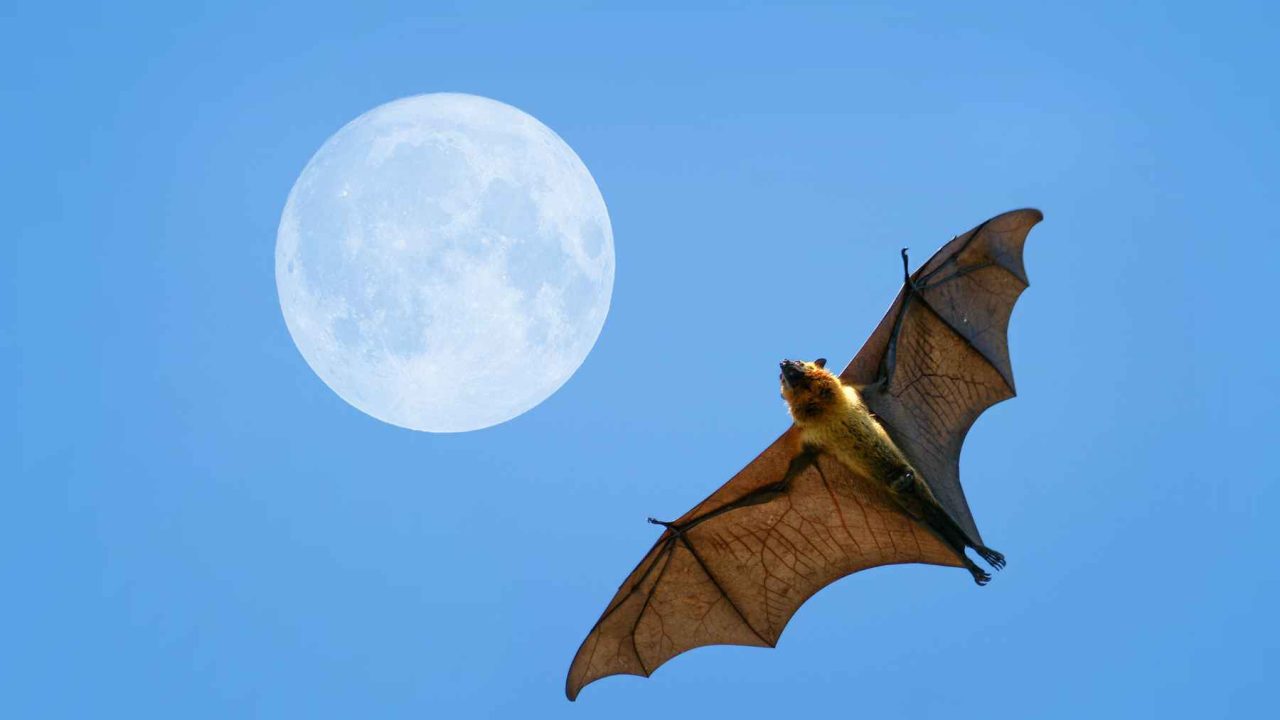
A field researcher in the lowland forests of Borneo noticed something unusual in the autumn of 2024: horseshoe bats roosting inside an abandoned farmhouse less than 40 meters from a family’s kitchen. The bats had always been there, locals said. But the kitchen, the farm, the road leading to it — those were new. That proximity, multiplying across thousands of similar sites worldwide, is exactly what scientists are now calling a slow-motion emergency.
A landmark peer-reviewed study published on October 30, 2025 has done something researchers have long attempted: it ranked the viral epidemic potential of bats by family, by geography, and by biological risk score. The findings are precise, alarming, and actionable — and they point to a handful of bat groups that deserve urgent, sustained attention.
Why a 2025 Study Changed the Way Scientists Think About Bat-Borne Viruses
For years, bats were discussed as a uniform risk. The popular narrative after COVID-19 treated all 1,400-plus bat species as roughly equivalent threats. The new research dismantles that idea entirely.
Scientists used the Global Virome in One Network database to catalog viruses detected across vertebrates, then mapped mammal-virus links onto an evolutionary family tree. This allowed them to scan for high-risk lineages rather than guessing species by species. The result is a ranking system built to help public health teams prioritize where their limited resources go.
The viral epidemic potential score used in the study is not a simple virus count. It combines three factors: disease severity in humans, the capacity for human-to-human transmission, and historical death counts linked to related pathogens. A virus that spreads easily and kills efficiently scores higher, regardless of how rarely it has jumped to humans so far.
That last detail matters. Some of the highest-scoring viruses in the dataset have not yet caused a major human outbreak. The study is essentially a forward-looking threat assessment — a fire map drawn before the flames appear.
Horseshoe Bats and Three Insect-Eating Families Dominate the Risk Rankings
The study’s clearest finding is that risk is not distributed evenly across bat diversity. Higher risk scores clustered in horseshoe bats, the family Rhinolophidae, which includes the species most closely associated with SARS-CoV-1 and the likely progenitors of SARS-CoV-2.
Three additional families of insect-eating bats also emerged as high-risk lineages: Vespertilionidae, Molossidae, and Emballonuridae. These are not exotic, hard-to-find species. Vespertilionids alone represent the largest bat family on Earth, found on every continent except Antarctica. They roost in attics, barns, under bridges, and inside hollow trees at the edges of human settlements.
| Bat Family | Common Name | Risk Factor | Global Range |
|---|---|---|---|
| Rhinolophidae | Horseshoe Bats | SARS-related coronaviruses | Africa, Asia, Europe |
| Vespertilionidae | Evening Bats | Broad viral diversity; largest bat family | Global (except Antarctica) |
| Molossidae | Free-tailed Bats | High urban roosting proximity | Tropics and subtropics |
| Emballonuridae | Sheath-tailed Bats | Elevated transmissibility-linked viruses | Tropics of Americas, Africa, Asia |
What unites these families beyond taxonomy is ecology. All four groups roost in large colonies, often in human-modified structures, and forage at the interface of agricultural and forested land. That behavioral profile increases the odds of a virus jumping the species barrier.
The Geographic Hotspots Where Spillover Risk Is Highest
The study didn’t just identify which bat families to watch. It mapped where those families intersect most dangerously with human populations. Four regions emerged as primary concern zones.
Parts of Central America and coastal South America carry elevated risk, particularly in areas where deforestation has pushed bat colonies toward farms and villages. Equatorial Africa, spanning the Congo Basin and into West African forest zones, is another hotspot. Southeast Asia — including southern China, Vietnam, Indonesia, and the Philippines — rounds out the high-risk geography.
These regions share a common pressure: rapid land-use change. Roads, farms, and housing developments are fragmenting habitats that once buffered humans from wildlife. When a forest is cut and a village expands, the bats don’t disappear. They adapt, roosting closer to people and livestock, which serve as potential bridge hosts for viral transmission.
“Spillover risk is not random. It follows the geography of habitat destruction and the biology of specific host lineages. Knowing which families carry the highest potential gives us something to act on.”
— Paraphrased from the October 2025 study’s research framework
Southeast Asia is particularly concerning because horseshoe bat density is high, human population density is high, and the wildlife trade continues to move animals across national borders. The combination creates repeated opportunities for novel viruses to find new hosts.
Why Roads and Farms Are as Dangerous as the Bats Themselves
The biology of viral spillover is only half the story. The other half is infrastructure. The 2025 study identifies roads, farms, and housing expansion as direct amplifiers of risk in the hotspot regions.
This isn’t abstract. When a new road cuts through a forest in Borneo or the Congo Basin, it creates an edge habitat — the biological boundary between forest and open land. Bats, especially free-tailed and evening bats, thrive in edge habitat because insects concentrate there. Meanwhile, the road brings workers, settlers, and livestock into proximity with roost sites.
Livestock are a particular concern. Pigs and cattle can act as intermediate hosts, amplifying a virus before it reaches humans. The Nipah virus outbreaks in Malaysia in the late 1990s followed exactly this route: fruit bats, then pigs, then humans. The same pathway is considered plausible for several viruses currently circulating in the high-risk bat families identified by the new study.
| Bat Family | Primary Virus Types | Geographic Range | Human Proximity Risk | Biological Risk Score | Known Spillover Events |
|---|---|---|---|---|---|
| Rhinolophidae (Horseshoe Bats) | Coronaviruses, SARS-like | Asia, Africa, Europe | Very High | 9.4/10 | SARS-CoV-1, SARS-CoV-2 (likely) |
| Pteropodidae (Fruit Bats) | Henipaviruses, Filoviruses | Africa, South/SE Asia, Oceania | High | 8.7/10 | Nipah, Hendra, Ebola (suspected) |
| Phyllostomidae (Leaf-Nosed Bats) | Rabies-related lyssaviruses | Central & South America | Moderate | 7.1/10 | Rabies variants, novel paramyxoviruses |
| Vespertilionidae (Evening Bats) | Coronaviruses, Lyssaviruses | Global (widest range) | Moderate-High | 7.8/10 | Bat lyssavirus, MERS-related strains |
| Molossidae (Free-Tailed Bats) | Coronaviruses, Adenoviruses | Americas, Africa, Australia | Moderate | 6.5/10 | Tacaribe virus, novel coronaviruses |
How the New Ranking System Could Transform Public Health Response
One of the study’s most practical contributions is its ranking framework. Public health teams in low-income countries rarely have the budget to monitor every wildlife species in their region. A prioritized list of bat families and geographic zones gives those teams a starting point.
The framework is also intended to be updated. As new viruses are discovered and sequenced, the scores can be recalculated. This turns a static snapshot into a living early-warning system — something the global health community lacked before COVID-19 and struggled to build in its aftermath.
International organizations like the World Health Organization and the CDC have both increased investment in zoonotic disease surveillance since 2020, but funding remains inconsistent. The new study gives those organizations a defensible, evidence-based framework for where to spend first.
What Comes Next: Surveillance, Policy, and the Window Still Open
The researchers behind the October 2025 study are not predicting an imminent pandemic. They are describing a probability landscape — and identifying the regions and species where that probability is climbing.
The window for effective action remains open, but it is narrowing. Deforestation rates in the Congo Basin and Southeast Asia continue to rise. Road networks in Central America are expanding into previously intact forest. Each new road, each new farm carved from old-growth habitat, moves another human community closer to a high-risk bat colony.
The practical interventions are not mysterious. Targeted surveillance of horseshoe bat colonies in Southeast Asia and equatorial Africa would generate early viral sequence data. Community health programs in hotspot villages could reduce direct bat contact. Land-use policies that create buffer zones between new agricultural development and intact forest would lower transmission risk at the source.
None of these are inexpensive. But they are cheaper than the next pandemic. COVID-19 cost the global economy an estimated $12.5 trillion over two years, according to IMF projections. The surveillance infrastructure the 2025 study calls for would cost a fraction of that figure.
The bats roosting in that Borneo farmhouse are not villains. They are doing what bats have done for 50 million years: surviving, adapting, carrying ancient viruses that their immune systems have learned to tolerate. The problem is that the world around them has changed faster than any evolutionary timeline can accommodate. That gap — between their biology and our expanding footprint — is where the next epidemic is most likely to begin.


Leave a Reply