
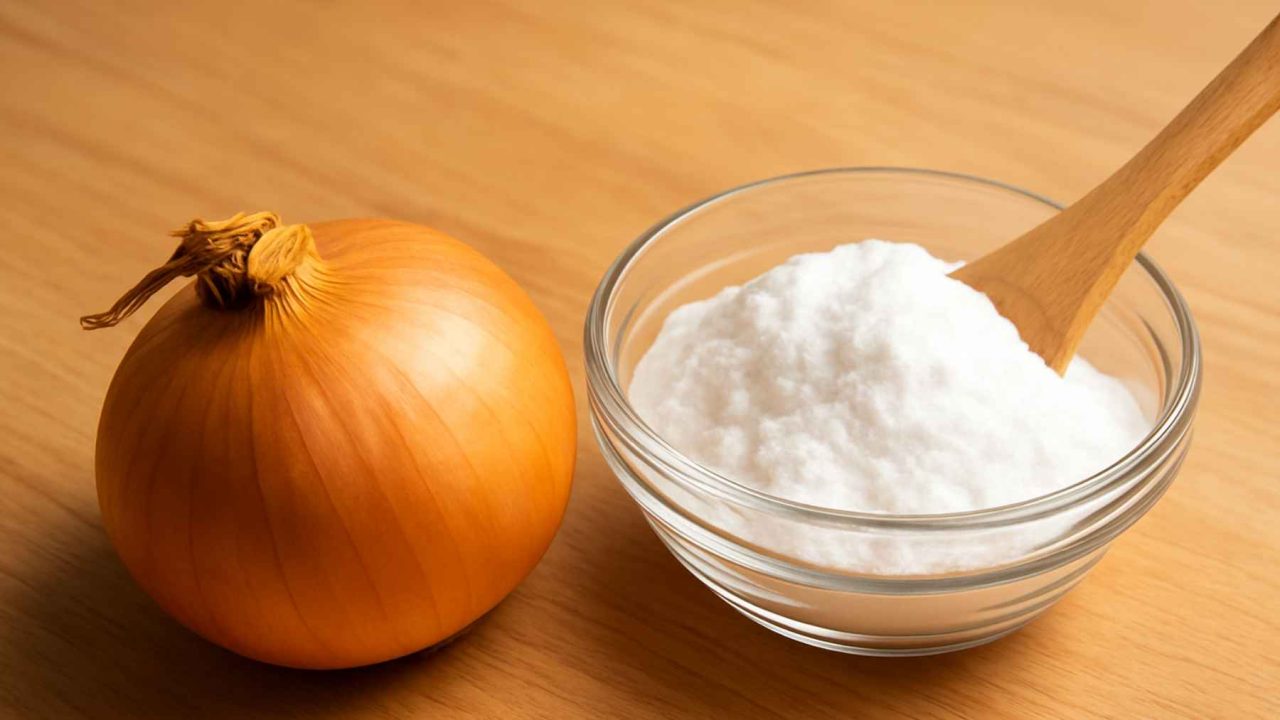
Maria had tried everything. The sticky traps collected dust. The spray left a chemical smell that clung to the kitchen for days. Then her neighbor, a retired schoolteacher, handed her a small bowl containing chopped onion and a white powder. “Trust me,” she said. Maria assumed it was nonsense. Two days later, the cockroaches were gone.
Stories like Maria’s circulate in kitchens, community forums, and family group chats across the country. Most people who hear them file the remedy under “folk magic” or hopeful thinking. The assumption is reasonable: if something so simple and cheap actually worked, wouldn’t everyone already be using it?
What Most People Assume About Home Remedies and Bugs
The dominant view is that insect control requires professional-grade chemicals. Pest management is a $22 billion industry in the United States, and its marketing leans heavily on the idea that anything short of a licensed technician with a tank sprayer is wishful thinking.
Home remedies, in that framing, are quaint at best and dangerous at worst — something people try before accepting that they need the real thing. The onion-and-baking-soda bait fits neatly into that dismissed category. It sounds improvised, unscientific, faintly superstitious.
But there is a crack in that assumption, and it starts in a university laboratory in West Africa.
The Field Study That Changed the Question
A research team in Ghana set out to test baited cockroach traps in real domestic environments: kitchens, storerooms, and a student bedroom. These were not sterile lab conditions. These were spaces with normal food smells, human traffic, and active infestations of both German and American cockroaches.
The researchers compared traps loaded with attractive food (peanut butter or sugar) against traps that combined those same attractants with baking soda, also known as sodium bicarbonate. The results were not subtle. Baking soda mixtures killed significantly more cockroaches than traps containing food alone.
This wasn’t a single anecdotal observation. It was a controlled field study comparing outcomes across multiple domestic settings. The folk remedy, it turned out, had a mechanism. And that mechanism is straightforward chemistry.
What’s Actually Happening Inside the Insect
When a cockroach ingests sodium bicarbonate, it enters a digestive system that operates very differently from a human stomach. Insects cannot burp or release internal gas through any effective means. That limitation is critical.
Sodium bicarbonate reacts with acids to produce carbon dioxide gas. Inside a cockroach, the reaction produces a buildup of CO₂ that the insect has no physiological way to expel. The gas disrupts internal organs. It also damages the protective exoskeleton from the inside, compromising the hardened shell that cockroaches depend on for survival.
| Bait Component | Role | Effect on Insect |
|---|---|---|
| Onion (chopped or powder) | Primary attractant; strong volatile sulfur compounds draw cockroaches | None directly; serves as bait vehicle |
| Sugar | Secondary attractant; reinforces feeding motivation | None directly; increases ingestion likelihood |
| Baking soda (sodium bicarbonate) | Active lethal agent; visually and texturally blends with attractants | Produces CO₂ gas internally; disrupts organs and exoskeleton |
| Moisture (from fresh onion) | Keeps the bait appealing and fresh | Maintains bait palatability; must be refreshed every 1-2 days |
The onion’s job in this equation is not incidental. Cockroaches are drawn to strong, sulfur-rich odors. The volatile compounds in onions, the same chemicals that make your eyes water when you cut them, are powerful olfactory signals to foraging insects. They trigger feeding behavior reliably.
The baking soda is odorless and tasteless to the cockroach. It blends into the attractant without triggering any avoidance response. The insect eats willingly, and the chemistry does the rest.
Why This Actually Matters Beyond Your Kitchen
Cockroaches are not merely unpleasant. Researchers at North Carolina State University found that homes with heavy cockroach infestations had dramatically elevated levels of airborne allergens and bacterial endotoxins. These aren’t abstract measurements. Cockroach allergens are a well-documented trigger for asthma in children, especially in urban housing.
Cockroaches carry bacteria, fungi, and parasites on their bodies, in their droppings, and in their saliva. Every surface they contact becomes a potential exposure point. When professional pest control eliminated cockroach populations in the North Carolina State study, airborne allergens and bacterial endotoxins dropped sharply, improving the indoor air quality measurably.
The U.S. Environmental Protection Agency promotes an approach called integrated pest management, which prioritizes cleaning, sealing entry points, and using targeted low-toxicity tools before reaching for broad-spectrum pesticides. A homemade bait combining onion and sodium bicarbonate fits precisely within that framework.
It is cheap. It does not require a license. It does not leave toxic residue on food preparation surfaces. And it works through a mechanism that insects cannot develop resistance to, because you cannot evolve a way to burp.
“Integrated pest management focuses on long-term prevention using a combination of techniques such as biological control, habitat manipulation, and use of resistant varieties.”
— U.S. Environmental Protection Agency, Integrated Pest Management guidelines
How to Use the Bait Correctly
The standard recipe calls for finely chopped fresh onion or onion powder, combined with an equal volume of baking soda. Some versions add a small amount of sugar to increase palatability. The mixture should be placed in a shallow dish or bottle cap near cockroach activity: behind appliances, under sinks, inside cabinet corners.
The bait must be refreshed every day or two. Fresh onion dries out quickly, and once it loses moisture, it also loses its chemical attractiveness. A dried-out bait is just a pile of powder that cockroaches will walk past without interest.
Placement matters as much as preparation. Cockroaches are thigmotactic, meaning they prefer surfaces that press against their bodies on multiple sides. Narrow gaps behind refrigerators and underneath stoves are their highways. That’s where the bait earns its keep.
What This Method Cannot Do
The onion-baking-soda trap is not a silver bullet for a severe infestation. It does not seal the cracks cockroaches use to enter. It does not eliminate the moisture sources and food debris that sustain a colony. Used alone, it addresses symptoms rather than causes.
The EPA’s integrated pest management model is useful here. The bait is one tool in a sequence that should also include fixing leaky pipes, sealing gaps around utility lines, and storing food in airtight containers. The chemistry works; the context determines how well.
The real lesson buried inside this story about onions and white powder is that chemistry is already happening everywhere in your home. The question is whether you understand it well enough to use it deliberately, or whether you keep paying someone else to do it with a stronger version of the same principles.
Maria’s neighbor knew what she was doing. She just never had the vocabulary to explain it — until now.




Leave a Reply