The T. Rex Was Faster Than We Thought, and Sue Proves It
A 2026 study of Sue's T. rex skeleton reveals toe-first locomotion that raises speed estimates by 20%, forcing a rethink of prehistoric predator biology.
The T. Rex Was Faster Than We Thought, and Sue Proves It
Audio Briefing~1:02
Click play to listen to key points
▶ Read transcript
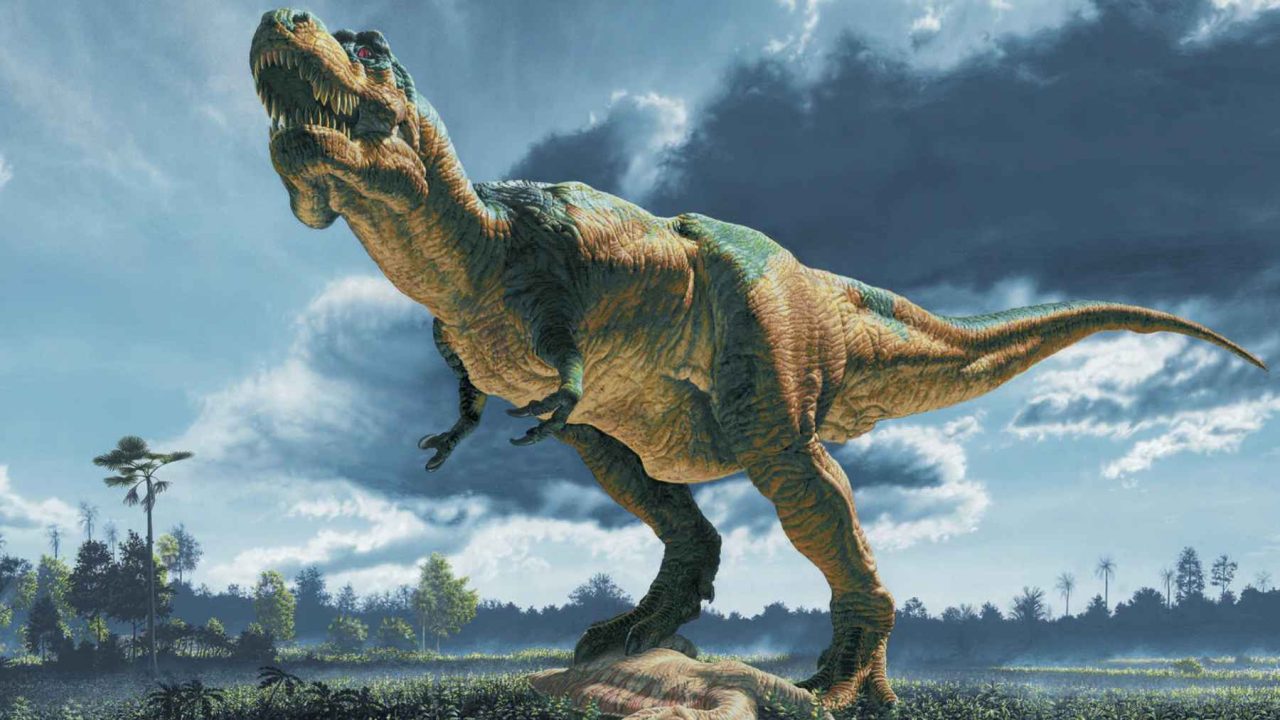
Here’s what you need to know about the T. rex speed story that’s shaking up paleontology. For decades, scientists believed T. rex was a slow, lumbering predator, maybe topping out around 12 miles per hour. That assumption just got overturned. A 2026 study out of the College of the Atlantic analyzed Sue, the most complete T. rex skeleton ever found, alongside fossil footprints and compared the movement mechanics to living animals like ostriches. What they found was surprising: T. rex struck the ground toes-first, not heel-first, which pushes speed estimates up by as much as 20 percent, putting the top range around 25 miles per hour. Younger, lighter tyrannosaurs likely hit the upper end of that range, while massive adults like Sue were probably closer to the lower end. If you want to dig deeper, the Field Museum in Chicago is home to Sue’s skeleton and regularly updates its exhibits with the latest science.
For decades, paleontologists painted Tyrannosaurus rex as a lumbering giant, a slow-moving ambush predator that relied on size rather than speed. That image stuck in textbooks, museum placards, and blockbuster films. It felt settled. It felt safe.
It was wrong.
In April 2026, a team of researchers at the College of the Atlantic in Maine published findings that quietly shattered one of the most persistent assumptions in dinosaur science. Their subject was Sue, the largest and most complete T. rex skeleton ever found, now housed at the Field Museum in Chicago. What they discovered in Sue’s bones and footprints forced a rethink of how this animal actually moved through the world.
Sue’s Skeleton and the Footprints That Changed Everything
Sue was discovered in 1990 by fossil hunter Sue Hendrickson in the badlands of South Dakota. The skeleton is extraordinary: more than 90 percent complete, representing an animal that weighed approximately 22,000 pounds and stretched over 40 feet from snout to tail. For more than three decades, scientists have returned to those bones looking for new answers.
The 2026 study took a different approach. Researchers didn’t just examine Sue’s skeleton in isolation. They compared fossil footprints left by T. rex individuals with the leg and foot bones from multiple specimens. Then they did something unexpected: they cross-referenced those patterns with the movement mechanics of living animals, including humans and ostriches.
KEY TAKEAWAY
T. rex struck the ground toes-first, not heel-first as previously assumed, a discovery that raises speed estimates by up to 20 percent and fundamentally changes how we picture this animal in motion.
The ostrich comparison turned out to be critical. Ostriches are the largest living bipedal animals, and they move with a distinct toe-first strike pattern. When researchers applied that same biomechanical logic to T. rex foot bones, the implications were immediate and significant.
T. rex wasn’t plodding. It was, in a very real sense, tiptoeing at speed.
Animal
Movement Style
Top Speed (approx)
T. rex (adult, old estimate)
Heel-first, lumbering gait
~9–12 mph
T. rex (adult, new estimate)
Toe-first strike
~11–25 mph
T. rex (juvenile)
Toe-first, lighter frame
Upper range of estimates
Ostrich
Toe-first bipedal
~43 mph
Human (sprint)
Heel-to-toe transition
~15–28 mph (elite)
A 20 Percent Faster Predator Changes the Entire Predator-Prey Equation
The number that has rattled paleontologists most is not the top speed itself. It’s the revision. A 20 percent increase in speed estimates, applied to an animal that weighed 22,000 pounds, transforms the ecological story of the Late Cretaceous entirely.
T. Rex Speed Estimates: Before and After 2026 Study
Interactive data visualization
Adult T. rex (large individual)
10
12
Mid-size T. rex (subadult)
12
18
Juvenile T. rex (young individual)
14
25
Pre-2026 Estimate (mph)
Post-2026 Estimate (mph)
Source: College of the Atlantic, 2026; comparative paleontology literature
20%
Increase in T. rex speed estimates following the toe-first locomotion discovery
22,000 lbs
Estimated weight of a fully grown T. rex, making this speed revision all the more striking
Consider what prey animals faced. Triceratops and Edmontosaurus, the most common large herbivores sharing T. rex’s range, were not built for sustained high-speed flight. If T. rex could reach 25 miles per hour in short bursts, the gap between predator and prey collapses dramatically.
Paleontological Disruption Index
8.5/10
The 2026 T. rex locomotion finding scores extremely high on scientific disruption: it revises a core assumption about the most studied predatory dinosaur in history, using a novel combination of footprint analysis and living-animal biomechanics.
The study also introduced an age dimension that researchers hadn’t fully quantified before. Younger tyrannosaurs, lighter and more agile, likely moved faster than adults. This suggests the hunting behavior of juvenile T. rex may have been meaningfully different from the massive, fully grown animals most people picture.
IMPORTANT
The speed range of 11 to 25 mph is not a single fixed number. It varies by individual size and age. A younger, lighter T. rex almost certainly sat at the upper end of that range, while the largest adults like Sue likely moved closer to the lower end of the revised estimates.
That distinction matters enormously. It means T. rex wasn’t a single ecological actor. It was a predator whose capabilities shifted across its lifespan, potentially filling different niches at different ages.
⚡What Would You Do?
You’re a paleontologist presenting the new T. rex locomotion findings at a major conference. A senior colleague publicly challenges your methodology, arguing that comparing T. rex to ostriches is too speculative to revise 30 years of established speed estimates. How do you respond?
Methodical
The audience follows your reasoning. Several researchers ask to collaborate. The challenge strengthens rather than undermines your position.
Collaborative
You earn respect for intellectual honesty. The follow-up study takes two years but produces even more robust findings.
Overconfident
The moment is remembered as dismissive. Skeptics use it to question the study’s credibility, slowing acceptance of the findings by years.
11–25 mph
The revised T. rex speed range, published April 15, 2026, based on toe-first locomotion analysis
Scotty, Sue, and the Quiet Competition Between Giants
Sue is not the only T. rex competing for the title of largest ever found. Scotty, discovered in Saskatchewan’s Frenchman River Valley in 1991 by a Royal Saskatchewan Museum research team, has been confirmed by some researchers as the largest T. rex ever unearthed. Scotty’s fossilized remains were painstakingly excavated over years and are now displayed at the Royal Saskatchewan Museum.
Old Model: Heel-Strike T. rex
VS
New Model: Toe-First T. rex
Assumed slow, lumbering gait similar to large mammals
Moves like a giant bird, striking ground toes-first like ostriches
Speed capped at roughly 9 to 12 mph by most estimates
Speed range revised to 11 to 25 mph depending on age and size
Portrayed as ambush predator relying on mass over agility
Younger individuals far more agile than previously modeled
Juvenile and adult movement treated as essentially similar
Changes predator-prey dynamics across the Late Cretaceous ecosystem
VERDICT: The toe-first model is supported by both fossil footprint data and comparative biomechanics with living animals, making it the stronger scientific framework as of 2026.
“Since its discovery and extensive subsequent study, Scotty has been referred to as the largest T. rex ever discovered in the world, the largest of any dinosaur.”
— Wikipedia entry on Scotty (dinosaur)
The distinction between Sue and Scotty is partly a matter of completeness versus raw size. Sue remains the most complete specimen, which is precisely why the 2026 study leaned on her bones so heavily. More complete skeletons allow for more precise biomechanical modeling. Scotty may be bigger, but Sue is better understood.
Both animals, however, now need to be reconsidered in light of this new locomotion data. If the toe-first finding holds across the species, every T. rex we’ve ever found moved differently than we assumed.
How the 2026 Discovery Unfolded
1991
Scotty discovered in Saskatchewan’s Frenchman River Valley by RSM research team.
1990
Sue Hendrickson discovers the skeleton now known as Sue in South Dakota. Over 90 percent complete.
Decades of study
Sue is housed at the Field Museum in Chicago and becomes the most studied T. rex specimen in history.
April 15, 2026
College of the Atlantic researchers publish findings: T. rex moved toe-first, revising speed estimates by up to 20 percent.
What Fossil Footprints Reveal That Bones Alone Cannot
One of the most underappreciated aspects of this study is its methodology. Bones tell you structure. Footprints tell you behavior. The researchers understood that combining both sources of evidence would produce a richer, more accurate picture than either could provide alone.
T. Rex Understanding: Before and After April 2026
BEFORE
T. rex was widely modeled as a slow, heel-striking predator with a top speed around 9 to 12 mph. Juveniles and adults were assumed to move in broadly similar ways. The animal’s size was seen as its primary weapon, not its speed.
AFTER
T. rex struck the ground toes-first, revising speed estimates to 11 to 25 mph. Juveniles were significantly faster than adults. The predator’s ecological role across its lifespan now looks far more dynamic and varied than previously understood.
Fossil footprints preserve the actual moment of contact between an animal and the ground. They record pressure distribution, stride length, and gait patterns with a fidelity that skeletal reconstruction simply cannot match. When the team compared T. rex footprints with the biomechanical signatures of ostriches, the toe-first pattern became unmistakable.
KEY TAKEAWAY
The combination of fossil footprint analysis and comparative biomechanics with living animals like ostriches is what made this finding possible. Neither data source alone would have been sufficient to overturn decades of conventional thinking.
This methodological shift, using living animals as biomechanical reference points for extinct ones, is increasingly common in paleontology. But applying it to the most famous predator in fossil history, with one of the most complete skeletons ever found as your primary specimen, carries unusual weight.
The findings published on April 15, 2026 don’t just revise T. rex. They suggest that our entire framework for estimating dinosaur locomotion may need recalibration. If the largest, most studied predatory dinosaur in history was moving differently than we thought, what else did we get wrong?
That question doesn’t have a comfortable answer yet. And that might be the most honest thing science has said about T. rex in years.
The Editorial Team is the named, credentialed group responsible for every article on this site. Each piece is researched by a section editor, reviewed by a credentialed practitioner where the topic warrants it, and signed off by the Editor in Chief before publication. The corrections process is public; named editors are accountable.




Leave a Reply