
▶ Read transcript
Here’s what you need to know about one of the most ambitious wildlife conservation efforts in history. In the late 1990s, feral goats introduced by sailors centuries earlier had overrun the Galápagos Islands, stripping vegetation across more than 1.2 million acres and pushing giant tortoise subspecies toward extinction. On Pinta Island, a single tortoise named Lonesome George was the last of his kind. Conservationists knew ground hunting alone couldn’t keep pace with the goats’ reproduction rate, so Project Isabela was born. The operation used a clever tactic called Judas goats — collared animals released into the wild who naturally led hunters to hidden herds. Combined with helicopter sharpshooters, the project removed over 140,000 goats in nine years, at a cost of 10.5 million dollars. Native forests began recovering within seasons. If you care about conservation, look up Project Isabela — it’s a masterclass in how creative thinking can rescue ecosystems from the brink.
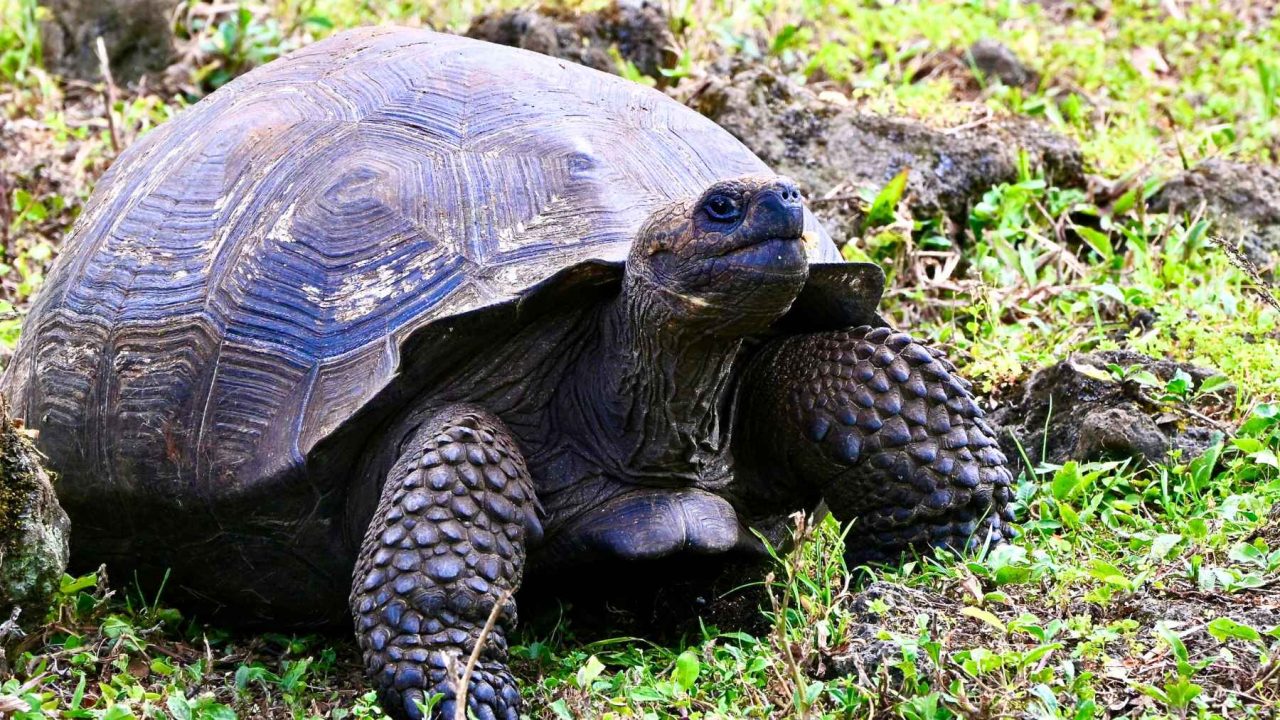
The ranger spotted the tortoise from fifty meters away, motionless in the scrub, its shell bleached and cracked in the equatorial sun. Around it, the vegetation had been stripped to bare dirt. Not by drought. By goats.
It was the late 1990s on Isabela Island, the largest of the Galápagos archipelago, and the damage was staggering. Feral goats, introduced by whalers and settlers over the previous two centuries, had multiplied into the hundreds of thousands. They were eating everything. And the animals that Charles Darwin once called “imps of darkness” were losing the war for their own home.
How Feral Goats Pushed Galápagos Tortoises to the Edge
Goats are not native to the Galápagos. They arrived as a food source for sailors and colonists, some released deliberately, others escaped. With no natural predators, they reproduced at a pace the island ecosystem could not absorb.
Giant tortoises, which had evolved over millions of years in near-total isolation, were catastrophically unprepared for the competition. Goats consumed the same low-lying vegetation tortoises depended on. They stripped hillsides bare, triggered erosion, and destroyed nesting habitat. On Pinta Island, a single male tortoise named Lonesome George became the last known survivor of his subspecies. The symbolism was brutal and undeniable.
By the mid-1990s, conservationists at the Charles Darwin Foundation and the Galápagos National Park Directorate had reached a grim consensus: conventional ground hunting would never be fast enough. The goat population was reproducing faster than hunters could remove them.
Something far more aggressive was needed.
Project Isabela: The $10.5 Million Strategy Built Around Helicopters and Deception
In 1997, the joint operation known as Project Isabela officially launched. Its mandate was clear: remove every last invasive goat from northern Isabela, Santiago, and Pinta islands. The total area covered exceeded 1.2 million acres.
The operation unfolded in phases. Ground hunters moved first, working systematically across terrain that was often volcanic, steep, and nearly impassable. Dogs trained to track goat scent were deployed in dense vegetation where visibility dropped to meters. GPS mapping allowed teams to log cleared zones and identify remaining pockets of resistance.
But the most striking innovation was not technological. It was biological.
Conservationists introduced what the project called “Judas goats.” These were captured feral goats fitted with radio collars and then released back into the wild. Goats are intensely social animals. A lone goat will almost always seek out others. The Judas goats led hunters directly to hidden herds in remote terrain that ground teams would have taken weeks to locate independently.
Then came the helicopters.
From April 2004 to May 2005 alone, aerial hunting crews removed more than 55,000 goats. Sharpshooters fired from low-flying helicopters across terrain that would have taken ground teams years to cover. The combination of aerial precision and GPS coordination transformed what had seemed like an impossible task into a manageable, if brutal, logistics problem.
The Controversy That Followed the Gunshots
Not everyone celebrated the operation. Animal welfare organizations raised objections to the scale and method of the culling. The aerial shooting of more than 140,000 animals was, by any measure, a confronting image. Critics questioned whether lethal removal was the only option, and whether the operation had moved too fast for adequate ethical review.
Conservationists pushed back firmly. The goats were themselves destroying the habitat of species found nowhere else on Earth. Every month of delay meant more tortoise habitat lost, more endemic plant species consumed, more erosion cutting into nesting grounds. The math, they argued, was not abstract. It was existential.
“The eradication of introduced mammals from islands is one of the most powerful tools available to conservation managers for the restoration of island ecosystems.”
— Victor Carrion et al., peer-reviewed analysis of Project Isabela, 2011
A peer-reviewed analysis led by Victor Carrion, with coauthors C. Josh Donlan, Karl J. Campbell, Christian Lavoie, and Felipe Cruz, later documented the operation’s outcomes in rigorous scientific detail. Their 2011 study called Project Isabela the world’s largest island restoration effort of its time. The designation was not ceremonial. It reflected the unprecedented scale of what had been accomplished.
| Phase | Method | Key Result |
|---|---|---|
| 1997–2003 | Ground hunting, trained dogs, GPS mapping | Cleared accessible terrain; established zone boundaries |
| 2001–2006 | Judas goat strategy with radio collars | Located hidden herds in remote volcanic terrain |
| Apr 2004–May 2005 | Aerial helicopter shooting | 55,000+ goats removed in 13 months |
| 2006 (completion) | Final verification sweeps | 140,000+ total goats removed; islands declared clear |
What the Galápagos Looked Like After 140,000 Goats Were Gone
The ecological rebound was faster than many scientists had predicted. Within a few years of the goat removal, native vegetation began returning to denuded hillsides. Scalesia forests, a type of giant daisy tree found only in the Galápagos, started regenerating in areas that had been stripped bare. Tortoise populations, no longer competing for food, showed measurable recovery in body condition and reproductive success.
You are a conservation director in the Galápagos. Feral goats are destroying tortoise habitat faster than ground teams can respond. You have three options, each with serious trade-offs in cost, controversy, and effectiveness.
On Santiago Island, which had been among the most severely impacted, the transformation was described by field researchers as dramatic. Ground cover that had disappeared under decades of goat grazing returned within seasons. The soil, no longer exposed to erosion from hooves, began stabilizing.
The tortoises, for their part, seemed indifferent to the politics. They moved through recovering scrubland with the unhurried certainty of animals that had survived five million years of geological upheaval. They had outlasted volcanic eruptions and continental drift. The question, for a few tense decades, was whether they could outlast a goat.
The answer, it turned out, required helicopters, GPS satellites, a $10.5 million budget, and a strategy built on the social instincts of the very animals being removed. Conservation, at that scale, looked less like environmentalism and more like warfare. The Galápagos won. But the cost, in money, in controversy, and in the sheer weight of 140,000 lives, is not something anyone involved described as a clean victory.
What Project Isabela proved is that ecological restoration sometimes demands decisions that resist easy moral framing. The islands are recovering. The tortoises are still here. And somewhere in the restored scrubland of Santiago, a giant tortoise is eating a plant that would not exist if no one had made the harder choice.


Leave a Reply