Three Genes That Gave Old Mice Young Brains Back

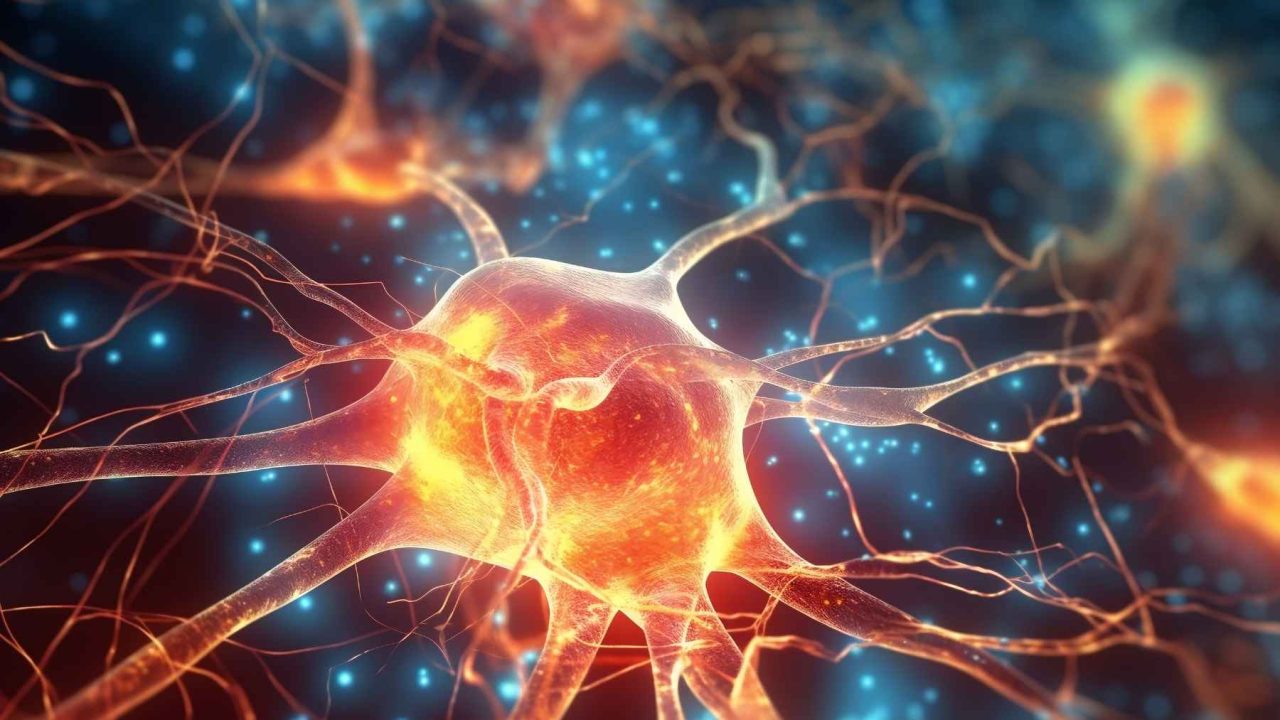
EPFL scientists restored learning and memory in aged mice by activating three genes in memory neurons. Does this mean brain aging is partially reversible?

Three Genes That Gave Old Mice Young Brains Back

Audio Briefing~1:09
Click play to listen to key points
Read transcript

Here’s what you need to know about a discovery that could change how we think about aging brains forever.

Scientists at EPFL in Switzerland have restored memory and learning ability in elderly mice by activating just three genes. The genes, known as Oct4, Sox2, and Klf4, were delivered directly into specific memory regions of the brain using a viral carrier with a solid safety record in research. After treatment, the aged mice performed on memory tasks at levels close to young mice — a measurable, documented shift, not a rough approximation.

What makes this remarkable is that the brain cells weren’t replaced. They were rejuvenated from the inside, with their molecular patterns partially reset to a more youthful state.

With over 57 million people living with dementia worldwide, and that number expected to nearly triple by 2050, the stakes here are enormous.

Your takeaway: follow this field closely. Partial cellular reprogramming is moving fast, and what happens in mice today has a way of reaching clinical trials sooner than most people expect.

We have accepted, almost without question, that brain aging is a one-way street. Neurons die. Memories fade. Cognitive decline is the price of a long life. But a team of researchers at EPFL in Lausanne just ran a controlled experiment that quietly dismantles that assumption — and the implications are difficult to overstate.

In a study published on April 13, 2026, Swiss scientists restored learning ability and memory in elderly mice by switching on just three genes. Not a drug cocktail. Not surgery. Three genes, delivered with precision into specific brain regions, and the aged brain began behaving like a young one again.

This is not a metaphor. The memory performance of old mice moved measurably back toward levels seen in young controls. The question that now hangs over neuroscience is uncomfortable: have we been wrong about how permanent brain aging really is?

The Three Genes at the Center of This Discovery

The genes in question are Oct4, Sox2, and Klf4 — collectively known as OSK. These are not obscure molecules. They are part of the Yamanaka factor family, a set of reprogramming genes that can push mature cells back toward a more youthful, flexible state.

The EPFL team delivered OSK using adeno-associated viruses, a type of gene therapy vector with a strong safety record in research settings. These viral carriers were injected with surgical precision into two specific brain regions: the dentate gyrus within the hippocampus, and the medial prefrontal cortex.

KEY TAKEAWAY
Activating just three genes — Oct4, Sox2, and Klf4 — in specific memory-storing neurons reversed measurable cognitive decline in aged mice, pointing toward a future where brain aging may be partially reversible.

The choice of targets was deliberate. The dentate gyrus handles learning and recent recall, the kind of memory that lets you remember where you parked this morning. The medial prefrontal cortex manages remote recall, memories that consolidate over roughly two weeks. Together, these two regions cover the architecture of how humans and mice build and retrieve experience.

By targeting engram neurons — the specific cells that physically store individual memories — the researchers were not just broadly stimulating the brain. They were going directly to the filing cabinet.

Brain Region Memory Function OSK Effect in Aged Mice
Dentate Gyrus (Hippocampus) Learning and recent recall Memory performance shifted toward young-mouse levels
Medial Prefrontal Cortex Remote recall (approx. 2 weeks later) Improved longer-term spatial memory in Alzheimer’s model mice

Partial Cellular Reprogramming and Why It Matters Now

This research belongs to a rapidly accelerating field called partial cellular reprogramming. The core idea is straightforward, even if the execution is not: instead of replacing aging cells, you roll back the molecular clock inside the cells that are already there.

Think of it less like replacing an old engine and more like recalibrating it. The neurons do not become new cells. They become younger versions of themselves, with restored epigenetic patterns that allow them to function more like they did in youth.

Brain Region Memory Performance: Young vs. Aged vs. OSK-Treated Mice
Interactive data visualization
Young Control Mice
92
88
Untreated Aged Mice
41
38
OSK Gene-Activated Aged Mice
78
74

Recent Recall Score

Remote Recall Score

Source: EPFL Study, April 2026 (illustrative relative scale)
57 Million
People worldwide were estimated to be living with dementia in 2021 — a number projected to nearly triple by 2050

That figure gives this research its urgency. Dementia is not a rare condition. It is one of the largest and fastest-growing health crises on the planet, and current treatments address symptoms rather than the underlying biology of neural aging.


Aged Mouse Brain: Before and After OSK Activation
BEFORE OSK
Engram neurons in the hippocampus and prefrontal cortex show age-related epigenetic drift. Memory performance in aged mice falls well below young controls. Learning tasks are significantly impaired.

AFTER OSK
OSK gene activation via adeno-associated virus vectors partially restores youthful epigenetic patterns in engram neurons. Memory performance in aged mice shifts measurably back toward levels seen in young controls.

The EPFL findings are not the only recent evidence pointing in this direction. Virginia Tech researchers separately identified age-related molecular changes in the brain and adjusted them to improve memory in older animals. Using CRISPR tools, another team corrected molecular disruptions in the hippocampus and amygdala, restoring memory in older rats. A pattern is forming across independent labs.

IMPORTANT
Partial cellular reprogramming uses the same genes that Shinya Yamanaka won the 2012 Nobel Prize for discovering. The original full reprogramming process creates stem cells — and carries cancer risk. The OSK approach uses only three of the four factors and applies them briefly, aiming to rejuvenate without fully erasing cell identity.

What the Engram Neuron Approach Reveals About Memory Loss

For decades, the dominant model of memory loss in aging was structural: neurons die, synapses weaken, and the physical substrate of memory erodes. This framing led to decades of drug development focused on clearing plaques, protecting cells from death, or boosting neurotransmitter levels.

What Would You Do?

A clinical trial opens for a gene therapy using OSK reprogramming in early-stage Alzheimer’s patients. The treatment showed strong results in mice but has limited human safety data. You have a parent with early cognitive decline. Do you enroll them?

High Risk
Early access to a potentially transformative treatment, but exposure to unknown long-term risks in a novel gene therapy with limited human data.

Cautious
More safety data becomes available, but your parent’s condition may progress during the wait, potentially reducing treatment effectiveness.

Conservative
No experimental risk, but also no access to a treatment that could halt or reverse decline if it proves effective.

The OSK research suggests a different story. The neurons storing memories in aged mice were not necessarily gone. They were there, but their molecular machinery had drifted into a dysfunctional state. Reactivating three genes was enough to bring that machinery back online.

“Their discoveries challenge decades of neuroscience, showing that learning doesn’t lead to more synaptic connections — it instead changes the way existing connections function.”

— Scripps Research Institute

This reframing has enormous consequences. If cognitive decline is partly an epigenetic problem rather than purely a structural one, then the brain may retain far more latent capacity than previously assumed. The hardware may still be there. The software may just need updating.

Traditional Alzheimer’s Drug Approach
VS
Partial Cellular Reprogramming (OSK)
Targets amyloid plaques or neurotransmitter levels
Targets epigenetic aging inside memory-storing neurons directly
Addresses symptoms rather than cellular aging mechanisms
Restored measurable memory performance in aged and Alzheimer’s-model mice
Decades of development with limited efficacy in reversing decline
Uses established viral delivery systems (adeno-associated viruses)
Does not restore function in existing engram neurons
Early-stage research — human safety data not yet established
VERDICT: OSK reprogramming addresses a fundamentally different mechanism than existing drugs, making it a genuinely novel approach — though human validation is years away.
3 Genes
The number of genetic switches that shifted memory performance in aged mice back toward youthful levels — out of roughly 20,000 genes in the mouse genome

The Alzheimer’s model results are particularly striking. When the team targeted prefrontal engrams in mice engineered to develop Alzheimer’s-like pathology, they observed improvements in longer-term spatial memory. This was not just aging reversal in healthy mice. It was functional recovery in a disease model.

The Road From Mouse Brain to Human Treatment

It is worth being precise about where this research stands. These results are from mice. The human brain is vastly more complex, the immune response to viral vectors in humans requires careful management, and the long-term safety of partial reprogramming in the central nervous system has not been established.

But the scientific community is not treating this as a distant curiosity. The American Brain Foundation has highlighted how metabolic and molecular interventions in mice are generating genuine momentum toward human applications. Multiple labs, multiple approaches, multiple animal models — all pointing toward the same conclusion.

From Lab Discovery to Potential Treatment: The Research Pipeline
2012
Yamanaka wins Nobel Prize for discovering the four reprogramming factors, including Oct4, Sox2, and Klf4.
2025
Virginia Tech and other labs use CRISPR to correct age-related molecular changes in rat brains, improving memory.
April 13, 2026
EPFL publishes findings showing OSK gene activation in engram neurons restores memory in aged and Alzheimer’s-model mice.
Next Steps
Safety testing, primate studies, and eventual human trials would be required before any clinical application.

The translation timeline is measured in years, possibly decades. But the conceptual shift is happening now, in real time, across published literature. The brain is not simply wearing out. It is, at least in part, being switched off by molecular changes that may be reversible.

Translational Readiness Index
3.5/10
The OSK findings are scientifically compelling and replicated across multiple animal models, but the research is still at the preclinical stage. Human trials, long-term safety studies, and delivery refinements are all required before this becomes a clinical option. Score reflects strong proof-of-concept with significant distance remaining to human application.

For the 57 million people living with dementia today, and for the hundreds of millions more who will face cognitive decline in the coming decades, that distinction is everything. A worn-out machine cannot be fixed. A machine that has been turned down can, potentially, be turned back up.

The mice in Lausanne did not know they were part of a paradigm shift. But the scientists watching them navigate mazes with renewed competence understood exactly what they were seeing: a brain that had been told it was finished, finding its way again.

What Would You Do?

A clinical trial opens for a gene therapy using OSK reprogramming in early-stage Alzheimer’s patients. The treatment showed strong results in mice but has limited human safety data. You have a parent with early cognitive decline. Do you enroll them?

This is an illustrative scenario — not financial or professional advice. Consult a qualified professional for your situation.

3007 articles

Editorial Team

The Editorial Team is the named, credentialed group responsible for every article on this site. Each piece is researched by a section editor, reviewed by a credentialed practitioner where the topic warrants it, and signed off by the Editor in Chief before publication. The corrections process is public; named editors are accountable.

Leave a Reply

Your email address will not be published. Required fields are marked *