
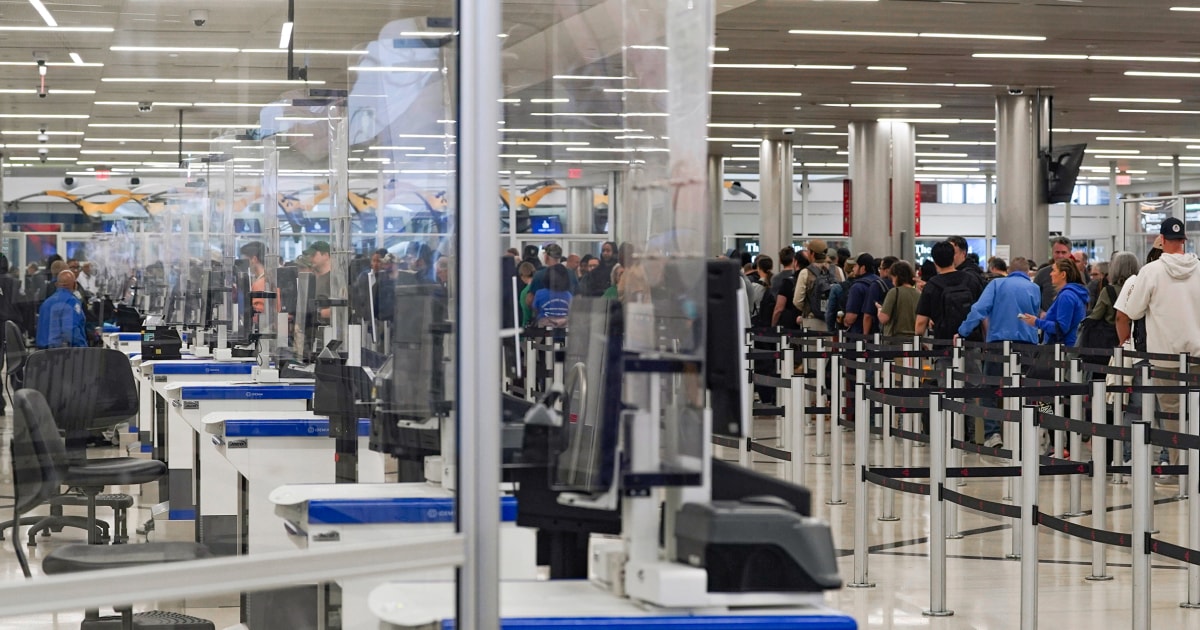
The Transportation Security Administration is facing what its own acting head has described as a “perfect storm” — a historic staffing crisis driven by an ongoing Department of Homeland Security partial shutdown, arriving at precisely the worst possible moment. With the 2026 FIFA World Cup set to flood US airports with international visitors this summer, millions of spring and summer travellers are already encountering longer lines, stretched security resources, and a system under serious strain.
The crisis stems from a combination of factors that have compounded simultaneously: unfinished negotiations, unpaid wages for TSA staff, and a passenger surge that shows no sign of slowing. Airport queues have already lengthened dramatically at major hubs, and the World Cup hasn’t even begun yet.
For anyone planning to fly in or out of the United States in the coming months, this situation is worth understanding — because it could directly affect how long you wait, whether your connection holds, and how smoothly your travel goes.
What Is Actually Happening at TSA Right Now
The root of the problem is a partial shutdown of the Department of Homeland Security, the federal agency that oversees the TSA. When government funding lapses or negotiations stall, essential workers — including TSA security officers — can find themselves working without pay or facing deep uncertainty about their employment conditions. That uncertainty has a direct effect on staffing levels.
When TSA staffing drops, the consequences are immediate and visible. Fewer officers means fewer screening lanes open. Fewer lanes means longer queues. And longer queues mean more missed flights, more stressed passengers, and more pressure on airport staff across the board.
Officials have noted that the timing of this crisis could hardly be worse. The 2026 FIFA World Cup is expected to be the largest soccer tournament ever staged, with matches scheduled across multiple US cities. The influx of international fans, athletes, media, and support staff will push passenger volumes at key airports to extraordinary levels precisely when the system is least equipped to handle them.
The Scale of the Challenge Ahead
To understand why this matters, it helps to consider the scale of what the TSA handles on a normal day — and then imagine that volume multiplied by a global sporting event drawing fans from dozens of countries.
| Factor | Current Status | Expected Impact |
|---|---|---|
| DHS Partial Shutdown | Ongoing | Reduced TSA staffing and morale |
| TSA Wage Negotiations | Unfinished | Officer uncertainty and potential walkouts |
| Passenger Volume | Already surging in spring 2026 | Set to intensify with World Cup arrivals |
| Airport Queue Lengths | Already increased dramatically | Expected to worsen through summer |
| 2026 FIFA World Cup | Approaching this summer | Unprecedented international passenger surge |
The concern among travel and security officials is that these pressures are not sequential — they are all happening at the same time, feeding into each other. A staffing shortfall that might be manageable in a quiet travel period becomes a serious crisis during one of the busiest travel seasons the country has ever seen.
Who Gets Hit Hardest — and How
If you are flying domestically or internationally through a major US hub this spring or summer, the effects of this crisis are likely to be felt in concrete ways. Security lines that once moved in 20 to 30 minutes may stretch to an hour or more. Passengers connecting through busy airports face a heightened risk of missing onward flights if their inbound arrival runs even slightly late.
International travellers arriving for the World Cup face a particular set of complications. Many will be unfamiliar with US airport security procedures, travelling in large groups, and arriving at airports that are already operating near capacity. The combination creates conditions where even minor delays can cascade into significant disruptions.
Frequent flyers and business travellers are not immune either. Even those enrolled in expedited screening programs may find that the overall system slowdown affects their experience when officer numbers are insufficient to staff all available lanes.
Airlines, too, are watching this situation closely. Flight schedules are built around assumptions about how long security and boarding processes take. If ground-level delays become routine, on-time performance across the network suffers — affecting passengers well beyond those who actually encounter the queues.
What Happens Next — and What You Can Do
The immediate priority for federal officials is resolving the underlying DHS shutdown and completing wage negotiations with TSA staff. Until those issues are addressed, the staffing pressures that are driving longer lines are unlikely to ease on their own.
For travellers, the practical advice is straightforward even if it is inconvenient: arrive earlier than you normally would. At major airports during peak periods, adding an extra hour to your pre-flight buffer is a reasonable precaution given current conditions. If you are travelling internationally or have tight connections, the case for extra time is even stronger.
Airports and airlines have been aware of the World Cup travel surge for some time and have made their own operational preparations. But the TSA staffing situation is a federal matter that individual airports and carriers have limited ability to solve on their own.
How quickly the DHS shutdown is resolved — and whether TSA wage negotiations reach a conclusion that stabilises staffing — will largely determine whether the summer travel season becomes a manageable challenge or a genuine crisis for millions of passengers and the broader US travel industry.
Frequently Asked Questions
What is causing the TSA staffing crisis in 2026?
An ongoing partial shutdown of the Department of Homeland Security, combined with unfinished wage negotiations and unpaid wages for TSA officers, has created significant staffing pressures across US airports.
How does the 2026 FIFA World Cup make this worse?
The World Cup is expected to drive an unprecedented surge in international passengers through US airports this summer, adding enormous volume to a security system already under strain.
Are airport lines already getting longer?
Yes. Queue lengths at major US airports have already increased dramatically, and officials warn conditions could worsen as the World Cup approaches and passenger volumes climb further.
Which travellers are most at risk from these disruptions?
Passengers with tight connections, international travellers unfamiliar with US airport procedures, and anyone flying through major hub airports during peak summer periods face the greatest disruption risk.
Will the situation be resolved before the World Cup begins?
This has not yet been confirmed. Resolution depends on the outcome of DHS shutdown negotiations and TSA wage talks, both of which remained unresolved at the time of reporting.
What can travellers do to protect themselves?
Arriving significantly earlier than usual — particularly at major airports and for international or connecting flights — is the most practical step travellers can take given current conditions.




Leave a Reply