
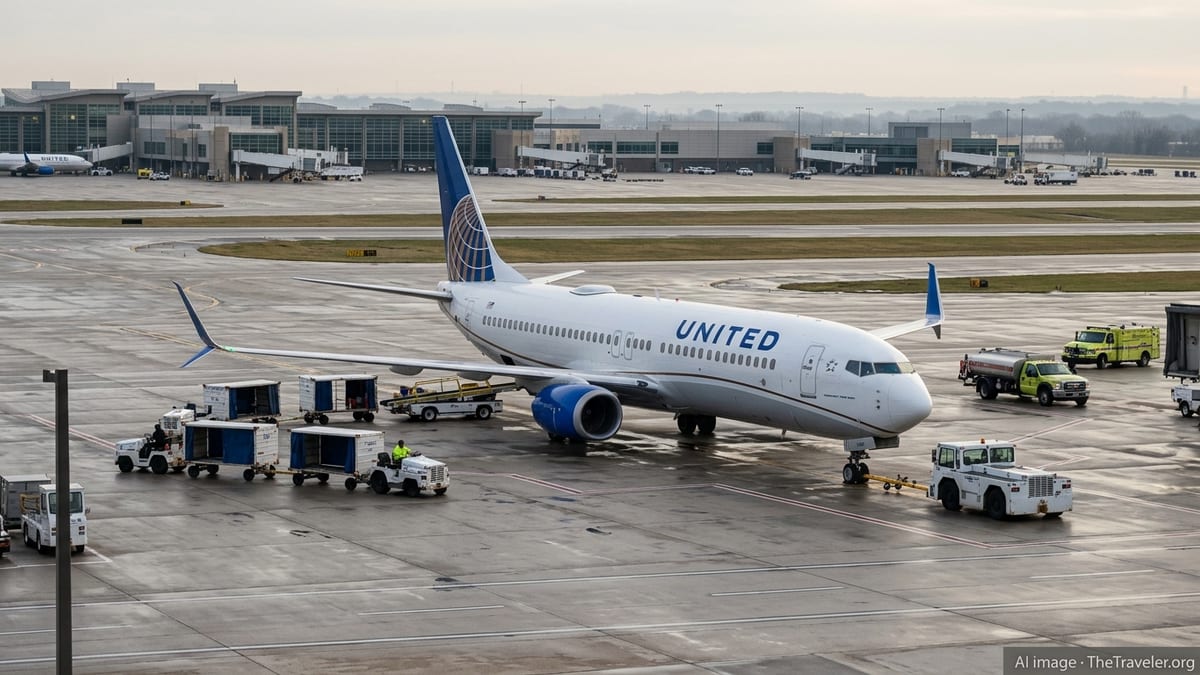
A routine cross-country flight turned into an unplanned stop in the Midwest when United Airlines Flight UA1578, en route from Nashville to San Francisco, was forced to divert and make an emergency landing at Kansas City International Airport shortly after takeoff.
The incident, which unfolded early in the flight’s journey, drew immediate attention from aviation safety observers and travelers alike. Passengers aboard the Airbus A320 found their transcontinental trip interrupted before the aircraft had even cleared the early phase of its route — a reminder that in commercial aviation, crew decisions made in the first minutes of a flight can be the most consequential.
According to available information, the flight crew identified a possible technical or operational problem shortly after departure from Nashville and made the call to divert rather than continue westward. That decision, while disruptive for passengers, reflects exactly the kind of protocol-driven response aviation safety standards are designed to produce.
What Happened Aboard United Airlines Flight UA1578
Flight UA1578 departed Nashville on what was expected to be a standard transcontinental route to San Francisco. Not long after takeoff, the crew detected what has been described as a possible technical or operational issue. Rather than pressing on and allowing the situation to develop further at altitude, the pilots chose to divert to the nearest suitable airport.
Kansas City International Airport became the unscheduled destination. The Airbus A320 landed safely, came to a complete stop, and ground crews were able to begin inspection and passenger handling procedures without incident.
No injuries have been reported in connection with the diversion. The crew’s decision to prioritize a controlled landing over continuing the flight is consistent with standard aviation safety procedures, which generally favor caution when any uncertainty arises about aircraft systems mid-flight.
The Flight at a Glance
| Detail | Information |
|---|---|
| Flight Number | United Airlines UA1578 |
| Origin | Nashville, Tennessee |
| Scheduled Destination | San Francisco, California |
| Diversion Airport | Kansas City International Airport |
| Aircraft Type | Airbus A320 |
| Stage of Flight at Diversion | Early phase, shortly after takeoff |
| Reported Injuries | None confirmed |
| Outcome | Safe landing; inspection and passenger handling initiated |
Why the Crew Made the Call They Did
Aviation professionals consistently emphasize that diversions, while alarming to passengers, are almost always the right outcome when a crew identifies an anomaly they cannot fully resolve in the air. The earlier a problem is caught, the more options a crew has — including the ability to land at a well-equipped airport rather than being forced into a more difficult situation further along the route.
In this case, the pilots adhered to standard safety protocols and chose a controlled diversion over continuing the flight. Kansas City International Airport, a major hub with full emergency and maintenance capabilities, was identified as the closest suitable option.
The nature of the technical or operational issue has not been fully detailed in available reporting. Investigators and airline maintenance teams would typically examine the aircraft following such a diversion to determine the root cause and assess whether any further action is required before the plane returns to service.
What This Means for Passengers and the Broader Picture
For the travelers aboard UA1578, the diversion meant a significant disruption — an unplanned stop in Kansas City instead of arriving in San Francisco. Passenger handling procedures were initiated after landing, which typically includes rebooking, accommodation assistance if needed, and communication from the airline about onward travel options.
From a broader aviation perspective, incidents like this one serve as a useful reminder of how the system is designed to work. Pilots are trained to treat any unresolved anomaly seriously, and the layered safety architecture of modern commercial aviation — from crew training to aircraft systems to air traffic control — exists precisely to manage these moments before they escalate.
The Airbus A320 is one of the most widely flown commercial aircraft in the world, with a strong overall safety record. Diversions involving this aircraft type are not uncommon across the global fleet, and the vast majority are resolved without harm to passengers or crew.
What Happens Next for the Flight and Aircraft
Following the safe landing at Kansas City International Airport, the immediate priorities would have been passenger welfare and aircraft inspection. Airlines in these situations typically work to rebook affected passengers on the next available flights to their destination while maintenance teams assess the aircraft.
The specific issue identified by the crew will likely undergo a formal review. Aviation regulators and airline safety teams routinely document and analyze diversion events, both to understand what occurred and to identify whether any systemic changes are needed.
United Airlines has not publicly detailed the cause of the diversion or the timeline for the aircraft’s return to service based on currently available information. Passengers who were aboard the flight would typically be contacted directly by the airline regarding compensation and rebooking options under standard airline customer care procedures.
For now, the key fact is the one that matters most: the crew identified a problem, acted quickly, and everyone landed safely.
Frequently Asked Questions
What flight made an emergency landing in Kansas City?
United Airlines Flight UA1578, traveling from Nashville to San Francisco, made an emergency diversion landing at Kansas City International Airport shortly after takeoff.
What type of aircraft was involved?
The aircraft was an Airbus A320 operating on a transcontinental route between Nashville and San Francisco.
Why did the flight divert to Kansas City?
The crew detected a possible technical or operational issue shortly after departure and chose to divert to the nearest suitable airport rather than continue the flight, following standard aviation safety procedures.
Were any passengers or crew injured?
No injuries have been confirmed in connection with the diversion and emergency landing.
What caused the technical issue on UA1578?
The specific nature of the technical or operational problem has not been fully detailed in available reporting at this time.
What happens to passengers when a flight is diverted like this?
Airlines typically initiate passenger handling procedures after an unscheduled landing, which generally includes rebooking on alternative flights and communication about onward travel options, though specific arrangements depend on the airline’s policies and the circumstances of the diversion.



Leave a Reply