
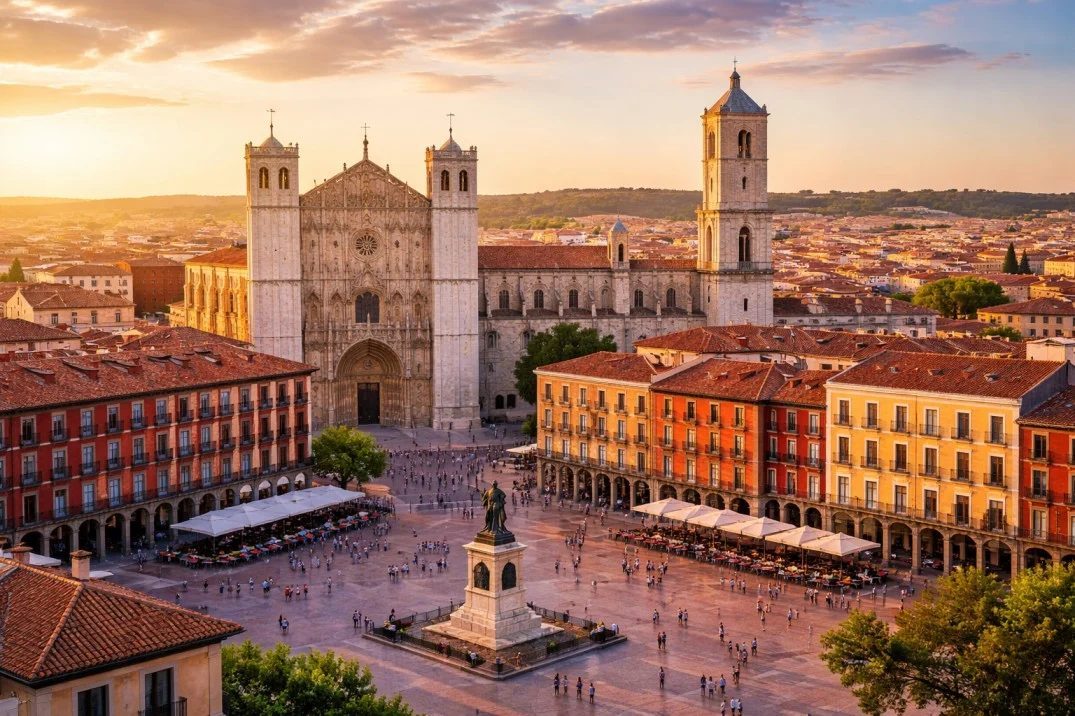
While Barcelona and Madrid absorb the lion’s share of Spain’s international tourist traffic, a city of roughly 300,000 people in the heart of Castilla y León has been quietly building a tourism identity that serious travelers are starting to notice. Valladolid — once a seat of Spanish imperial power — is re-emerging as a cultural destination in its own right, drawing visitors with its Renaissance heritage, its food scene, and a calendar of festivals that punches well above the city’s weight.
What makes Valladolid particularly compelling for travelers right now is the contrast it offers. The streets are walkable and relaxed. The history is dense and layered. And unlike the country’s most-visited cities, the experience still feels genuinely Spanish rather than curated for mass tourism.
For anyone planning a trip to Spain who wants something beyond the obvious, Valladolid is worth a serious look — and here’s why the city is generating real momentum in cultural and festival tourism circles.
A City That Once Ran an Empire — and Still Carries That Weight
Valladolid’s historical significance is not a marketing invention. The city grew into a major center of power during medieval times and served, at one point, as the capital of Spain. That history left a physical mark on the urban landscape that visitors can still read in the architecture, the plazas, and the institutions that line the city’s streets.
The Renaissance period in particular shaped much of what Valladolid looks like today. That architectural legacy — the stonework, the courtyards, the civic grandeur — gives the city a visual richness that rewards slow exploration far more than a rushed day trip.
Sitting within the wider region of Castilla y León, Valladolid also functions as a major administrative and cultural hub for one of Spain’s most historically significant territories. That regional role has helped sustain cultural institutions and investment in ways that smaller cities often cannot manage.
What Valladolid Actually Offers the Modern Traveler
The city’s appeal breaks down across a few distinct pillars, each of which draws a different kind of visitor — and increasingly, travelers who want all of it in one place.
| Tourism Pillar | What It Includes | Who It Appeals To |
|---|---|---|
| Renaissance Heritage | Historic architecture, medieval urban fabric, former capital status | History and culture travelers |
| Gastronomy | Authentic regional Spanish food scene | Food-focused travelers |
| Festival Tourism | Cultural festivals and events calendar | Experience-driven and repeat visitors |
| City Livability | Walkable streets, manageable size, relaxed atmosphere | Travelers seeking authentic, uncrowded Spain |
The gastronomy angle deserves particular attention. Castilla y León has a strong culinary identity rooted in Castilian traditions — roasted meats, legume-based dishes, and wines from nearby regions — and Valladolid sits at the center of that food culture. For travelers who plan trips around eating well, the city offers a credible destination rather than a secondary stop.
The festival dimension is also driving real tourism growth. A robust events calendar gives visitors a reason to time their trips intentionally, and it creates the kind of concentrated cultural experience that generates word-of-mouth and return visits.
Why the “Smaller City Feel” Is Actually the Point
With a population of approximately 300,000, Valladolid occupies an interesting middle ground in Spanish urban geography. It is large enough to have genuine cultural infrastructure — museums, theaters, universities, restaurants — but compact enough that visitors can navigate it without feeling overwhelmed or anonymous.
That scale matters more than it might initially seem. Some of the most common complaints about visiting Spain’s major tourist cities involve crowds, prices inflated by demand, and the sense that the authentic local life has been pushed out to make room for visitors. Valladolid does not have that problem yet — and that absence is precisely what draws travelers who have already done the big-city circuit.
The relaxed street life that observers note in the city is not incidental. It reflects a place where tourism is growing but has not yet overwhelmed the rhythms of daily life. For many travelers, that balance is exactly what they are looking for.
The Broader Shift Toward Cultural and Heritage Tourism in Spain
Valladolid’s rise fits into a wider pattern playing out across European travel. Travelers — particularly those who have visited the continent before — are increasingly bypassing the headline destinations in favor of cities with genuine historical depth and lower tourist density. Heritage tourism, festival tourism, and food-led travel are all growing segments, and Valladolid speaks directly to all three.
Spain as a whole continues to attract enormous international visitor numbers, but the distribution of that tourism is shifting. Cities in regions like Castilla y León are benefiting as travelers search for experiences that feel less scripted and more connected to actual Spanish life and history.
Valladolid’s positioning as a cultural and administrative hub within that region gives it structural advantages that smaller towns cannot replicate — the infrastructure, the institutions, and the event calendar that sustain a genuine tourism economy rather than a seasonal spike.
What to Expect If You Go
For travelers considering Valladolid, the practical picture is straightforward. The city is designed for ease of navigation, with a walkable historic core that keeps the main attractions within reach without requiring constant transport. The size — large enough to feel like a real city, small enough to feel manageable — is a consistent draw for visitors who want depth without chaos.
- The Renaissance architectural heritage is concentrated and walkable within the historic center
- The food scene reflects authentic Castilian culinary traditions rather than tourist-facing menus
- Festival and cultural events provide timed experiences that reward intentional trip planning
- The city’s role as a regional hub means it has the infrastructure to support visitors comfortably
- Proximity to the wider Castilla y León region offers day-trip options for travelers staying longer
The city’s current momentum in tourism circles suggests this window — where Valladolid is genuinely compelling but not yet overrun — may not stay open indefinitely. Destinations that hit this particular sweet spot tend not to stay undiscovered for long.
Frequently Asked Questions
Where is Valladolid located in Spain?
Valladolid is located in the region of Castilla y León in central Spain, where it serves as a major cultural and administrative center.
How big is Valladolid?
The city has a population of approximately 300,000 people, giving it what observers describe as a smaller city feel despite its significant historical and regional role.
What is Valladolid historically known for?
Valladolid grew in importance during medieval times and at one point served as the capital of Spain, leaving behind a substantial Renaissance architectural legacy that shapes the city’s tourism identity today.
What kinds of tourism is Valladolid known for?
The city is recognized for Renaissance heritage tourism, gastronomy, and festival tourism, with a growing reputation as an authentic alternative to Spain’s more crowded major destinations.
Is Valladolid easy to get around as a visitor?
The city is described as designed for ease of navigation, with a walkable layout and a relaxed street atmosphere that makes it accessible for independent travelers.
Is Valladolid considered an up-and-coming destination?
Yes — the city is described as one of Spain’s most up-and-coming tourist cities, with a blossoming modern culture layered over its deep historical foundations.



Leave a Reply