
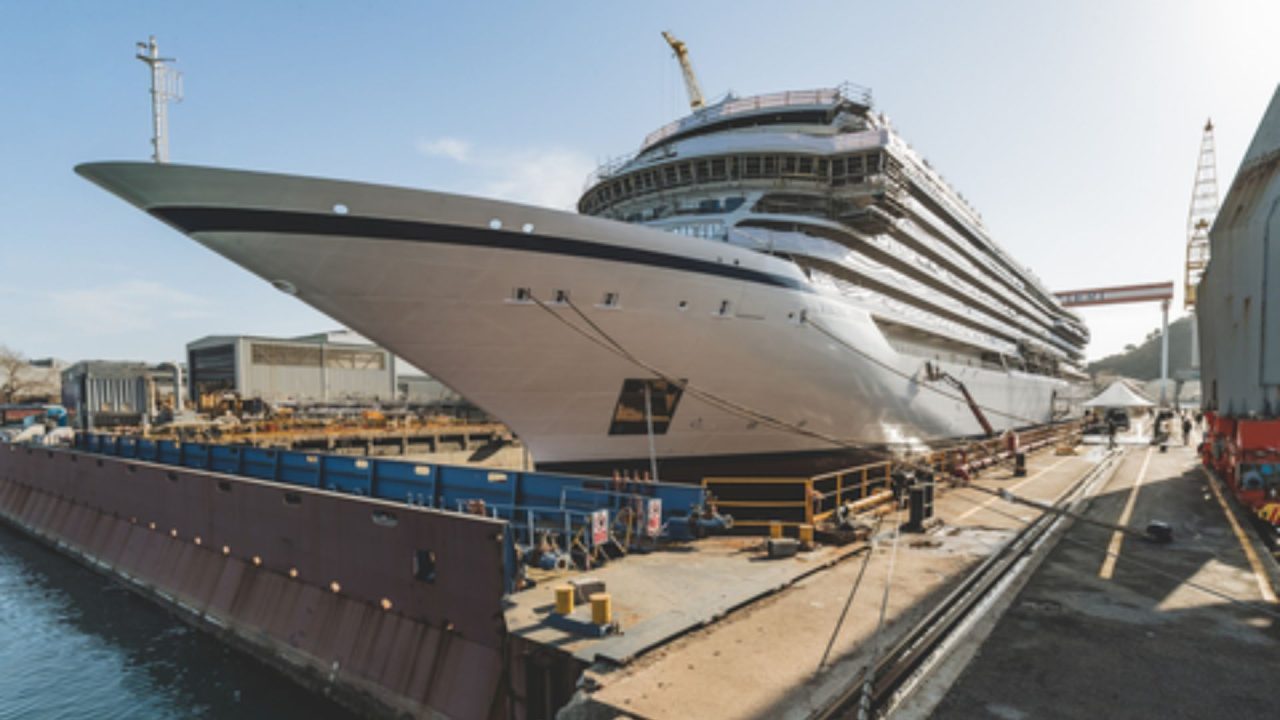
The world’s first hydrogen-powered cruise ship has officially touched water — and it could permanently change how travelers explore some of Europe’s most protected coastlines.
Viking’s Viking Libra completed its float-out ceremony in March 2026 at the Fincantieri shipyard in Ancona, Italy. The milestone marks the moment a vessel transitions from dry dock to water ahead of final outfitting and sea trials. For the cruise industry, it signals that zero-emission ocean travel is no longer a concept on a whiteboard — it’s a ship sitting in the water, weeks away from carrying real passengers.
The timing is deliberate. Norway, one of Viking’s most iconic destinations, has set zero-emission mandates for sailings through its World Heritage fjords by 2026. Viking Libra isn’t just a new ship — it’s a direct answer to one of the toughest environmental regulations ever placed on the cruise industry.
What Makes Viking Libra Different From Every Other Cruise Ship
The short answer: how it’s powered. Viking Libra runs on dual-fuel hydrogen-electric propulsion, which means it can operate with true zero emissions rather than simply reducing them. Most cruise ships today run on heavy fuel oil or, at best, liquefied natural gas — cleaner than diesel, but still far from clean.
Hydrogen propulsion eliminates the carbon equation entirely during operation. When hydrogen is used as fuel, the byproduct is water vapor, not carbon dioxide or sulfur dioxide. For a ship sailing through a narrow Norwegian fjord surrounded by glaciers and UNESCO-protected landscapes, that difference is enormous.
The vessel itself is substantial. At 54,300 gross tons, it spans eleven decks and accommodates 998 passengers — a size that keeps it intimate by cruise industry standards while still being a serious ocean-going ship. It was built by Fincantieri, one of the world’s leading shipbuilders, at their facility in Ancona.
Key Facts About Viking Libra at a Glance
| Detail | Specification |
|---|---|
| Ship Name | Viking Libra |
| Propulsion System | Dual-fuel hydrogen-electric |
| Gross Tonnage | 54,300 GT |
| Passenger Capacity | 998 passengers |
| Number of Decks | 11 |
| Shipbuilder | Fincantieri, Ancona, Italy |
| Float-Out Date | March 2026 |
| Expected Debut | November 2026 |
After the float-out, the ship enters a period of final outfitting — interior finishing, systems testing, and sea trials — before its planned November 2026 debut.
Why Norway’s Fjords Are at the Center of This Story
Norway’s fjords aren’t just scenic. Sites like Geirangerfjord carry UNESCO World Heritage status, meaning they come with strict international obligations around environmental protection. For years, cruise ships passing through these narrow waterways have been a source of genuine concern — the combination of diesel exhaust and heavy ship traffic in enclosed fjord environments creates measurable air quality and ecological impacts.
Norwegian authorities have responded with firm policy. Zero-emission mandates for World Heritage fjords are set to take effect in 2026, effectively barring conventional fuel-burning vessels from some of the country’s most visited destinations. That’s not a distant regulatory threat — it’s the current operating environment Viking Libra is being built to meet.
For travelers, this matters in a practical way. Ships that can’t comply with those standards will lose access to certain routes. Ships that can comply — like Viking Libra — will be among the few options available for sailing through Norway’s most spectacular scenery without restriction.
The Ripple Effect on Mediterranean and Eco-Conscious Travel
Norway isn’t the only destination watching this closely. Mediterranean ports — many of them situated near sensitive marine ecosystems, historic city centers, and increasingly crowded coastlines — have been under growing pressure to address cruise ship emissions. A hydrogen-powered vessel capable of zero-emission operation changes the conversation at every port it enters.
The broader trend is clear: eco-conscious travelers are reshaping demand. Sustainability has moved from a marketing talking point to an actual booking consideration for a growing segment of travelers. The ability to sail through a protected fjord or anchor near a historic Mediterranean coastline without contributing to local air pollution is becoming a genuine selling point — not just an ethical footnote.
- Zero-emission operation makes Viking Libra compliant with Norway’s 2026 fjord mandates from day one
- Hydrogen propulsion produces water vapor rather than carbon or sulfur emissions
- UNESCO-listed sites like Geirangerfjord become accessible without environmental compromise
- Mediterranean ports facing emission pressure benefit from cleaner vessel technology
- Travelers seeking low-impact itineraries gain a credible option at ocean scale
What Happens Between Now and November
The float-out is a milestone, but it’s not the finish line. With the hull now in the water at Ancona, the Fincantieri team moves into the final outfitting phase — the intensive process of completing interiors, installing systems, and running the technical tests required before any passenger ship earns its certification to sail.
Sea trials will follow, putting Viking Libra’s hydrogen propulsion through real-world conditions before the ship is formally handed over to Viking. If the schedule holds, passengers will board for the first time in November 2026.
Norway’s tourism boards have been supportive of the development, seeing hydrogen-powered vessels as a way to preserve access to fragile environments while continuing to welcome visitors. The alignment between Viking’s technology timeline and Norway’s regulatory deadline is not coincidental — it reflects months, if not years, of coordination between the cruise industry and destination authorities.
Whether Viking Libra represents the beginning of a broader hydrogen transition in cruising or remains an outlier for years to come will depend on how the technology performs in service, what it costs to operate, and how quickly hydrogen fueling infrastructure develops at ports around the world. But as the first ship of its kind, it carries the weight of proving the concept for an entire industry.
Frequently Asked Questions
What is Viking Libra?
Viking Libra is the world’s first hydrogen-powered cruise ship, built by Fincantieri at its Ancona shipyard in Italy. It completed its float-out ceremony in March 2026.
How many passengers can Viking Libra carry?
The ship accommodates 998 passengers across eleven decks and measures 54,300 gross tons.
When will Viking Libra begin sailing with passengers?
Viking Libra is scheduled to debut in November 2026, following final outfitting and sea trials after its March 2026 float-out.
Why does hydrogen propulsion matter for Norway’s fjords?
Norwegian authorities have mandated zero-emission operations in World Heritage fjords by 2026. Viking Libra’s hydrogen-electric propulsion allows it to sail those routes without producing harmful emissions.
Which UNESCO sites will benefit from this technology?
Geirangerfjord is specifically noted as a UNESCO World Heritage site where cleaner vessel access is expected to improve as a result of zero-emission ship technology.


Leave a Reply