
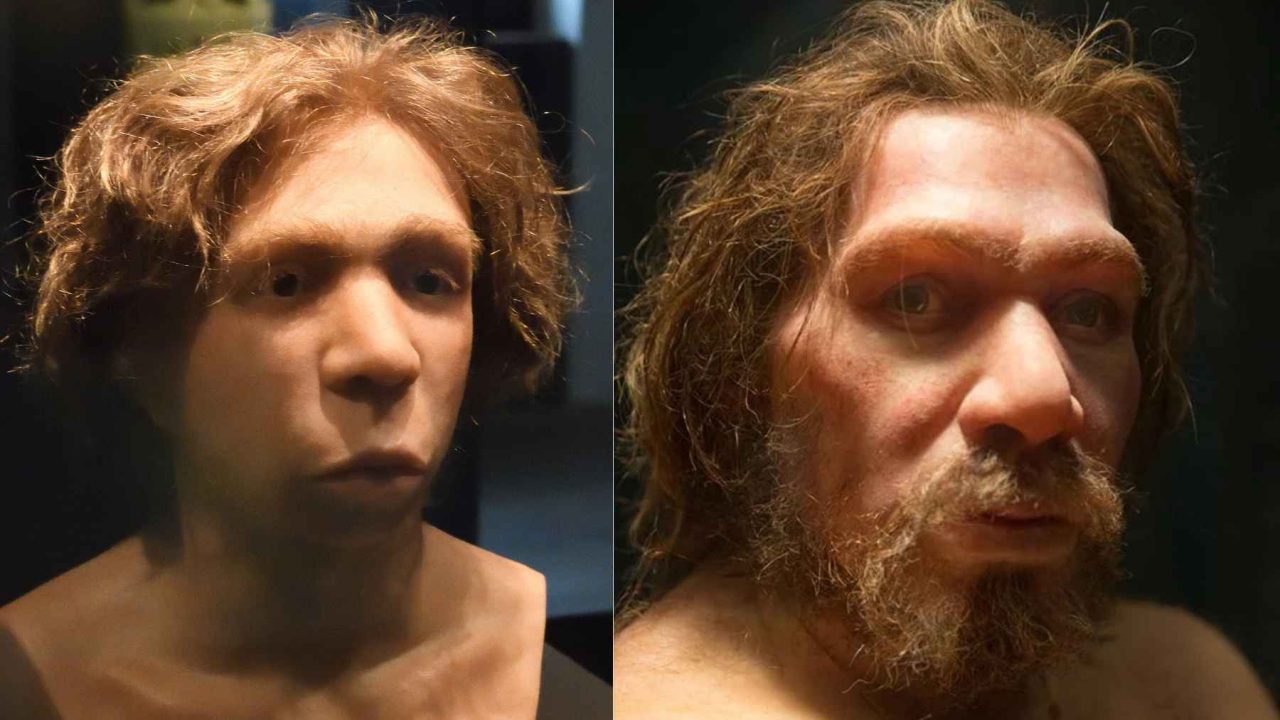
About 2 to 4 percent of your DNA, if you have non-African ancestry, was written by a species that went extinct roughly 40,000 years ago. That number feels small. It is also deeply misleading.
Because the distribution of that ancient inheritance is anything but uniform. Some regions of the human genome are soaked in Neanderthal sequence. Others are almost completely empty. And the emptiest place of all is one of the most consequential: the X chromosome.
A peer-reviewed paper published on February 26, 2026, in Science put a precise number on that absence. Researchers found a 62 percent relative excess of modern human ancestry on Neanderthal X chromosomes compared with other Neanderthal chromosomes. In plain terms: where Neanderthal DNA should be on the human X, it is largely gone. The question is why.
The Three Neanderthals Who Helped Crack the Code
To understand how researchers reached this conclusion, it helps to know their raw material. The 2026 study compared DNA recovered from three individual Neanderthals, referred to in the literature as Altai, Chagyrskaya, and Vindija. Each came from a different archaeological site, separated by thousands of miles and thousands of years.
African populations served as the reference genome throughout the analysis. This is a standard methodological choice: because the ancestors of present-day African populations did not interbreed with Neanderthals, their genomes provide a clean baseline for comparison. Everything that looks distinctly Neanderthal in non-African genomes stands out against that background.
What the team found was a striking geographic pattern within the genome itself. Neanderthal ancestry clusters in certain chromosomal regions and vanishes in others. The X chromosome is one of the most extreme examples of what geneticists call a “Neanderthal desert.”
| Chromosome / Region | Neanderthal Ancestry Level | Notable Trait Associations |
|---|---|---|
| Autosomes (non-sex chromosomes) | Low single-digit percent range | Immune function, metabolism, pain sensitivity |
| Skin and hair gene regions | Elevated retention | Hair texture, skin adaptation to cold climates |
| X chromosome | Strongly depleted (“Neanderthal desert”) | Fertility, hybrid compatibility |
| Y chromosome | Absent (no Neanderthal Y survived) | Paternal lineage |
A 62 Percent Imbalance and What It Reveals About Ancient Sex
Daniel Harris, a co-first author on the 2026 study, described the finding as “a striking imbalance.” That phrasing is careful and scientific. The reality it points to is stranger and more intimate.
The researchers concluded that ancient interbreeding was mostly between male Neanderthals and female anatomically modern humans. Not the reverse. The sex of the participants, separated from us by tens of thousands of years, left a detectable signature in the chromosomes of billions of living people.
Here is the biological logic. Females carry two X chromosomes. Males carry one X, inherited from their mother, and one Y, inherited from their father. When a male Neanderthal and a female modern human produced offspring, that child inherited one Neanderthal X and one modern human X. Any Neanderthal sequences on that X that reduced fertility or survival would be exposed immediately, in every individual, with no second copy to compensate.
On autosomes, a harmful variant from one parent can be masked by a functional copy from the other. On the X chromosome, in males especially, there is nowhere to hide. Natural selection had a clear target, and over generations, it removed Neanderthal sequences from that region with unusual efficiency.
The result is that all surviving Neanderthal DNA in living humans came through male Neanderthals. The female Neanderthal contribution, if it ever existed in meaningful quantity, was scrubbed away by selection long before anyone was around to sequence it.
“Much as different populations of modern humans inherited different regions of the genome from Neanderthals, there is little overlap between Neanderthal-derived sequences across populations — suggesting selection shaped which fragments survived in each lineage.”
— PMC / NCBI, published research on Neanderthal introgression patterns
The Traits That Survived Selection — and the Price They Carried
Not all Neanderthal DNA was eliminated. Far from it. The sequences that persisted did so because they offered something useful, at least in the environments early modern humans were entering when they left Africa.
Researchers found elevated Neanderthal ancestry in genomic regions associated with skin and hair. The leading interpretation is practical: thicker, straighter hair and skin better adapted to cold, low-sunlight environments gave early migrants into Eurasia a survival edge. The Neanderthals had been living in those conditions for hundreds of thousands of years. Their DNA carried solutions that modern humans had not yet evolved independently.
Immune system genes also show Neanderthal influence. Some variants appear to have primed early immune responses in ways that helped modern humans survive novel pathogens in unfamiliar landscapes. But that inheritance is not straightforwardly beneficial.
In 2016, scientists discovered that Neanderthal immune genes, while useful for rapid pathogen response, are also associated with elevated rates of allergic and autoimmune conditions in modern populations. The same hair-trigger sensitivity that helped an ancient ancestor survive a new bacterial threat can, in a modern body with modern hygiene and modern food, misfire against harmless substances.
Evolution does not optimize for comfort. It optimizes for reproduction in a specific environment. The Neanderthal sequences that survived in us were selected for a world that no longer exists.
What the Deserts Tell Us About Hybrid Incompatibility
The concept of a “Neanderthal desert” is not unique to the X chromosome, but the X is the starkest example. These deserts, regions where Neanderthal ancestry is conspicuously absent, are thought to mark places where hybrid DNA was actively harmful.
In biology, when two populations that have been separated for a long time interbreed, their genomes do not always mix smoothly. Sequences that evolved together in one lineage can interact poorly with sequences from another. The offspring of such pairings sometimes survive and reproduce. Sometimes they do not, or do so at reduced rates. Over generations, natural selection removes the incompatible fragments.
The human X chromosome appears to have been a particularly hostile environment for Neanderthal sequences. The 62 percent excess of modern human ancestry found there in the 2026 study is not a rounding error. It is the cumulative record of thousands of generations of selection against hybrid incompatibility, written into the genomes of every living person with non-African ancestry.
There is something quietly humbling about this. The genome is not a museum. It is an active record of what worked and what failed, edited continuously by the pressure of survival across tens of thousands of years. The Neanderthal DNA you carry is not random. It is the residue of an ancient negotiation between two species, and the terms of that negotiation are still visible if you know where to look.
The places where that DNA is absent may tell us more about who we are than the places where it remains.
Frequently Asked Questions

You Might Also Like
The Aluminum Breakthrough That Could End Our Addiction to Rare Metals
Scientists at King's College London created cyclotrialumane, a new aluminum form that could replace platinum…

5 Reasons Chernobyl’s Radiation-Eating Fungus Rewrites Biology
A melanin-rich fungus discovered in Chernobyl thrives on radiation. Here are the 5 most stunning…
One Percent Left: The Quiet Collapse of Europe’s Ancient Eel
The European eel is down to 1% of its 1960s population in parts of Europe.…
Leave a Reply