
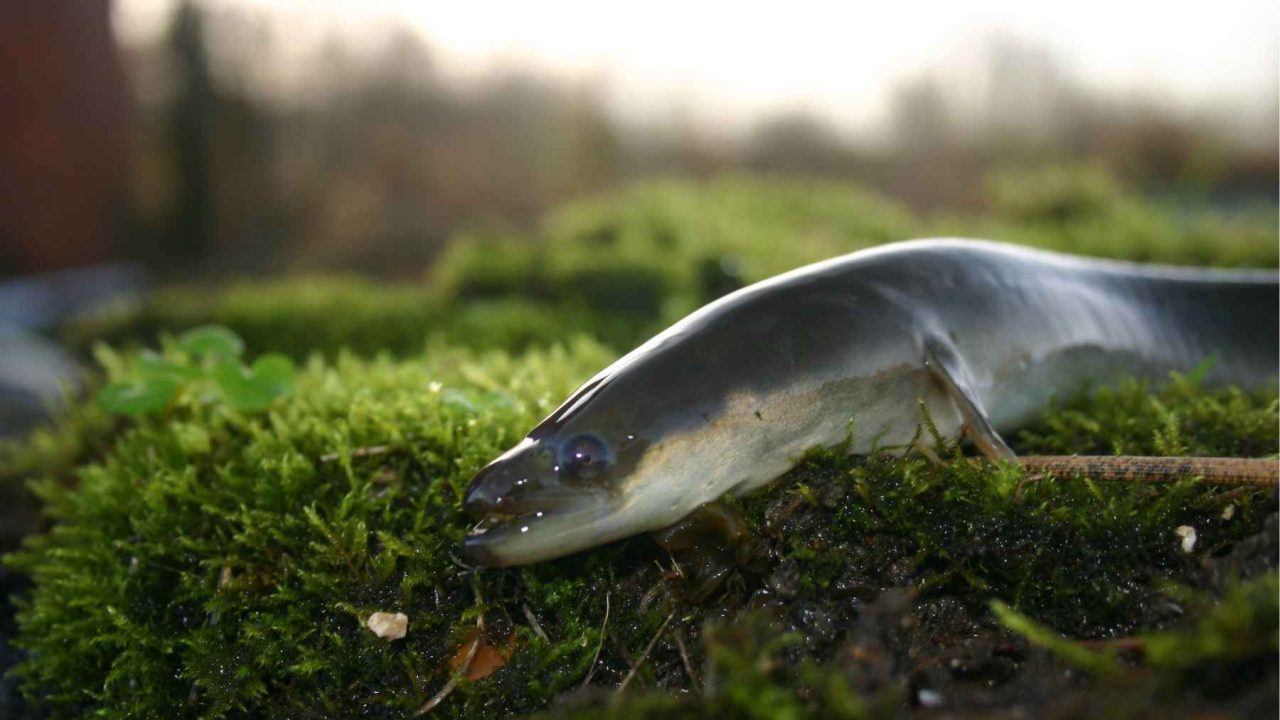
Here is the uncomfortable truth that nobody in the conservation world wants to say out loud: the European eel may already be functionally doomed, and a fishing ban, however well-intentioned, might not change that at all.
That is not an argument against protecting the eel. It is an argument for understanding what is actually killing it. Because if we get that wrong, we will spend the next decade fighting fishermen in Galicia while the real culprits go entirely unaddressed.
The Anguilla anguilla, the European eel, is one of the most biologically extraordinary animals on the planet. It is also, according to the IUCN Red List, Critically Endangered. And it has been disappearing so quietly, so steadily, that most of Europe barely noticed until the numbers became almost too grim to publish.
A Creature Built for the Impossible
To understand what is at stake, you need to appreciate what this animal actually does. The European eel can grow to over a meter in length. It spends most of its adult life in freshwater rivers, lakes, and estuaries across Europe, from the Atlantic coast of Ireland to the rivers of North Africa.
Then, when it is ready to reproduce, it does something that still baffles scientists. It migrates thousands of kilometers across the open Atlantic Ocean to the Sargasso Sea, a warm gyre east of the Bahamas, where it spawns and dies. The larvae, called leptocephali, then drift back on ocean currents for up to three years before reaching European coasts as transparent, finger-length creatures called glass eels.
No human has ever observed European eels spawning in the wild. We have never found their eggs in the Sargasso. We know they go there because tagged adults swim in that direction and never come back. The full reproductive cycle of this species remains one of zoology’s genuine open mysteries.
The Numbers That Should Have Stopped Us
Glass eel recruitment is the clearest window we have into eel population health. Every spring, researchers count the young eels arriving at river mouths and compare those numbers to historical baselines. What those counts now show is alarming.
In the North Sea region, glass eel recruitment is hovering at just over one percent of its 1960 to 1979 average. One percent. Not fifty. Not twenty. One.
Even in the relatively better-performing regions, including Spain and the Mediterranean, recruitment sits at around seven percent of its historical average. That is not a recovery. That is a slower collapse.
The trajectory has been decades in the making. Overfishing, river fragmentation from dams and weirs, habitat loss, pollution, parasitic infection by the introduced nematode Anguillicola crassus, and shifting ocean conditions have all been implicated. No single cause explains everything. That complexity is part of what makes the crisis so hard to resolve politically.
| Threat Factor | Impact on Eel Population | Controllable? |
|---|---|---|
| Commercial fishing (glass eels) | Direct removal of juvenile recruits | Yes — via quotas and bans |
| River barriers (dams, weirs) | Blocks upstream migration routes | Partially — requires infrastructure changes |
| Habitat loss and pollution | Reduces viable river habitat | Slowly — long-term restoration needed |
| Anguillicola crassus parasite | Damages swim bladder, impairs migration | No — invasive species already widespread |
| Ocean current and climate shifts | May reduce larval drift success | No — systemic climate issue |
Spain’s Stalled Attempt at Action
In early 2025, Spain’s Ministry for the Ecological Transition made a move that surprised the fishing sector. It proposed listing the European eel as “in danger of extinction” under national law, which would have triggered the strictest available protections, including significant restrictions on fishing.
The proposal went before the State Committee for Flora and Fauna on February 17. It did not pass. Several regional governments, particularly those with active glass eel fisheries, opposed the strict classification and blocked the measure from advancing.
“The fishing operations in Galicia and Asturias are subject to regulated nets, ongoing scientific monitoring, and regular inspections — and the industry insists this matters.”
— Summarized from regional fishing sector statements
That defense is not entirely without merit. Eel and glass eel fisheries in Spanish estuaries operate under seasons limited to roughly six months. Catches are monitored. The argument from fishing communities is that regulated, traditional fisheries are not the primary driver of the collapse, and that punishing them while ignoring dams and ocean change is both scientifically flawed and economically devastating.
The counter-argument is also straightforward: when a species is at one percent of its former abundance, even regulated fishing removes recruits that the population cannot afford to lose.
The Reveal Nobody Wants
Here is where the picture becomes genuinely uncomfortable. The fishing industry is not wrong that it is being scapegoated. Hydroelectric dams and water management infrastructure across Europe have severed vast stretches of eel habitat. A glass eel that successfully reaches an estuary may face dozens of barriers before reaching viable river habitat upstream.
The parasite Anguillicola crassus, introduced accidentally from Asia in the 1980s, has infected eel populations across the continent. It damages the swim bladder, the organ eels rely on for their multi-thousand-kilometer oceanic return migration. An infected eel may simply be unable to complete the journey to spawn.
And then there is the Sargasso Sea itself. Ocean warming and circulation changes may be altering the currents that carry eel larvae back to Europe. If that mechanism is degrading, no amount of fishing regulation will restore recruitment to historical levels.
What this means is that the eel’s survival requires simultaneous action on multiple fronts: fishing controls, dam removal or eel ladders, parasite management, and meaningful climate policy. A total ban on glass eel fishing, imposed in isolation, is politically explosive and may deliver far less biological benefit than its proponents claim.
What Happens If Nothing Changes
The trajectory is not ambiguous. A species at one percent of its former recruitment numbers, in the northern part of its range, is not merely struggling. It is approaching a threshold from which biological recovery becomes self-reinforcing in reverse. Fewer adults mean fewer larvae. Fewer larvae mean fewer glass eels. The spiral tightens.
Spain’s political standoff illustrates exactly how conservation efforts collapse in practice. The science points one way. Economic interests push another. Regional governments protect their fishing communities. The measure fails. The eel continues its decline while everyone argues about who is most responsible.
Meanwhile, the glass eel trade remains deeply lucrative. Live glass eels are exported primarily to Asia for aquaculture, where they command prices that make small harvests extraordinarily profitable. That economic pressure does not disappear because a committee in Madrid votes one way or the other.
The eel spent millions of years evolving one of the most complex life cycles in the vertebrate world. It crosses an ocean twice, in opposite directions, across a lifetime. It transforms its body chemistry to move between salt and fresh water. It navigates by magnetic field, by chemistry, by currents we do not fully understand.
And we have reduced it, in the span of roughly sixty years, to a ghost of its former abundance. The question is not really whether to ban fishing. The question is whether we are willing to make all the changes, expensive, inconvenient, and politically difficult, that the species actually needs.
If the answer is no, then the ban is just the last argument we have before the silence.
Frequently Asked Questions

You Might Also Like

A Sunken Silk Road City Found in a Kyrgyzstan Lake
Archaeologists discovered a medieval Silk Road city submerged in Kyrgyzstan's Lake Issyk-Kul, with brick buildings,…

Your Tea Bag Is Releasing Billions of Plastic Particles Into Every Cup
New research finds a single tea bag can release up to 14.7 billion microplastics into…
Banana Trunks Are Becoming Fabric: 5 Breakthroughs Driving a Fiber Revolution
Banana trunks generate millions of tons of waste yearly. Now, decortication and controlled drying are…
Leave a Reply