
▶ Read transcript
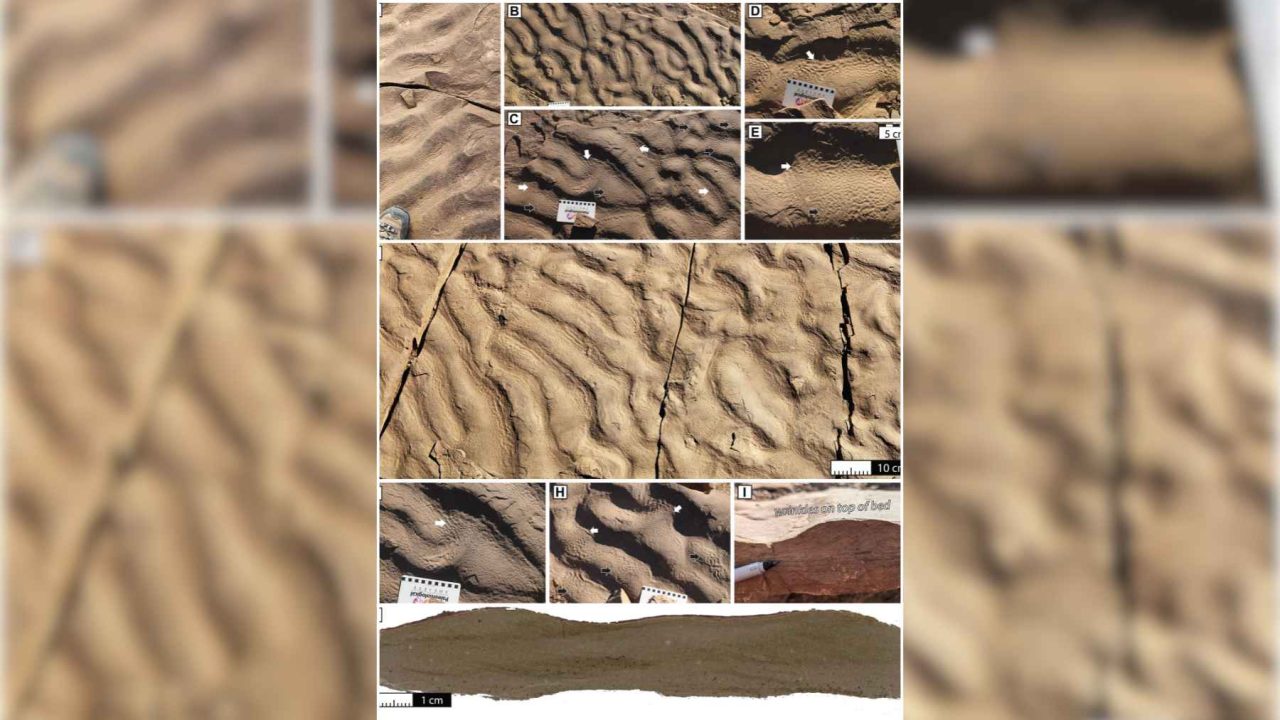
Here’s what you need to know about a geological mystery that’s been puzzling scientists for nearly a decade. Researchers hiking through Morocco’s Atlas Mountains in 2016 discovered something that, according to established science, simply shouldn’t exist. The rocks there, about 180 million years old, are covered in tiny wrinkled textures called wrinkle structures. The problem is these formations are considered hallmarks of ancient pre-animal environments, typically found only in rocks older than 540 million years. Once burrowing animals evolved, they churned up the seafloor and destroyed the microbial mats that create these wrinkles before they could fossilize. So finding them in Jurassic-era rock is a genuine head-scratcher. Scientists are debating two explanations: the extreme depth of the site, around 590 feet, may have kept burrowing creatures away, or chemosynthetic microbes may have actively built the mats. Most researchers now think it was probably both working together. If you find this kind of thing fascinating, keep an eye on the Geological Society of America’s publications for updates as this research develops.
The clock is ticking on a geological mystery that has stumped scientists since a 2016 hike through Morocco’s Dadès Valley. A January 14, 2026 news release from the Geological Society of America formally described findings that challenge one of geology’s oldest assumptions. The wrinkles in question are small, strange, and shouldn’t exist at all.
Dr. Rowan Martindale, a paleoecologist and geobiologist at the University of Texas at Austin, first spotted the unusual textures while surveying rock formations in Morocco’s Central High Atlas Mountains. Stéphane Bodin of Aarhus University was with her. What they found was not what either expected.
The rocks are approximately 180 million years old. And they are covered in tiny wrinkles that, according to the scientific consensus, should not be there.
Why Wrinkle Structures Vanish After 540 Million Years Ago
Wrinkle structures are tiny, rippled textures preserved on the surfaces of ancient sedimentary rocks. They range from a fraction of an inch to about an inch across. They look almost like the surface of a brain, or the skin of a dried prune.
For decades, geologists understood these structures as signatures of microbial mats, thin films of microorganisms that once coated the seafloor. These mats were common in the Precambrian era, before complex animal life evolved. They bound sediment grains together, leaving wrinkled impressions that could survive long enough to fossilize.
Then animals arrived. Burrowing creatures disrupted the seafloor, churning sediment and destroying the delicate mats before they could fossilize. That is why wrinkle structures are considered a hallmark of ancient, pre-animal environments. Finding them in rocks younger than about 540 million years is, geologically speaking, a red flag.
The Morocco rocks are Jurassic. The Jurassic period was teeming with complex animal life, including the ancestors of modern marine invertebrates. Burrowing organisms were everywhere. The wrinkles should have been erased long before they had a chance to fossilize. Yet there they are, perfectly preserved in the Atlas Mountains.
The Depth Argument: Why Some Scientists Say Location Explains Everything
One camp of researchers argues the answer is straightforward: depth. The wrinkled layers in Morocco formed at a depth of at least approximately 590 feet below the ocean surface. The ocean’s sunlight zone, where photosynthetic life thrives and most animal activity concentrates, extends to about 660 feet.
At 590 feet, conditions become extreme. Light is scarce. Oxygen levels drop. The diversity and density of burrowing organisms decreases sharply. Proponents of this view argue that the deepwater environment simply protected the microbial mats long enough for them to fossilize, the same way isolated ecosystems preserve species that have vanished elsewhere.
This explanation is tidy. It fits within existing frameworks. If deepwater environments consistently lack the burrowing pressure that destroys microbial mats, then finding wrinkles there is unusual but not impossible. It is simply a matter of ecological geography.
Supporters of this view also point to modern analogs. Chemosynthetic microbial communities, which derive energy from chemical reactions rather than sunlight, thrive in deepwater environments today. If similar communities existed in the Jurassic deep sea, they could have formed the kind of dense, cohesive mats that leave wrinkle impressions.
| Feature | Depth Hypothesis | Microbial Origin Hypothesis |
|---|---|---|
| Primary cause | Low burrower density at depth | Chemosynthetic microbial mats |
| Fits existing framework? | Mostly yes | Partially, reshapes assumptions |
| Requires new biology? | No | Yes, deepwater microbial ecology |
| Supported by modern analogs? | Indirectly | Yes, chemosynthetic communities |
| Implication for fossil record | Wrinkles are depth-dependent | Wrinkles may be underreported in deep strata |
The Microbial Argument: Why Others Say Depth Alone Is Not Enough
A second group of scientists is not satisfied with depth as a complete explanation. They argue the wrinkles require an active biological mechanism, not just the passive absence of burrowers. Specifically, they point to chemosynthetic microbes as the likely architects.
Chemosynthesis is the process by which microorganisms generate energy from chemical compounds such as hydrogen sulfide or methane, rather than from sunlight. These organisms form dense, structured communities on the deep seafloor. Their metabolic activity can bind sediment and create the kind of stable surface that preserves wrinkle textures.
You are a geologist surveying a deepwater sedimentary sequence from the Jurassic period. You find wrinkle structures on a bedding surface. Your supervisor says they must be a misidentification — wrinkles don’t exist in rocks this young. What do you do?
‘Deepwater rock wrinkles likely formed from chemosynthetic microbes, not just physical processes, reshaping assumptions about ancient ocean ecosystems.’
— Geological Society of America, January 2026 findings summary
This matters because it shifts the wrinkle structures from a passive geological curiosity to an active biological signal. If chemosynthetic microbes were responsible, these wrinkles are evidence of a thriving deepwater ecosystem operating entirely outside the sunlight-driven food chains that dominate most fossil narratives.
Critics of the depth-only hypothesis also note that not all deepwater sediments from this era show wrinkle structures. If depth alone were sufficient, you would expect wrinkles to be far more common in ancient deepwater deposits. Their rarity suggests something more specific is required, something biological and localized.
What the Data from Morocco Actually Shows
The physical evidence from the Dadès Valley is striking in its specificity. The wrinkle structures are small, between a fraction of an inch and about one inch across. They appear on bedding surfaces within deepwater sedimentary sequences. Their morphology is consistent with biological, not purely physical, formation processes.
The geological context places the formations at a minimum depth of approximately 590 feet during the Jurassic period. This puts them right at the boundary of the ocean’s sunlight zone, which extends to about 660 feet. The formations are not in the abyssal deep; they are in a transitional zone where light, oxygen, and animal life all diminish sharply.
The data does not cleanly resolve the debate. The wrinkles exist. They are biological in origin. They formed in deepwater. But whether depth was the primary permissive factor, or whether chemosynthetic microbial communities were the active cause, remains genuinely contested.
What the data does rule out is a purely physical explanation. These are not current ripples or pressure features. The morphology is too specific, too consistent with known microbial mat textures from Precambrian deposits, to be dismissed as abiotic geology.
The Editorial Position: Chemosynthesis Is the More Compelling Explanation
Depth as a permissive factor is almost certainly part of the answer. Without the reduced burrowing pressure of deep water, the mats would not have survived long enough to fossilize. But depth alone does not explain why these structures appear where they do and not everywhere else at similar depths.
The chemosynthetic hypothesis is more compelling precisely because it requires something specific to be present, not just something absent. A thriving chemosynthetic microbial community would explain both the formation of the mats and their localized preservation. It also connects these ancient wrinkles to a living tradition of deepwater microbial ecology that scientists can study today.
This position is not comfortable for the field. It means that wrinkle structures, long used as reliable markers of pre-animal environments, may be appearing in younger rocks than anyone suspected. Geologists will need to re-examine deepwater sedimentary sequences from the Mesozoic with fresh eyes.
Some geologists argue that deepwater refugia for microbial mats have always existed. The surprise is not the wrinkles themselves but that scientists assumed wrinkle structures were impossible after 540 million years ago. The Morocco find may simply reveal a sampling bias: researchers haven’t looked hard enough at deepwater Mesozoic sediments. The wrinkles were always there. We just weren’t looking.
What This Debate Means for How Scientists Read Ancient Rocks
The implications extend well beyond Morocco. If deepwater environments could preserve microbial mat textures long after the Precambrian, the fossil record of microbial life may be far richer and more widespread than current surveys suggest. Scientists may have been systematically overlooking wrinkle structures in deepwater sequences, dismissing them as anomalies or misidentifying them.
There is also a broader consequence for astrobiology. Chemosynthetic life, which requires no sunlight, is one of the most promising candidates for life on other worlds, particularly in subsurface oceans on moons like Europa and Enceladus. Evidence that chemosynthetic communities left durable fossil signatures on Earth strengthens the case for searching for similar biosignatures elsewhere.
For Dr. Martindale, the discovery began with a hike and a puzzled look at a rock face in the Dadès Valley. A decade later, it has become a formal challenge to how geologists interpret the past. The wrinkles are small. The questions they raise are not.
Science moves slowly, and the debate over these 180-million-year-old folds will continue for years. But the rocks in the Atlas Mountains are not going anywhere. They have been waiting 180 million years to be read correctly. The question is whether scientists are finally asking the right questions of them.



Leave a Reply