
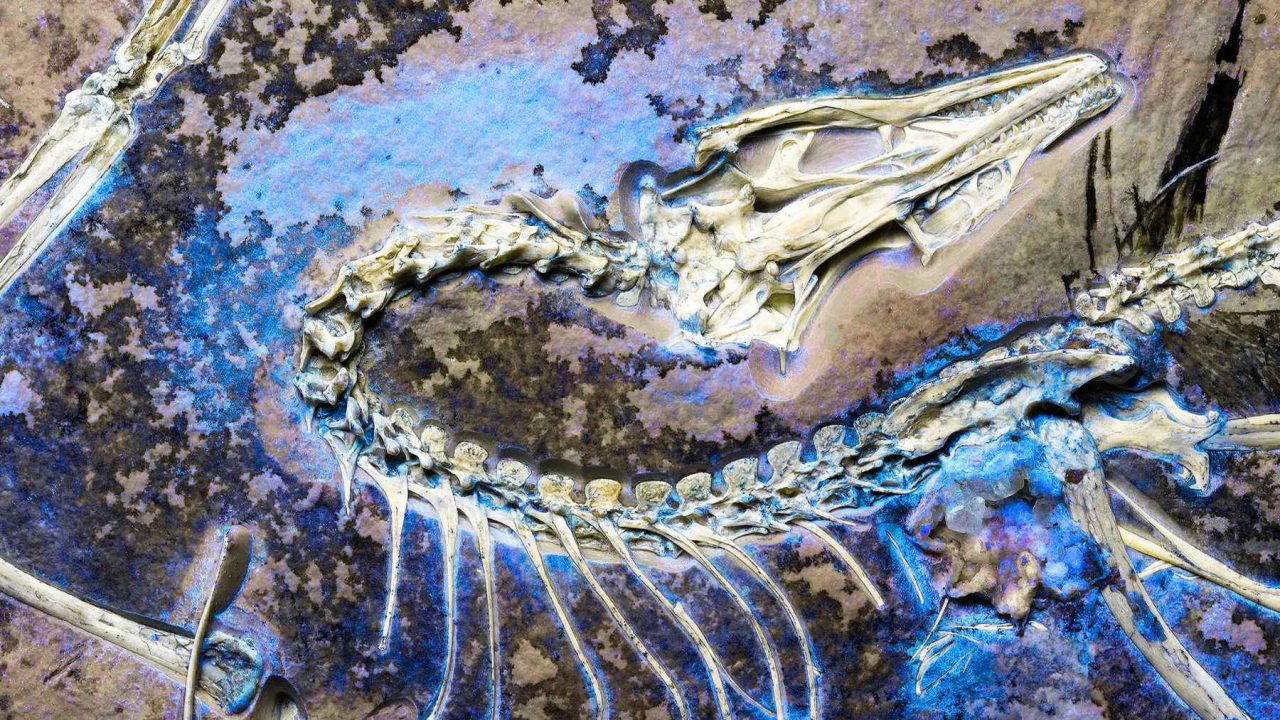
Here is a contrarian claim worth sitting with: the most important fossil in the history of bird evolution was not sitting in a museum. It was in private hands, essentially hidden from science, for decades.
While researchers argued, published, and counter-published about how birds first took flight, the 14th known specimen of Archaeopteryx gathered dust in a private collection. No CT scanner. No ultraviolet lamp. No peer review. Just silence.
That changed in August 2022, when the fossil arrived at the Field Museum of Natural History in Chicago. What followed was more than a year of meticulous preparation, followed by a suite of imaging technologies that revealed details invisible to the naked eye. The study, led by researcher Jingmai O’Connor, was published on May 14, 2025. And the findings? O’Connor described the experience as “one wow after another.”
Here are the five most significant revelations from this extraordinary specimen, ranked by their power to reshape what we think we know about the origin of bird flight.
5. The Solnhofen Limestone Delivered Its 14th Miracle
The fossil comes from the Solnhofen limestone deposits in Bavaria, southern Germany. These ancient lake sediments are famous for preserving fine anatomical detail, including feather impressions, soft tissue outlines, and even the occasional skin texture.
The first Archaeopteryx fossils were found in this same region more than 160 years ago. Since then, only 14 specimens have ever been identified. Most remain in Germany, either in museums or private collections. The rarity alone makes each new specimen scientifically significant.
This particular fossil was collected before 1990. It spent decades outside the reach of researchers. The fact that it eventually reached the Field Museum at all is something of a minor miracle in the world of paleontology.
4. Preparing This Pigeon-Sized Creature Took Over a Year
Archaeopteryx was roughly the size of a pigeon. It had thin, hollow bones, much like modern birds. But extracting those bones from 150-million-year-old limestone without destroying them requires extraordinary patience.
Preparation of this specimen took more than a year. Technicians worked under microscopes, removing matrix grain by grain. One wrong move and a fragile rib or feather shaft disappears forever.
The effort paid off. The prepared fossil revealed anatomical structures that had never been documented in previous specimens, including features of the shoulder girdle and wing architecture that speak directly to the flight debate.
3. CT Scans Revealed Bone Hidden 3.2 Millimeters Below the Surface
Here is where technology transforms paleontology into something almost supernatural. CT scanning allowed researchers to see bone sitting 3.2 millimeters, about 0.13 inches, beneath the surface of the rock. That is barely more than the thickness of two pennies stacked together.
But those hidden millimeters contained critical information. The internal architecture of bones tells researchers how an animal moved, how much stress its skeleton could bear, and whether it was built for powered flight, gliding, or something in between.
Previous specimens could only be analyzed from their surface features. This fossil, for the first time, offered a three-dimensional interior view of an Archaeopteryx skeleton with this level of precision. The data it yielded was unprecedented.
| Analysis Method | What It Revealed | Significance |
|---|---|---|
| CT Scanning | Bone up to 3.2mm below surface | Internal skeletal architecture never seen before |
| Ultraviolet Light | Soft tissue and feather impressions | Feather arrangement critical to flight mechanics |
| Physical Preparation | Surface bone detail | Shoulder and wing structure visible for first time |
2. Ultraviolet Light Exposed What 150 Million Years Had Hidden
Ultraviolet light causes certain minerals and organic residues to fluoresce. When researchers shone UV lamps on this specimen, features invisible under normal lighting suddenly glowed with detail.
Feather impressions, soft tissue outlines, and subtle surface textures emerged from the stone. These features are critical because the arrangement and structure of feathers directly affects aerodynamic performance. A feather positioned slightly differently on a wing changes everything about how that wing generates lift.
The UV analysis revealed feather details that aligned with a specific flight style, one that researchers say is more consistent with active, powered flight than with passive gliding. This is a direct challenge to the “trees down” hypothesis, which argues that early birds glided before they flapped.
“Archaeopteryx looked very different” from modern birds, but the new specimen is forcing researchers to reconsider just how flight-capable it actually was.
— Jingmai O’Connor, Field Museum of Natural History
The Number 1 Reveal: Shoulder Anatomy That Rewrites the Ground-Up vs. Trees-Down Debate
The single most significant finding from this fossil concerns the shoulder joint. Specifically, the orientation of the glenoid fossa, the socket where the humerus connects to the shoulder girdle, has been a flashpoint in the flight origins debate for decades.
For powered flight, a bird needs to move its wing in a specific arc. The shoulder socket must face in a direction that allows this motion. In modern birds, the glenoid faces upward and outward. In non-flying theropod dinosaurs, it faces outward and slightly downward.
Previous Archaeopteryx specimens had ambiguous shoulder anatomy, partly because of preservation distortion. This 14th specimen, with its CT-revealed interior structure and UV-enhanced surface detail, gave researchers the clearest picture yet of how that socket was oriented.
The findings suggest the shoulder was positioned in a way that would have allowed, though perhaps not perfected, a powered upstroke. That is the motion that makes sustained flapping flight possible. It is also the motion that the “ground up” hypothesis requires.
This does not close the debate entirely. Science rarely works that cleanly. But it shifts the weight of evidence in a meaningful way. The “trees down” camp has long argued that gliding is an easier evolutionary pathway to flight. You start high, you fall slowly, you eventually flap. It is intuitive.
The “ground up” argument is less intuitive but increasingly supported by the fossil record. Small feathered theropods running along the ground, using their proto-wings for balance, speed, or display, gradually developed the musculature and skeletal architecture for powered flight. This specimen’s shoulder geometry fits that story better than the alternative.
Why the Order of These Revelations Matters for Future Paleontology
The ranking here is not arbitrary. Each level builds on the last. Without the patience of physical preparation, the CT scanner has nothing to work with. Without CT data, the UV findings lack skeletal context. And without both, the shoulder anatomy interpretation is just another claim in a long argument.
The lesson is cumulative: multiple technologies, applied to a single well-preserved specimen, can achieve what decades of debate cannot. This is increasingly the model for 21st-century paleontology.
It also raises an uncomfortable question about the fossils still sitting in private collections. How many other specimens, each potentially as significant as this one, remain beyond the reach of science? The 14th Archaeopteryx waited decades. The 15th may be waiting right now.
The first birds did not know they were making history. They were just trying to survive. It turns out, 150 million years later, we are still trying to figure out exactly how they did it.



Leave a Reply