
▶ Read transcript
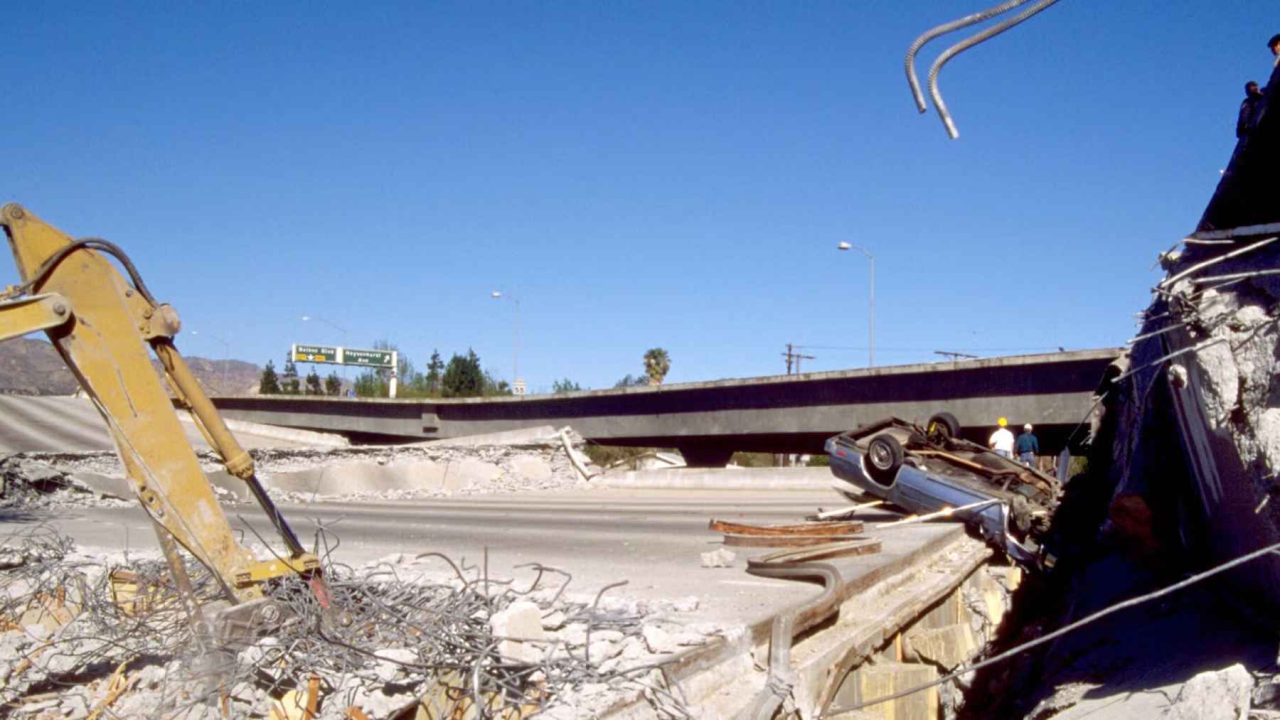
Here’s what you need to know about a seismic threat California may not be ready for. Supershear earthquakes occur when a fault rupture moves faster than its own seismic waves, creating a concentrated shock pulse similar to a sonic boom. Four of the last six magnitude seven-plus strike-slip earthquakes globally were supershear events, and roughly one-third of all large strike-slip quakes may involve this type of rupture. That matters because California’s major faults, including the San Andreas and the Hayward, are exactly this type. The problem is that California’s building codes assume the strongest shaking hits perpendicular to a fault, but supershear concentrates energy along the fault line itself. Communities built directly along these faults could face forces their structures were never designed for. Turkey’s 2023 earthquake confirmed supershear produces damage patterns that defy conventional predictions. The takeaway: if you live near a major California fault, stay informed and advocate for updated building codes that account for supershear scenarios.
Four of the last six magnitude 7+ strike-slip earthquakes on Earth were supershear events. That statistic alone should unsettle anyone living within shaking distance of the San Andreas Fault. Yet California’s seismic design standards still largely ignore this phenomenon.
A 2025 opinion piece by researchers from the University of Illinois Urbana-Champaign and the California Institute of Technology laid out the case plainly. Supershear earthquakes move so fast they outrun their own seismic waves. The result is a shock pulse that concentrates energy in patterns our buildings were never designed to withstand.
Here are five reasons this overlooked earthquake type deserves far more attention, ranked from concerning to outright alarming.
Reason Five: One-Third of Large Strike-Slip Quakes May Be Supershear
The Statewide California Earthquake Center, based at USC Dornsife College of Letters, Arts and Sciences, estimates that roughly one-third of large strike-slip earthquakes worldwide may involve supershear rupture. That’s not a fringe occurrence. It’s a substantial fraction of the most dangerous quake type on the planet.
Strike-slip faults are exactly the kind California is famous for. The San Andreas, the Hayward, the Garlock: all are strike-slip systems. If one in three major events on these fault types goes supershear globally, the odds that California will experience one are not trivial. They are near-certain over geologic timescales.
The problem is that most seismic hazard models treat supershear as an anomaly. Engineers design for the “typical” rupture pattern. When four out of six recent major strike-slip quakes defy that pattern, “typical” starts to look like wishful thinking.
| Feature | Conventional Earthquake | Supershear Earthquake |
|---|---|---|
| Rupture speed | Slower than shear waves | Faster than shear waves |
| Energy distribution | Spreads outward from fault | Concentrates along fault line |
| Shaking pattern | Strongest perpendicular to fault | Strongest along fault itself |
| Shock effect | Gradual wave arrival | “Double strike” with sharp initial jolt |
| Analogy | Boat wake spreading behind vessel | Sonic boom from supersonic jet |
Reason Four: Turkey’s 2023 Disaster Proved Supershear Kills Differently
On February 6, 2023, a catastrophic earthquake sequence struck southeastern Turkey and northern Syria. The devastation was immense: over 50,000 dead, entire city blocks pancaked. A 2023 paper published in Communications Earth & Environment confirmed what seismologists had suspected. Parts of the rupture went supershear.
This wasn’t an academic curiosity. The supershear segments of the fault produced damage patterns that didn’t match conventional predictions. Buildings that should have survived based on their distance from the fault were destroyed. Structures oriented along the fault line took hits that engineers hadn’t anticipated in their models.
“Supershear occurs when an earthquake’s rupture front moves faster than shear waves, stacking energy into a shock-like pulse similar to a sonic boom.”
— Researchers from UIUC and Caltech, 2025 opinion piece
Turkey became a grim laboratory. The data showed that supershear doesn’t just amplify shaking. It fundamentally changes where the worst shaking occurs. For California, where millions live directly along major strike-slip faults, that distinction could be the difference between a manageable disaster and a catastrophic one.
Reason Three: California’s Building Codes Assume the Wrong Direction of Force
Here’s where the engineering gap becomes personal. Current design standards in California generally assume that the strongest ground motion during an earthquake will be perpendicular to the fault. This makes intuitive sense for conventional ruptures: energy radiates outward like ripples in a pond.
Supershear flips this assumption. When rupture speed exceeds the shear wave velocity, energy stacks and concentrates along the fault line itself. Think of the difference between standing beside a highway as a car passes versus standing in the road as a supersonic jet creates a shock cone overhead.
Communities strung along the San Andreas Fault, from the Coachella Valley to the San Francisco Peninsula, could face shaking intensities their structures were never tested against. Not because the buildings are poorly built, but because they were built for a different kind of earthquake.
Reason Two: Myanmar’s 2025 Earthquake Showed Supershear at Terrifying Scale
On March 28, 2025, a devastating earthquake struck Mandalay, Myanmar. The shallow rupture occurred roughly 6 miles deep and broke an astonishing 290 miles of the Sagaing Fault. The scale was staggering. For context, 290 miles is roughly the distance from Los Angeles to Las Vegas.
The Sagaing Fault is a strike-slip system, much like the San Andreas. A shallow rupture on a long, straight fault segment is precisely the geometry that favors supershear transition. When the rupture has room to accelerate and the fault is relatively smooth, the conditions align for the rupture front to break the shear wave speed barrier.
You own a home 2 miles from the San Andreas Fault in Southern California. New research suggests supershear earthquakes could produce shaking 50% stronger than your home was designed for. A structural retrofit would cost $25,000.
Myanmar’s disaster underscored a pattern that seismologists have been tracking with growing alarm. Supershear isn’t confined to one tectonic setting or one part of the world. It appears wherever the right fault geometry and stress conditions exist. California has those conditions in abundance.
Reason One: The San Andreas Fault Is Primed for a Supershear “Big One”
This is the revelation that keeps seismologists up at night. The San Andreas Fault, California’s most famous and most feared seismic feature, has long, straight segments that are textbook candidates for supershear rupture. The southern San Andreas, in particular, hasn’t produced a major earthquake since 1857. That’s 169 years of accumulated stress.
When researchers from UIUC and Caltech published their 2025 opinion piece, they weren’t speculating about a distant possibility. They were pointing to a convergence of evidence that demands immediate attention. The fault geometry is favorable. The stress accumulation is enormous. And the recent global track record shows supershear happening in four of six comparable events.
The “double strike” effect is especially concerning for infrastructure. Bridges, overpasses, and older buildings that might survive the first jolt could be critically weakened before the second wave of energy arrives. Emergency response systems calibrated for a single peak event would face a shaking sequence they weren’t designed to handle.
Researchers have emphasized that the next “Big One” on the San Andreas might not resemble the earthquake California has been preparing for. The rupture could be faster, the energy distribution could be radically different, and the damage footprint could extend along the fault in ways current models don’t predict.
Consider the numbers. The southern San Andreas runs through Riverside and San Bernardino counties, home to over 4.6 million people. It passes within miles of critical infrastructure: aqueducts carrying water to Los Angeles, freight rail lines, Interstate 10. A supershear event wouldn’t just shake these systems harder. It would shake them in a direction they weren’t braced for.
What California’s Seismic Preparedness Must Change Now
The ranking above isn’t just an intellectual exercise. It traces a clear trajectory from global statistics to California’s front door. One-third of large strike-slip quakes go supershear. Turkey proved the destruction pattern is different. Current building codes assume the wrong direction of force. Myanmar showed supershear at massive scale. And the San Andreas has every ingredient for a supershear rupture.
So what needs to happen? First, seismic hazard models for California need to incorporate supershear scenarios explicitly. The U.S. Geological Survey and state agencies should fund targeted research on supershear probability along specific San Andreas segments.
Second, building codes need revision. If the strongest shaking can arrive along the fault rather than perpendicular to it, structural engineering standards must account for that. This is especially urgent for critical infrastructure within a few miles of major strike-slip faults.
Third, early warning systems need recalibration. The ShakeAlert system currently estimates shaking based on conventional rupture models. A supershear event could produce faster, more concentrated shaking that arrives with less warning time than the system predicts.
The researchers who authored the 2025 opinion piece weren’t trying to cause panic. They were trying to close a gap between what science knows and what policy reflects. That gap, right now, is wide enough to drive a fault line through.
California has spent decades preparing for an earthquake. The uncomfortable question is whether it has been preparing for the right one.


Leave a Reply