
▶ Read transcript
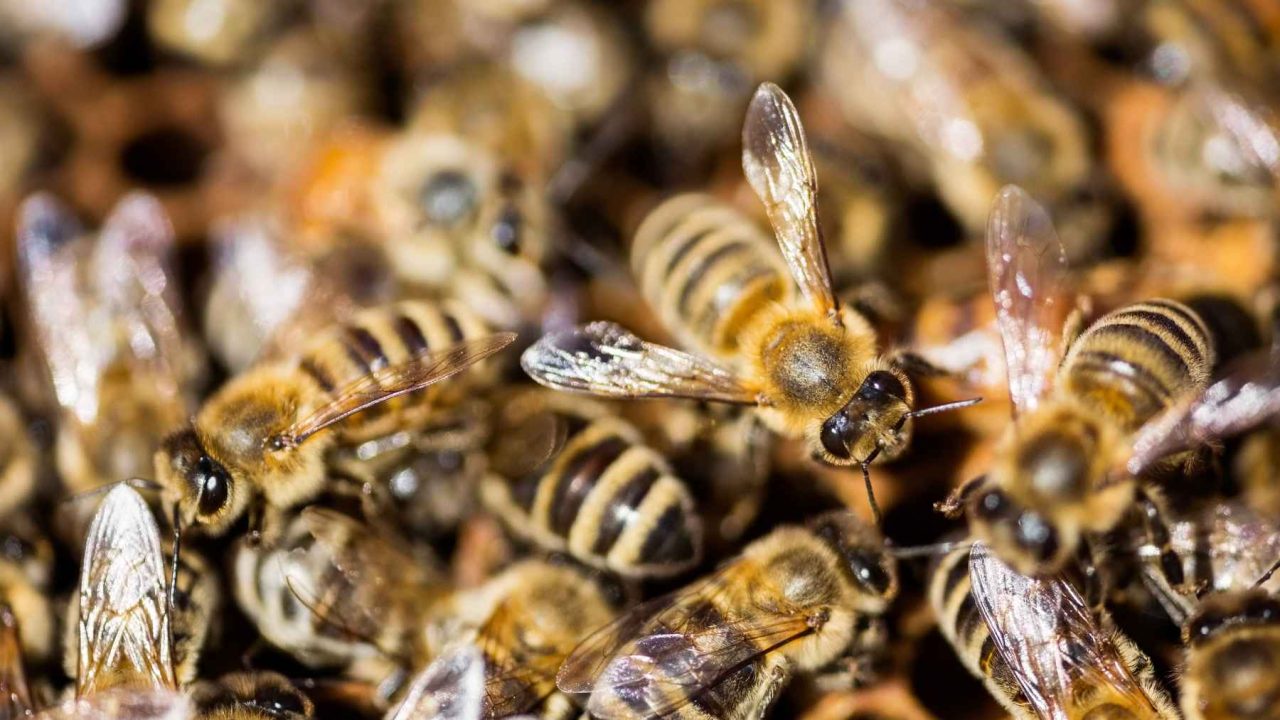
Here’s what you need to know about a study that challenges our assumptions about city parks. Researchers in Suzhou, China, sequenced the gut contents of solitary mason bees across ten urban agricultural sites, and what they found was surprising. Despite being surrounded by seemingly diverse green spaces, the bees were eating almost exclusively from just two plant sources: Brassica crops and ornamental plane trees. Even more concerning, the team identified 173 antibiotic resistance genes in the bee gut DNA, suggesting the soil and water in these parks carry invisible chemical contamination. They also found evidence of virus spillover between managed honeybees and wild bees through shared flowers, meaning urban beekeeping programs could actually be harming wild pollinators. The takeaway here is simple: if your community is investing in green spaces, push for genuine plant diversity rather than assuming that looking green automatically means being ecologically healthy.
When you walk through a lush city park, do you assume the greenery means the ecosystem is thriving? Most of us do. The trees are tall, the flower beds are colorful, and bees are buzzing. Everything looks healthy. But a growing body of research suggests that what we see on the surface tells us almost nothing about what’s actually happening at the biological level.
A study published in April 2026, led by Min Tang at Xi’an Jiaotong-Liverpool University, is at the center of a debate that could reshape how cities design and evaluate their green spaces. The research team didn’t just observe bees from the outside. They sequenced the entire contents of their digestive tracts.
The Suzhou Study: 10 Sites, One Solitary Bee, and 173 Resistance Genes
The researchers focused on Osmia excavata, a solitary mason bee that nests alone rather than forming colonies. This choice was deliberate. Solitary bees are often better environmental indicators than honeybees because they forage locally and don’t benefit from the buffering effects of a large colony.
Across 10 urban agricultural sites in Suzhou, China, the team collected gut samples and applied “shotgun” metagenomic sequencing. Unlike targeted approaches that look for specific genes, this method reads all the DNA in a sample simultaneously: plant DNA, bacterial DNA, viral DNA. Everything.
The results were startling. The team identified 173 antibiotic resistance genes in the bee gut DNA. They found signs of virus “spillover” that could move between managed honeybees and wild bees via shared flowers. And the bees’ diets were dominated by just two plant sources: Brassica crops and the ornamental plane tree Platanus.
On the surface, these parks looked green. Underneath, the biological story was far more complicated.
Green Spaces as Ecological Havens: The Traditional View
For decades, urban planners and conservation advocates have operated under a straightforward principle. More green space equals more biodiversity, which equals healthier ecosystems. Parks, community gardens, and urban farms are pitched as refuges for pollinators in otherwise hostile concrete landscapes.
There’s real evidence supporting this view. A comprehensive review of honeybee gut microbiota research confirms that gut microbiomes substantially influence host digestion, detoxification, behavior, pathogen protection, and immune function. Healthy green spaces, the argument goes, provide diverse foraging options that support robust gut health in pollinators.
| Factor | Traditional “Green = Healthy” View | Emerging Gut-Level Evidence |
|---|---|---|
| Diet Diversity | Parks offer varied flowering plants | Bees found eating mostly 2 plant types |
| Pathogen Exposure | Green spaces reduce stress and disease | Virus spillover detected between bee species |
| Chemical Contamination | Parks are cleaner than industrial zones | 173 antibiotic resistance genes found |
| Microbial Health | Natural environments support balanced microbiomes | Significant microbial shifts at 2 of 10 sites |
A University of British Columbia project previously analyzed honey from city hives to pinpoint contaminants like lead across neighborhoods. That study demonstrated that bees are effective biomonitors. But it also reinforced the assumption that urban green spaces are net positives for pollinator health, provided we manage obvious toxins.
Proponents of this view argue that the Suzhou findings don’t invalidate urban greening. They simply highlight the need for better plant diversity in park design. The parks aren’t the problem; the planting choices are.
The Counter-Argument: When “Green” Becomes a Biological Illusion
The opposing camp sees the Suzhou data as evidence of a deeper structural flaw. Urban green spaces, they argue, create an illusion of ecological health that masks serious biological dysfunction.
Consider the diet finding. Despite being surrounded by what appeared to be diverse urban agriculture, the mason bees were eating almost exclusively Brassica crops and plane tree pollen. This isn’t a minor nutritional gap. For solitary bees, dietary monotony can weaken immune responses and reduce reproductive success.
“The gut microbiome contains features indicating host health and reflecting long-term evolutionary adaptation and acute reactions to real-time environmental change.”
— Wiley Insect Science review, 2025
Then there are the 173 antibiotic resistance genes. These genes don’t appear from nowhere. They accumulate in environments where antibiotics or their residues are present, often through agricultural runoff, wastewater, or contaminated soil. The fact that these genes showed up in bee guts at urban agricultural sites suggests that the soil and water feeding these “green” spaces carry invisible chemical baggage.
Perhaps most alarming is the virus spillover evidence. Managed honeybee colonies and wild solitary bees were sharing pathogens through the same flowers. This means that well-intentioned urban beekeeping programs could actually be endangering the wild pollinators they’re supposed to coexist with.
Research comparing managed and wild honeybee microbiomes has already shown significant differences in microbial communities between the two groups. Managed colonies showed distinct markers that diverged from wild populations. The Suzhou study extends this concern to a completely different bee species.
What the Metagenomic Data Actually Reveals
Stripped of interpretation, the raw data from Min Tang’s team tells a specific story. The shotgun metagenomic approach captured three simultaneous data streams from each bee gut: what the bees ate, what bacteria lived inside them, and what viruses were present.
The dietary data showed that plant diversity in the environment didn’t translate to dietary diversity in the bees. The parks had many plant species, but the bees overwhelmingly visited Brassica and Platanus. This could reflect bee preference, but it more likely reflects which plants were actually producing accessible, nutritious pollen at the times bees needed it.
You’re an urban park manager with a $200,000 budget. Your city’s new sustainability report highlights your park’s high canopy coverage and visible pollinator activity. But a university research team offers to conduct metagenomic analysis of local bee populations for $40,000, which could reveal hidden problems.
The bacterial data showed that gut microbial communities shifted significantly at two of the 10 study locations. Researchers from other institutions have found that specific gut bacteria in bees can improve memory, highlighting just how consequential these microbial shifts can be. When gut communities change, bee cognition, immunity, and foraging efficiency may all be affected.
The viral data confirmed that pathogen exchange between managed and wild bee populations is not theoretical. It’s measurable. Flowers serve as transmission platforms, and in urban settings where managed hives and wild bees overlap in small green patches, the risk intensifies.
Why Both Sides Miss the Real Point
Here’s where the debate gets stuck. Advocates for urban greening aren’t wrong that parks matter. Critics of superficial greening aren’t wrong that current approaches fall short. But both sides are arguing about the destination when the real issue is measurement.
For too long, we’ve evaluated urban ecological health by what we can see: canopy coverage, flower counts, the presence of pollinators. The Suzhou study demonstrates that these surface metrics can be actively misleading. A park full of plane trees and Brassica crops looks vibrant. Bees are visiting. Everything appears to function.
But inside those bees, the data reveals nutritional monotony, antibiotic resistance gene accumulation, microbial disruption, and cross-species viral transmission. The green space isn’t a refuge. It’s a trap that looks like a refuge.
My editorial position: cities need to adopt biological monitoring as a standard metric for evaluating green spaces. Visual assessments and species counts are necessary but wildly insufficient. Metagenomic analysis of pollinator guts should become as routine as water quality testing in urban environmental management.
What Bee Gut Science Means for the Next Generation of Urban Parks
The implications extend well beyond Suzhou. Every major city investing in urban greening, from Singapore to London to Portland, faces the same blind spot. Without biological monitoring, there’s no way to distinguish between a park that genuinely supports ecosystem health and one that merely photographs well for a sustainability report.
Several concrete shifts could follow from this research. First, urban planting schemes need to prioritize temporal pollen diversity, not just species counts. Bees need nutritious pollen available across their entire active season, not just during peak bloom weeks. Second, the placement of managed honeybee hives in or near wild pollinator habitat requires far more scrutiny. Virus spillover through shared floral resources is a real and measurable risk.
Third, and most provocatively, cities may need to rethink the role of ornamental trees like Platanus. Plane trees are popular in urban forestry because they’re hardy, fast-growing, and provide excellent shade. But if they dominate bee diets to the exclusion of more nutritious alternatives, their ecological value is lower than their visual presence suggests.
The technology already exists to do this work at scale. Shotgun metagenomic sequencing costs have dropped dramatically over the past decade. A single bee gut sample can reveal plant diet composition, bacterial community structure, viral load, and chemical exposure markers simultaneously. No other monitoring tool offers that breadth of information from a single data point.
The question is whether cities will invest in looking beneath the surface, or continue measuring ecological health by how green things appear from the sidewalk. If the guts of a solitary mason bee in Suzhou can tell us this much, imagine what a systematic monitoring program across an entire city could reveal.
We’ve spent decades planting trees and calling it conservation. The bees, it turns out, have been keeping a very different scorecard.
Frequently Asked Questions

You Might Also Like

The Alien Comet That Broke the Internet and Fooled AI
Interstellar comet 3I/ATLAS entered our solar system — and the social media frenzy caused AI…

180-Million-Year-Old Rock Wrinkles Baffle Geologists
Tiny wrinkles in 180-million-year-old Jurassic rock from Morocco's Atlas Mountains challenge a core assumption of…

The Sun’s Solar Maximum Is Turning Space Into a Minefield
The Sun's solar maximum is supercharging space debris risks. Scientists warn satellites, GPS, and communications…
Leave a Reply