
Only 337 towns in the United States attract more than 1 million visitors annually. The other 19,000-plus incorporated places? Almost entirely overlooked — and that gap is exactly where the best American travel experiences now live.
Every year, travelers funnel billions into the same 30 American cities. Nashville, Sedona, Charleston, Asheville — all fine places that now charge $300+ per night and require dinner reservations three weeks out. Meanwhile, towns with equal or superior character sit one state over, charging a fraction of the price, waiting for anyone willing to look at a map sideways.
Airbnb unveiled its first-ever America Off-the-Map list, a curated collection of under-visited destinations where travelers can experience authentic local life without fighting tourist infrastructure. The list confirmed what road-trip veterans have known for years: secondary and tertiary American towns are experiencing a quiet renaissance.
Four Towns That Should Be Famous by Now
Read more: The Bear Is Not a Predator: 5 Findings That Rewrite Wildlife Science
Start with the towns that have the clearest case for national attention. Each has a distinct identity, a compelling physical setting, and accommodation rates that haven’t yet caught up with their quality.
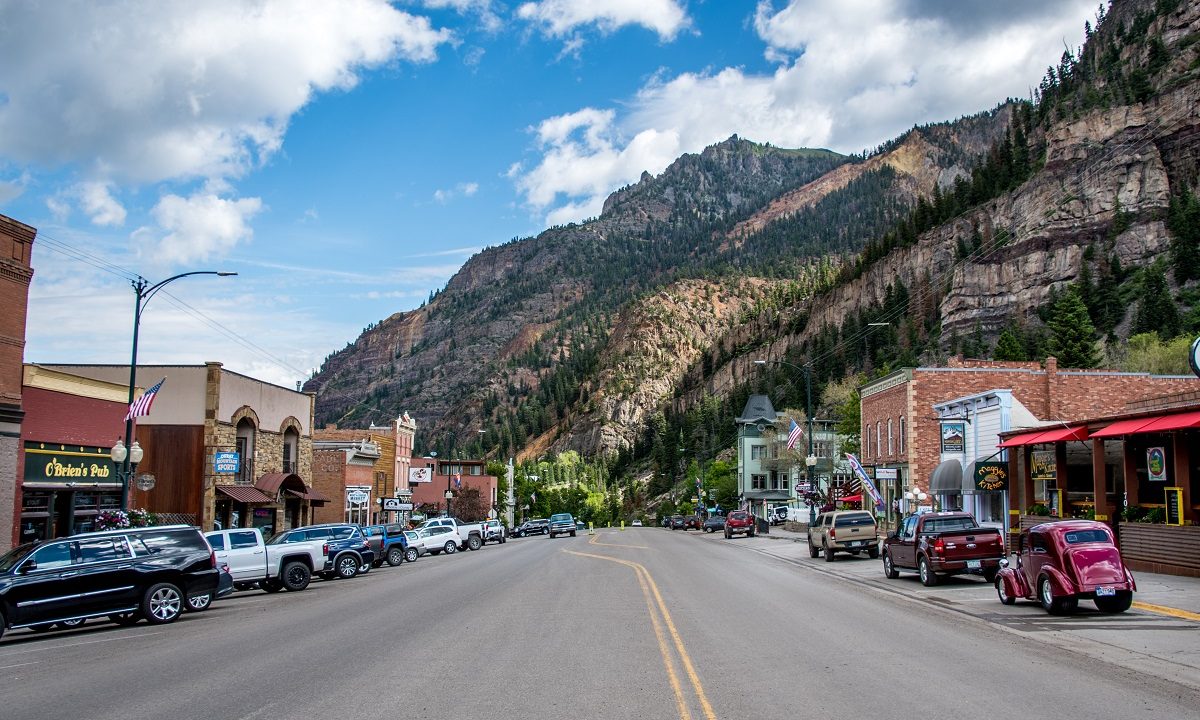
Ouray, Colorado — population 1,100 — sits at 7,792 feet in a box canyon in Ouray County, surrounded on three sides by the San Juan Mountains. The town earned the nickname “Switzerland of America” sometime in the 1880s, and the comparison still holds. Ouray’s municipal hot springs pool charges $14 for adults, runs 96–106°F, and operates year-round. The Ouray Ice Park, the world’s first public ice climbing park, occupies a 2-mile stretch of Uncompahgre Gorge and costs nothing to enter. A two-night stay at a Victorian-era inn like the Beaumont Hotel averages $189/night — roughly what a mid-tier Holiday Inn costs in Denver, 325 miles away.
Staunton, Virginia — population 25,600, Augusta County — is the unlikely home of the American Shakespeare Center, which operates the Blackfriars Playhouse, a faithful re-creation of Shakespeare’s indoor theater from 1608. Tickets run $20–$55. The downtown, listed on the National Register of Historic Places, contains 19th-century Italianate buildings in better condition than most cities charge $400/night to sleep near. Hotel rates along Beverley Street average $139/night. (I spent a Saturday evening watching “The Tempest” performed with original staging practices — house lights on, direct audience address, no intermission — and it was more arresting than any Broadway production I’d seen in the previous five years.)
Eureka Springs, Arkansas — population 2,073, Carroll County — was founded in 1879 around a series of natural springs believed to have healing properties. The entire downtown sits on the National Register of Historic Places. More than 100 Victorian-era buildings line streets so steep they were carved into Ozark hillsides in switchback patterns. The town hosts over 50 working artists in galleries concentrated along Spring Street. A weekend stay at the 1886 Crescent Hotel, once dubbed “America’s Most Haunted Hotel,” runs $135–$225/night — not cheap, but competitive with a generic Marriott in Little Rock.
Bisbee, Arizona — population 5,231, Cochise County, 92 miles southeast of Tucson — was one of the largest cities in the Southwest before World War II. The Phelps Dodge copper mining operation extracted $6.1 billion worth of copper (in today’s dollars) from the surrounding Mule Mountains before closing in 1975. Bisbee’s mining history and bohemian arts district have transformed it into one of Arizona’s most distinctive small towns. The Lavender Pit — a 300-acre open-pit mine visible from town — is free to view. Overnight rates run $79–$129 in the historic district. That’s less than a quarter of what you’d pay in Scottsdale for a room with no equivalent character.
USA TODAY’s 10Best panel argues that coastal small towns — not inland or mountain destinations — offer the best combination of calm and charm in America, noting that nominees were evaluated on authentic character and community vitality. Critics of the “hidden town” genre point out that the same towns appear on every “undiscovered” list until they’re overrun. Tulum, Vermont’s Stowe, and North Carolina’s Highlands all went from “secret” to saturated within a decade. Ouray’s parking situation on holiday weekends is already testing this theory.
The Coast Has Its Own Contenders — Ten of Them
Read more: Beijing’s Air Hit 27 µg/m³ in 2025: The Decade That Erased the Smog
An expert-nominated and reader-voted ranking identified ten coastal small towns as the best in the country, singling out their calm and charm as qualities that major beach resorts have long since forfeited. Several of these towns belong on any serious itinerary.
Astoria, Oregon — population 10,100, Clatsop County — sits at the mouth of the Columbia River, 95 miles northwest of Portland. Founded in 1811, it claims to be the oldest American settlement west of the Rockies. The Astoria Column, a 125-foot painted tower built in 1926, offers views of four states on clear days. Hotel rates average $139/night — half what Portland’s Pearl District charges for equivalent comfort. The local Bumble Bar and Fort George Brewery anchor a craft beer scene that punches far above the town’s size.
Beaufort, South Carolina — population 14,000, Beaufort County — is 70 miles south of Charleston along U.S. Highway 21. Its antebellum architecture survived the Civil War largely intact because Union forces used it as a hospital and headquarters. The Beaufort Historic District contains 68 pre-Civil War structures. Overnight rates average $149/night — less than half of Charleston’s $340 summer average. (Drive down Bay Street on a Tuesday in October and you’ll pass maybe six other tourists — in a town with more architectural history per block than most American cities can claim per zip code.)
Port Townsend, Washington — population 10,200, Jefferson County — sits on the northeastern tip of the Olympic Peninsula, 50 miles northwest of Seattle via ferry. It’s home to the largest collection of Victorian commercial architecture on the West Coast. A 35-minute Washington State Ferry crossing from Keystone on Whidbey Island costs $14.95 for a vehicle. The Northwest Maritime Center, founded in 1998, hosts the annual Wooden Boat Festival each September — 230 boats and 20,000 visitors over three days.
| Town | State | Population | Avg. Nightly Rate | Nearest Expensive Alternative | Savings/Night |
|---|---|---|---|---|---|
| Ouray, CO | Colorado | 1,100 | $189 | Telluride ($389) | $200 |
| Bisbee, AZ | Arizona | 5,231 | $99 | Scottsdale ($287) | $188 |
| Astoria, OR | Oregon | 10,100 | $139 | Portland ($278) | $139 |
| Staunton, VA | Virginia | 25,600 | $139 | Charlottesville ($229) | $90 |
| Eureka Springs, AR | Arkansas | 2,073 | $155 | Branson, MO ($219) | $64 |
| Beaufort, SC | South Carolina | 14,000 | $149 | Charleston ($340) | $191 |
| Best value overall | Bisbee, AZ — 66% cheaper than nearest comparable tourist town, with equal or greater architectural and cultural density | ||||
Sixteen More Towns That Reward the Detour
The remaining towns on this list range from the Great Lakes to the Gulf Coast. Condé Nast Traveler’s 2026 travel guide emphasized quiet coastal paradises, contemporary design cities, and new ways to travel far — a framework that fits most of the towns below precisely.
Marfa, Texas — population 1,981, Presidio County — sits at 4,688 feet in the Chihuahuan Desert, 196 miles southeast of El Paso. The Chinati Foundation, established by sculptor Donald Judd in 1986, contains 100 permanent aluminum sculptures across a former Army fort. Admission is $25. Hotel Paisano, where Rock Hudson and Elizabeth Taylor stayed during the filming of “Giant” in 1955, charges $179/night. The mysterious “Marfa Lights,” visible from a designated viewing area 9 miles east of town on U.S. Highway 90, remain scientifically unexplained.
Galena, Illinois — population 3,200, Jo Daviess County — produced nine Civil War generals, including Ulysses S. Grant, whose home at 500 Bouthillier Street is a state historic site open for $5. The town’s lead mining prosperity peaked in 1845, leaving behind 85% of its buildings on the National Register of Historic Places. The drive along U.S. Highway 20 through the driftless area — unglaciated terrain with hills and valleys unlike anywhere else in the Midwest — takes 3.5 hours from Chicago and costs nothing.
Paducah, Kentucky — population 27,000, McCracken County — earned designation as a UNESCO Creative City of Crafts and Folk Art in 2013, one of only three American cities with that honor. The National Quilt Museum on Jefferson Street houses 650 quilts across 30,000 square feet. Admission is $15. Hotel rates in Paducah average $98/night, about what a highway Hampton Inn charges in Louisville for a room with no distinctive character whatsoever.
Walla Walla, Washington — population 34,100, Walla Walla County — contains 120 wineries within a 30-mile radius, producing Syrah and Cabernet Sauvignon that critics consistently rank among the country’s best. Tasting room fees average $10–$20. The Whitman Mission National Historic Site, 7 miles west on U.S. Highway 12, marks the 1836 settlement of Marcus and Narcissa Whitman and costs $7 to enter.
Traverse City, Michigan — population 15,800, Grand Traverse County — produces 75% of the nation’s tart cherries and sits at the southern tip of Grand Traverse Bay. The Sleeping Bear Dunes National Lakeshore, 35 miles to the west, was voted “Most Beautiful Place in America” by ABC’s “Good Morning America” viewers in 2011. Traverse City’s average summer hotel rate of $179/night compares favorably to Mackinac Island’s $329.
Astoria, OR founded as America’s first permanent Pacific Coast settlement by John Jacob Astor’s Pacific Fur Company
Eureka Springs, AR incorporated; first hotel built within months of healing springs discovery
Ouray, CO and Bisbee, AZ reach peak mining prosperity; Victorian architecture locked into place
Phelps Dodge closes Bisbee copper mine; artists move in within five years, drawn by cheap rents
Paducah, KY becomes a UNESCO Creative City; Walla Walla wine region enters Wine Spectator’s top 10 American regions
SHOW THE MATH: What a 4-Night Hidden Town Road Trip Actually Costs
Bisbee: 2 nights × $99 = $198
Marfa: 2 nights × $179 = $358
Gas (Bisbee→Marfa, 450 miles, avg. 30mpg, $3.50/gal): $52.50
Chinati Foundation admission: $25
Ouray hot springs: $14
Beaufort Historic District tour: $18
Meals, 4 days (local diners avg. $18/meal × 3 meals × 4 days): $216
Total estimated: ~$881 for 4 nights, 2 people
Comparable 4-night trip to Sedona + Scottsdale:
Hotel: 4 nights × $287 = $1,148
Meals (tourist-district pricing avg. $32/meal): $384
Tours/activities: $120
Comparable total: ~$1,652 — 88% more expensive for a less authentic experience
Bisbee, Staunton, Beaufort, Galena, Port Townsend — all five have National Register districts with walking-distance density. Budget $140–$189/night.
Ouray’s ice park (free), Traverse City’s Sleeping Bear Dunes (free entry), Marfa’s desert terrain. Average $89–$189/night. No crowds at trailheads before 8am.
Eureka Springs’ 50+ galleries, Marfa’s Chinati Foundation, Paducah’s UNESCO craft designation. Many travelers drawn to arts-rich international cities like Lisbon find comparable creative density in overlooked American towns at a fraction of the cost.
The remaining towns worth the drive: Leavenworth, WA (Bavarian architecture transplanted to the Cascades, population 2,600); New Harmony, Indiana (two utopian communities founded in 1814 and 1825, population 760); Pella, Iowa (Dutch heritage, tulip festival each May since 1935, population 10,600); Fernandina Beach, Florida (Amelia Island, Victorian downtown, 13 miles of beach, population 13,700); Natchez, Mississippi (more antebellum mansions than any other American city, 17 open for tours, rates from $110/night); Taos, New Mexico (Taos Pueblo inhabited continuously for over 1,000 years, UNESCO World Heritage Site since 1992); Kennett Square, Pennsylvania (mushroom capital of the world, 60% of all U.S. mushrooms grown within 5 miles of town center); Tybee Island, Georgia (18 miles east of Savannah, rates $40 lower per night than Savannah hotels in peak season); Winslow, Arizona (Route 66 landmark, La Posada Hotel restored by artist Tina Mion in 1997, $139/night); Madison, Indiana (Ohio River town, 133-block National Historic Landmark District, population 11,900); Galveston, Texas (1,550 historic structures, Broadway Strand Victorian district, 51 miles from Houston’s $280/night hotel market); and Red Wing, Minnesota (Red Wing Pottery founded 1877, Barn Bluff hiking, population 16,900, rates averaging $119/night).
The window on these towns is real but not infinite. Bisbee’s Airbnb bookings rose 31% between 2022 and 2024. Marfa has already lost two affordable guesthouses to boutique hotel conversions. Ouray’s summer weekends now require parking strategy. The towns that still offer the full experience — character plus accessibility plus affordable rates — number fewer each year. The 20 on this list are there now. Drive them before the algorithm catches up.
Which of these 20 towns have you actually visited — and which one surprised you most? Drop the town name and one specific detail in the comments. Real trip reports from readers have shaped three of our previous destination features, and the best Bisbee or Eureka Springs account submitted by earns a featured spot in our summer print edition.

You Might Also Like

Every Friday Night, an Entire Montana Town Gathers in Someone’s Living Room
A small Montana town with no traffic lights, no mall, and no cinema holds weekly…
America’s Best Ghost Towns: 4.2M Visitors Can’t Be Wrong
Ghost town visits hit 4.2 million in 2025. These abandoned American towns are preserved economic…

The Oldest Mineral Springs Resort in North America Sits 50 Miles From Santa Fe — and Most Americans Drive Past It
What would it mean to soak in the same water that Pueblo peoples, Spanish settlers,…
Leave a Reply