
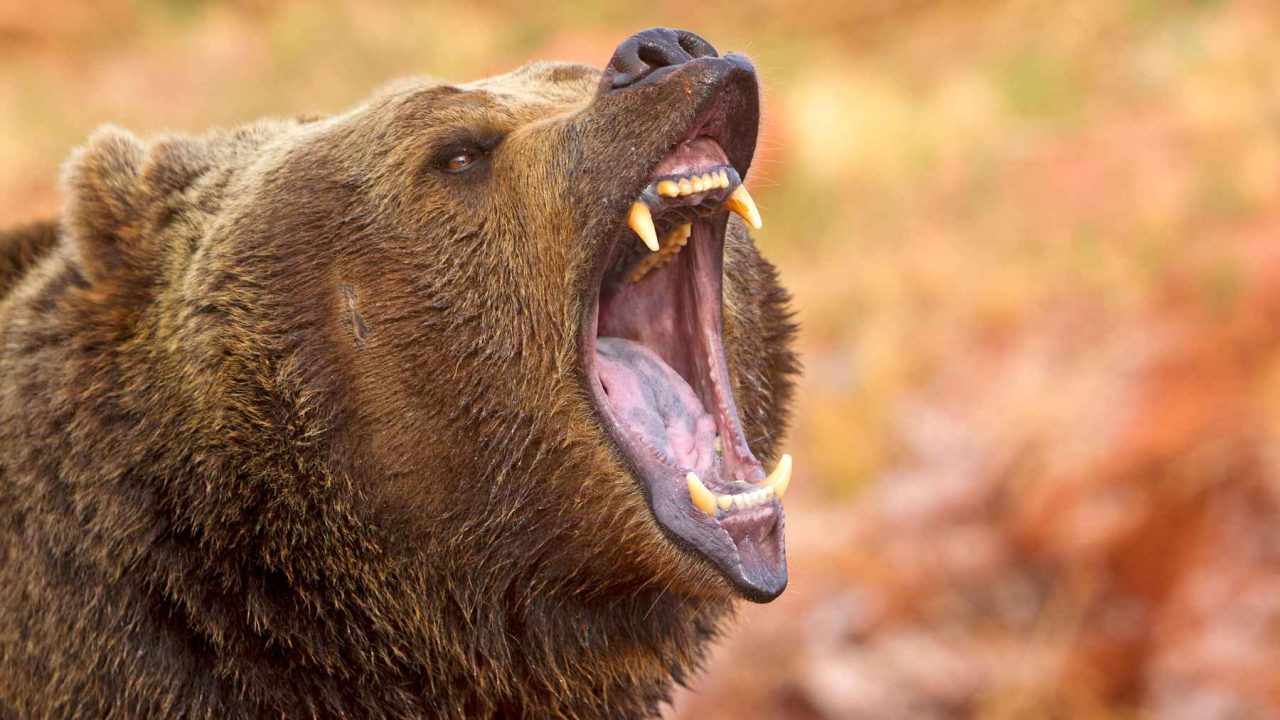
Bears are predators. Everyone knows this. The image is so embedded in culture, in wildlife documentaries, in the anxious minds of hikers, that questioning it feels almost absurd.
But a landmark study published December 3, 2025, in Nature Communications does exactly that. And the data it presents is difficult to argue with.
Across seven species, across dozens of countries, across more than 55,000 years of fossil and living evidence, a clear pattern emerges: bears are not the hunters we assumed them to be. They haven’t been for a very long time. And in a warming world, they may be drifting even further from that ancient predatory identity.
Here are five findings from that study, ranked by just how much they challenge what science thought it knew.
5. The Dataset That Makes This Study Impossible to Dismiss
Many studies about animal diets are built on small sample sizes and narrow geographic windows. This one is not.
The research team compiled 210 diet records drawn from 155 separate studies covering all seven terrestrial bear species on Earth. Bone material came from 14 natural history and paleontological collections across Europe. The fossil and subfossil record spanned roughly the last 55,000 years, reaching deep into the Late Pleistocene.
For the modern isotope analysis, researchers examined 219 brown bear samples and 372 red deer samples from across the European continent. That’s not a pilot study. That’s a comprehensive audit of bear diets across geological time.
| Data Source | Sample Size | Coverage |
|---|---|---|
| Diet records | 210 records from 155 studies | All 7 terrestrial bear species |
| Brown bear isotope samples | 219 individuals | Across Europe (modern) |
| Red deer isotope samples | 372 individuals | Across Europe (comparison) |
| Fossil and subfossil record | ~55,000 years | Late Pleistocene to present |
| Natural history collections | 14 institutions | Across Europe |
Scale matters in science. And this scale makes the findings very hard to wave away.
4. Isotope Analysis Reveals a Trophic Position That Keeps Dropping
To understand what an animal ate, scientists use stable isotope analysis. The technique reads chemical signatures locked inside bone collagen. Nitrogen isotopes, specifically, rise with each step up the food chain. Predators have higher nitrogen isotope values than herbivores. It’s a biological receipt for diet.
What the 2025 study found in European brown bear bones was consistent and sobering: modern brown bears occupy a significantly lower trophic position than their Late Pleistocene ancestors. The nitrogen values in ancient bear bones tell a story of animals that ate far more meat.
The comparison to red deer samples is especially telling. Red deer are classic herbivores. Bears and red deer now occupy surprisingly similar dietary territory in parts of Europe. Two animals that were once on opposite ends of the food web have moved measurably closer together.
3. Short Growing Seasons Are the Hidden Trigger for Carnivory
One of the study’s most practically useful discoveries is what drives bears toward meat in the first place. The answer is not species, location, or population. It is ecosystem productivity.
Bears in unproductive ecosystems with short growing seasons tend to be significantly more carnivorous. The study defined growing season length as the number of months when average air temperatures stay above 32°F. Where plants grow for only a few months per year, bears compensate by hunting or scavenging animal protein.
“Bears tended to be more carnivorous in unproductive ecosystems with short growing seasons, and more herbivorous in productive ecosystems with long growing seasons.”
— Finding from the 2025 Nature Communications study
This reframes how we think about bear behavior across the globe. An Alaskan brown bear gorging on salmon isn’t revealing some universal bear nature. It’s responding to a specific ecological moment in a specific place. Alaska, home to over 98 percent of the U.S. brown bear population, has extreme seasonal productivity swings. Bears there exploit a short, intense window of animal abundance.
Where that window doesn’t exist, bears simply don’t bother hunting at scale. And as growing seasons extend with warming temperatures, the calculus changes.
2. The Pleistocene Bear Was a Different Animal Entirely
If you could travel back 30,000 years and observe a European brown bear, you would be watching a genuinely different ecological creature. Not a different species, but a different role.
The study found that European brown bears occupied higher trophic positions during the Late Pleistocene than at any point during the Holocene, the current geological epoch beginning around 12,000 years ago. These were animals competing at the apex level of a very different food web. They shared their ecosystems with woolly mammoths, cave lions, and steppe bison. They hunted, scavenged, and ate accordingly.
After the last ice age ended, those megafauna disappeared. The cold, open landscapes of the Pleistocene gave way to dense, temperate forests packed with berries, roots, nuts, and tubers. Bears did not stubbornly cling to a carnivorous lifestyle. They adapted, generation by generation, toward the most available calories. The predator became an opportunistic forager.
This finding matters because it tells us bear diet is not fixed biology. It is flexible behavior responding to environmental conditions. And those conditions are currently shifting again, fast.
The Number 1 Finding: Bears Are Undergoing “Trophic Rewiring” in Real Time
The most significant discovery in the study is not about the past at all. It’s about the present, and what happens next.
The authors describe the phenomenon they’re observing as “trophic rewiring”: a wholesale restructuring of where a species sits in the food web. And they document it happening across bear populations right now, driven by climate-linked changes in ecosystem productivity.
| Bear Species | Primary Diet | Meat Consumption | Herbivore Index | Fossil Record Span | Conservation Status |
|---|---|---|---|---|---|
| Brown Bear | Berries, roots, fish | < 10% annually | Very High | 55,000+ years | Least Concern |
| American Black Bear | Berries, insects, nuts | < 5% annually | Very High | 40,000+ years | Least Concern |
| Giant Panda | Bamboo (99%) | Negligible | Extreme | 8 million years | Vulnerable |
| Polar Bear | Marine mammals, fish | ~70% annually | Very Low | 150,000 years | Vulnerable |
| Spectacled Bear | Fruits, bromeliads | < 5% annually | High | 2 million years | Vulnerable |
As temperatures rise globally, growing seasons lengthen. More months above 32°F means more plant biomass, more berries, more calorie-dense vegetation available across previously marginal landscapes. Bears in regions experiencing the fastest warming are also the populations showing the strongest dietary shifts toward plants.
The implications cascade outward from there. Bears that eat less meat exert less predation pressure on ungulates like deer and elk. Ungulate populations that face fewer bear predators can grow larger. Larger ungulate populations strip more vegetation. Plant communities change. Soil changes. The cascade continues.
Trophic rewiring in one species is rarely a contained event. It moves through food webs like a ripple in still water. Scientists studying wolf reintroduction in Yellowstone documented similar cascades for decades. The bear data suggests the same principle applies when a large omnivore quietly steps back from its role as a predator.
There is also a conservation paradox embedded in this finding. Efforts to protect bears, reintroduce them into recovering habitats, and end unsustainable hunting have succeeded remarkably in some regions. Black bear populations in the American South, for instance, have rebounded significantly thanks to decades of protection and strategic reintroductions. But a recovered bear population that is also shifting toward plant foods is not filling the same ecological niche that was lost. The numbers return. The function may not.
For polar bears, the trophic rewiring story plays out differently and more darkly. Stranded on land for longer periods as Arctic sea ice disappears, polar bears face starvation rather than dietary flexibility. Their extreme specialization as marine hunters leaves little room for the kind of adaptive shift that brown bears have managed. The same warming that expands plant availability for brown bears closes off options for their polar cousins.
What Trophic Rewiring Means for How We Manage Wild Spaces
The countdown of discoveries above isn’t just intellectually interesting. It has direct implications for wildlife management, conservation policy, and our basic assumptions about ecosystem health.
For decades, the presence of large carnivores like bears has been used as a proxy for ecosystem integrity. Protected areas were designed around the idea that securing apex predators stabilized everything below them. That logic still holds, but it now needs a footnote: the predator you’re protecting may not be performing the predatory function you assume.
The 2025 study calls for rethinking how we classify and monitor large omnivores. Stable isotope analysis of living populations, done periodically, could track trophic position over time in the same way we monitor population size. Diet isn’t static. Neither should our understanding of it be.
Bears are still bears. They still move through forests, dig up meadows, disperse seeds across vast distances, and shape the landscapes they inhabit. But the bear that emerges from 55,000 years of dietary data is not the apex predator of the popular imagination. It is something stranger, more flexible, and more ecologically interesting than that: an animal whose identity shifts with the world around it.
The question now is whether the world is shifting faster than even that flexibility can accommodate.



Leave a Reply