
▶ Read transcript
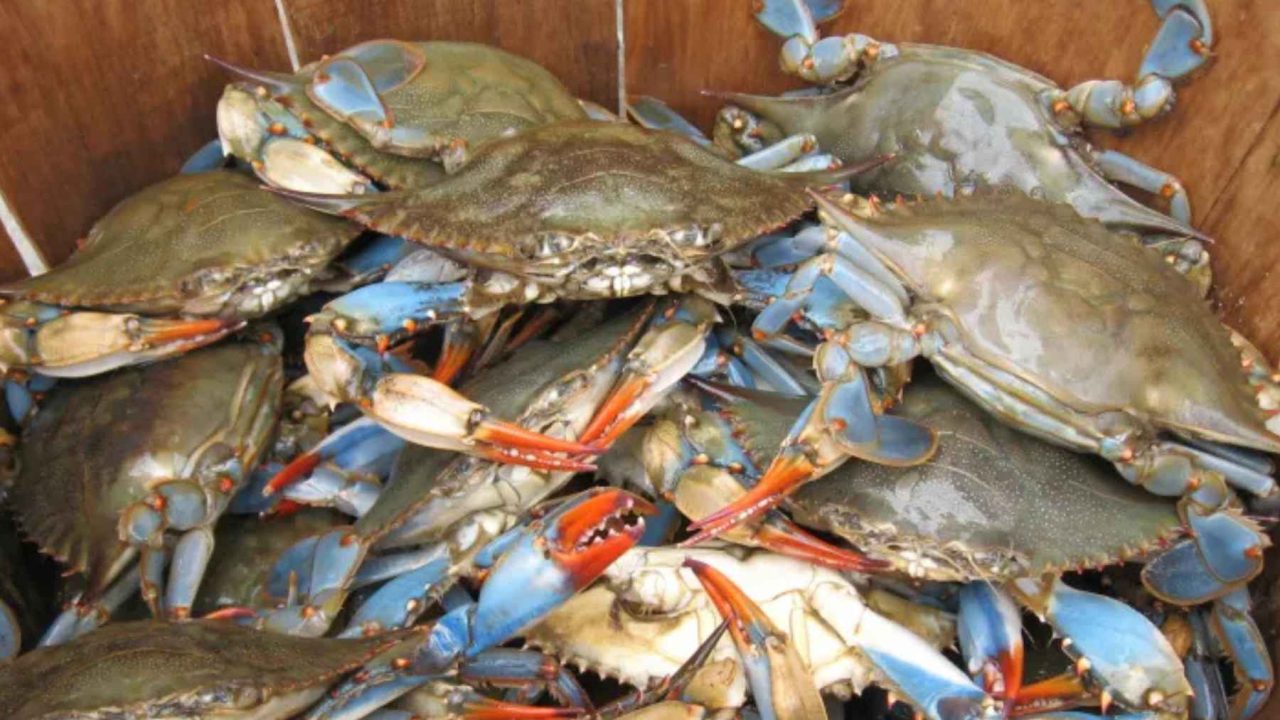
Here’s what you need to know about one of the most surprising findings in marine biology in recent years. A 37-year study by the Smithsonian Environmental Research Center has confirmed that cannibalism is responsible for more than 97 percent of all predation on juvenile blue crabs in the Chesapeake Bay. Fish, long assumed to be a major threat, were recorded as predators exactly zero times across the entire study. The biggest factor determining whether a young crab survives turns out to be water depth. In water just one to two and a half feet deep, juveniles face a 60 to 80 percent chance of being eaten by adult crabs. But in ultra-shallow water around six inches deep, that risk drops to roughly 30 percent, because larger adults struggle to hunt efficiently there. So if you live along the Chesapeake Bay, think twice before replacing a natural shoreline with a concrete bulkhead. Preserving those shallow-water zones could be the difference between a thriving crab population and a disappearing one.
Every summer, something ruthless unfolds in the brackish shallows of the Chesapeake Bay. Tiny blue crab larvae, barely wider than a fingernail, drift into waters already occupied by their own kind. The danger they face is not from fish, not from pollution, not from nets. It comes from their own family.
A landmark 37-year study, tracking juvenile blue crabs in a Chesapeake Bay tributary from 1989 to 2025, has confirmed what researchers long suspected but could never fully quantify. Cannibalism is not just a threat to young crabs. It is the threat. And the numbers are staggering.
A 37-Year Study Reveals the True Predator in Chesapeake Bay
Scientists at the Smithsonian Environmental Research Center spent nearly four decades tethering juvenile blue crabs at various depths in a mid-salinity tributary and recording what happened to them. The methodology was painstaking. The results were shocking.
Cannibalism by adult crabs accounted for more than 97 percent of all predation on juveniles across the entire study period. Not 60 percent. Not 80 percent. Ninety-seven percent. Fish predation, often assumed to be a major driver of juvenile mortality, was recorded exactly zero times across all 37 years of observation.
Deaths from physiological stress, such as temperature shock or oxygen depletion, were recorded at under 1 percent. For researchers who had spent years modeling fish as key predators of juvenile crabs, this was a fundamental rethinking of the food web.
The study focused on mid-salinity waters, the zone where juvenile blue crabs are known to congregate in large numbers during their early development. These are the waters where the crabs should, in theory, find food and shelter. Instead, they find their elders waiting.
| Crab Size | Width Range | Predation Risk | Status |
|---|---|---|---|
| Small Juvenile | 1.2–2.0 inches (30–50mm) | 60–80% in deep water | Critical Risk |
| Preadult | 3.5–4.3 inches (90–110mm) | Significantly reduced | Moderate Risk |
| Adult | Above 4.7 inches (120mm+) | Zero predation recorded | Safe |
Why Depth Is a Death Sentence for Juvenile Crabs
The size of a juvenile crab matters enormously. Small juveniles measuring between 1.2 and 2.0 inches wide (30 to 50 millimeters) face the highest predation rates. Preadults in the 3.5 to 4.3 inch range (90 to 110 millimeters) showed much lower risk. Adults above roughly 4.7 inches (over 120 millimeters) showed no predation whatsoever in the dataset.
This creates a brutal gauntlet. Every juvenile blue crab must survive long enough to outgrow its own species’ appetite. And the odds shift dramatically depending on one deceptively simple variable: how deep in the water column the crab settles.
“Cannibalism is the No. 1 killer of juvenile blue crabs in mid-salinity waters where they are known to congregate.”
— Smithsonian Environmental Research Center, 2025
In deeper water ranging from about 1.3 to 2.5 feet, a small juvenile crab faced a 60 to 80 percent probability of being cannibalized. That is not a risk. That is near-certain death. But in the shallowest zone, at roughly 6 inches of water depth, that risk dropped to around 30 percent.
Thirty percent is still terrifying odds for a creature the size of a quarter. But compared to the deeper water alternative, shallow zones function as genuine refuges. The physics are simple: larger adult crabs have difficulty maneuvering in extremely shallow water, and their bulk makes them energetically inefficient hunters in the inches-deep shallows where juveniles can hide among vegetation and debris.
Summer Is the Killing Season for Young Blue Crabs
The timing of the threat is as important as its location. Cannibalism peaked sharply in summer months, when adult blue crabs were most active and metabolically hungry. During cold months, tethering experiments recorded no predation at all.
You manage a coastal property on the Chesapeake Bay. A contractor offers to install a hardened concrete bulkhead to stop erosion, which would eliminate the gradual shallow-water slope along your shoreline. A conservation group recommends a living shoreline instead. The bulkhead is cheaper upfront.
This seasonal pattern aligns with what Chesapeake Bay watermen have observed for generations. Summer is when blue crabs are most abundant, most aggressive, and most visible in the shallows. It is also, according to this data, when juvenile mortality reaches its annual peak.
A blue crab’s life span runs only 24 to 30 months, during which it will molt more than 20 times. Each molt is a vulnerability window, when the shell softens and the crab is temporarily defenseless. During summer, when both molting frequency and adult aggression peak, the combination is lethal.
What This Means for Conservation and Fishery Management
The implications of this research reach well beyond academic ecology. The blue crab fishery is economically vital to the Chesapeake Bay region, supporting thousands of watermen and a seafood industry worth hundreds of millions of dollars annually. Population declines in recent decades have prompted harvest restrictions, sanctuary zones, and extensive monitoring programs.
Most management strategies have focused on reducing fishing pressure on adult crabs, protecting egg-bearing females, and improving water quality. This study suggests a parallel priority: preserving and restoring the shallow-water habitats that give juveniles their best chance of surviving to adulthood.
Shoreline development, erosion, and sea-level rise are steadily reducing the availability of ultra-shallow coastal zones. If those 6-inch-deep refuge areas shrink, juvenile crabs will be pushed into deeper water where adult cannibalism rates are dramatically higher. The population math becomes grim quickly.
The research also challenges a long-standing assumption in fishery modeling: that fish are meaningful predators of juvenile crabs. If fish account for essentially zero juvenile crab mortality, then management strategies designed to reduce fish populations to protect crabs may be misallocating conservation resources entirely.
The real predator was always in the family. And the only thing standing between a juvenile blue crab and its own kin is a few inches of water.


Leave a Reply