
▶ Read transcript
Here’s what you need to know about India’s unusual approach to protecting tigers on the highway.
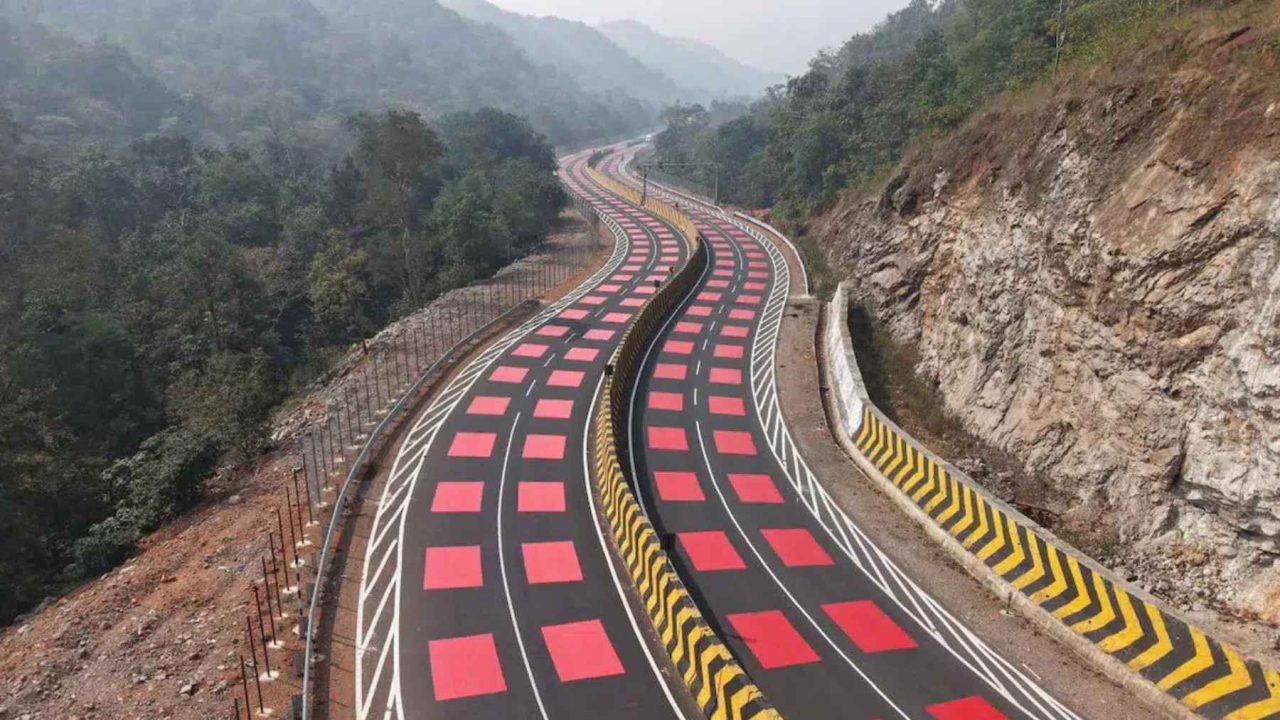
A stretch of National Highway 45 in Madhya Pradesh, which cuts through one of India’s most important tiger reserves, has become the country’s first wildlife-safe road. The most striking feature is a two-kilometer section of road painted vivid red using a hot-applied thermoplastic coating. The idea is rooted in psychology — when drivers see the road surface shift from gray to red, the brain registers danger before any conscious thought kicks in, and speed naturally drops. Research on surface color changes in traffic zones backs this up. But the red road isn’t working alone. Twenty-five animal underpasses are built along the nearly twelve-kilometer corridor, giving tigers, leopards, and sloth bears a safe route beneath the highway entirely. Studies show crossing structures without fencing reduce roadkill by essentially zero, so the combination here is key.
If you’re curious about wildlife road safety, look into whether highways near protected areas in your region have similar infrastructure — and advocate for it if they don’t.
Every year, an estimated 1 to 2 million collisions occur between vehicles and large animals on roads across the United States alone. Scale that reality to a country like India, with its dense road networks cutting through some of the world’s most biodiverse forests, and the numbers become staggering. Now, one stretch of highway in central India is trying something that no Indian road has ever attempted before.
It is not a fence. It is not a speed camera. It is not a warning sign. It is the road itself, turned red.
A Highway Through the Heart of a Tiger Reserve
National Highway 45 connects Bhopal and Jabalpur, two of Madhya Pradesh’s most important cities. For decades, that route has sliced directly through the Veerangana Durgavati Tiger Reserve, a dense forest ecosystem that shelters tigers, leopards, sloth bears, and dozens of other species. Trucks and passenger cars moved through at highway speeds, largely indifferent to what lived in the trees on either side.
The animals had no such indifference. Wildlife crossings were dangerous. Nighttime movement, which is when many large mammals travel, put them directly in the path of fast-moving vehicles with bright headlights. Roadkill was a persistent, documented problem along this corridor.
The National Highways Authority of India, operating under the Ministry of Road Transport and Highways, decided to treat this corridor differently. Engineers and conservation planners began designing a solution that addressed the problem from multiple angles simultaneously. The result is what officials are now calling India’s first wildlife-safe road.
The 5-Millimeter Layer That Changes Driver Behavior
The centerpiece of the project is disarmingly simple. A hot-applied thermoplastic red surface layer, just 5 millimeters thick, has been laid across the carriageway through the identified 2.0-kilometer danger zone. The color is not decorative. It is a psychological trigger.
Red carries near-universal associations with danger, stopping, and caution. When a driver approaches a section of road that shifts from standard gray asphalt to a vivid crimson surface, the brain registers the change before the conscious mind has processed a single word of signage. The foot eases off the accelerator. The grip on the wheel tightens slightly. Speed drops.
This is not guesswork. Traffic psychology research has consistently shown that surface color and texture changes produce measurable reductions in vehicle speed. The technique has been used in urban pedestrian zones in Europe and at school crossings in several countries. India’s application of it to a wildlife corridor is the first of its kind on an Indian national highway.
| Wildlife Road Safety Method | Roadkill Reduction | Notes |
|---|---|---|
| Fencing combined with crossing structures | ~83% | Most effective combined approach |
| Fencing alone (5 km or more) | ~80–54% | Effective but creates barrier effects for wildlife movement |
| Crossing structures without fencing | No detectable benefit | Animals must be guided to use crossings |
| Red thermoplastic surface (NH-45 approach) | Under evaluation | Combined with 25 underpasses; data collection ongoing |
The NH-45 project does not rely on the red surface alone. The 25 animal underpasses distributed along the 11.96-kilometer corridor are designed to give wildlife a safe route beneath the highway entirely. The underpasses address the movement problem; the red surface addresses the speed problem. Together, they form a layered defense.
What the Research Says About Roads and Wildlife
The statistics on wildlife-vehicle collisions are grim reading for anyone who cares about large mammal conservation. US federal research estimates between 1 and 2 million such collisions annually in America, a country with extensive wildlife management infrastructure. In countries where road networks are expanding rapidly through intact forest, the numbers are proportionally worse.
The research on crossing structures reveals a counterintuitive finding. Underpasses and overpasses built without accompanying fences show no detectable reduction in roadkill. The reason is behavioral. Animals do not instinctively seek out a tunnel beneath a road. Without fencing that channels them toward the crossing, they continue to attempt direct road crossings, often fatally.
You are a highway engineer in India tasked with reducing wildlife deaths on a national highway through a tiger reserve. You have a limited budget and cannot close or reroute the road. Which approach do you prioritize?
The NH-45 design appears to account for this. The 25 underpasses are part of a larger system, not standalone structures. Whether fencing has been incorporated along the full corridor has not been fully detailed in public documentation, but the combination of behavioral design, physical infrastructure, and surface psychology represents a more comprehensive approach than India has previously attempted on a national highway.
“India’s first Red Road sets a powerful precedent by blending infrastructure, psychology, and conservation. By slowing traffic naturally and providing safe crossing points, it shows that roads and wildlife can coexist.”
— Conservation commentary on the NH-45 project
Why the Jabalpur-Bhopal Corridor Became the Test Case
Madhya Pradesh was not a random choice. The state is home to more tigers than any other in India, and the Veerangana Durgavati Tiger Reserve sits within a landscape that connects multiple protected areas. Maintaining wildlife movement through that landscape is not simply an ecological nicety. It is essential for genetic diversity and long-term population survival.
The Jabalpur-Bhopal highway is a major freight and passenger route. Closing it was never an option. Rerouting it would have cost enormous sums and disrupted commerce across the region. The red road approach offered a third path: keep the highway open, keep traffic moving, but change the way drivers interact with the most dangerous section of the route.
NHAI’s implementation of this project signals something broader than a single road upgrade. It suggests that India’s highway authority is beginning to treat wildlife mortality as a design problem rather than an acceptable externality of infrastructure development. That shift in framing, if it holds, could have consequences far beyond one stretch of red asphalt in Madhya Pradesh.
The Question That Remains Unanswered
The project is new. The data is not yet in. Conservation scientists will need months, probably years, of post-implementation monitoring to determine whether the red surface is actually changing driver behavior at the scale needed, and whether the underpasses are being used by the animals they were built for.


Leave a Reply