
▶ Read transcript
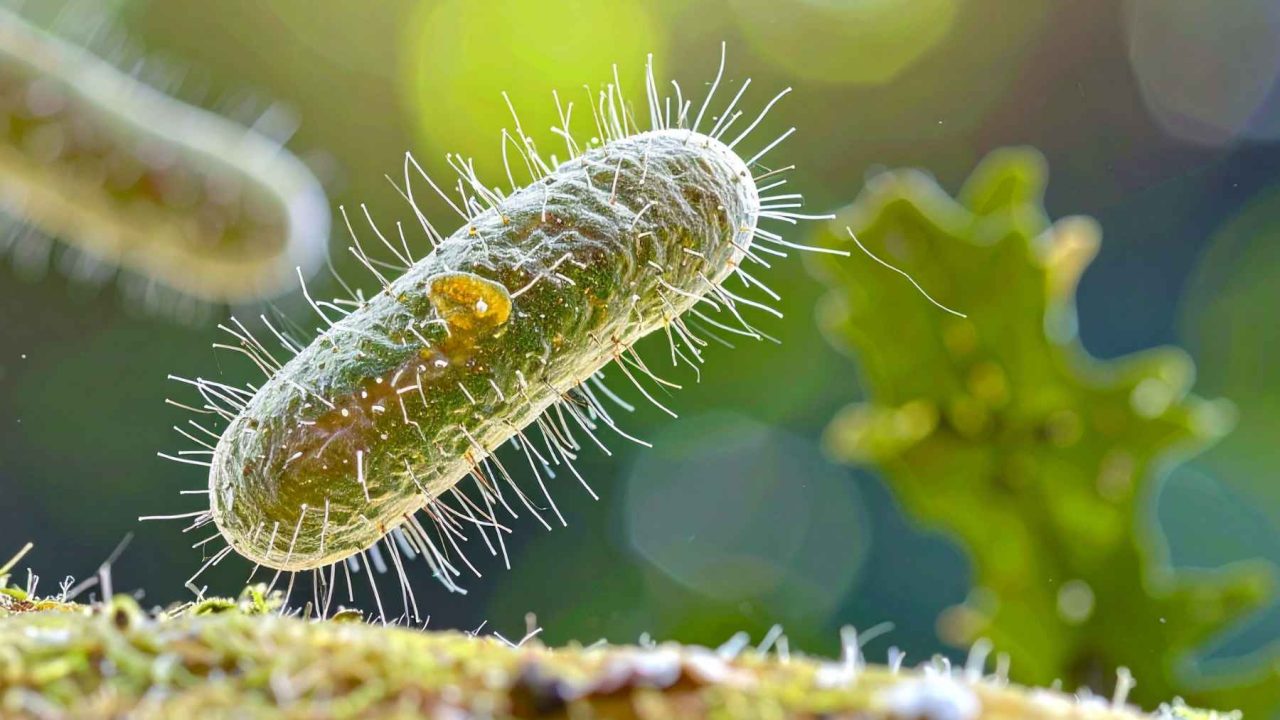
Here’s what you need to know about one of the most unusual biological threats scientists are warning about. In February 2026, the World Health Organization issued a preemptive warning about so-called mirror bacteria, organisms that don’t exist yet but could theoretically be built in a lab using molecular building blocks that are the exact opposite of all natural life on Earth. A coalition of 38 researchers, including Nobel laureates, has called for a halt on this research. Their concern is that our immune systems evolved to recognize natural molecular structures, meaning mirror bacteria could be essentially invisible to our defenses, resistant to antibiotics, and free from natural predators like bacteriophages. Some U.K. scientists note that this same molecular incompatibility might also prevent mirror bacteria from feeding or infecting hosts, but that uncertainty is precisely the problem. The takeaway: support and follow calls for international governance on mirror life research before the science outpaces our ability to contain it.
What if the greatest biological threat to life on Earth didn’t come from nature, but from a laboratory mirror?
That question is no longer hypothetical. In February 2026, the World Health Organization published a detailed explanation of why “mirror life” could plausibly cause catastrophic harm to humans, animals, plants, and the environment. The warning landed with unusual weight because no self-replicating mirror organism exists today. This isn’t a response to an active crisis. It’s a preemptive alarm.
A coalition of 38 researchers, including Nobel Prize winners, has called for a halt on research aimed at creating these organisms. Their concern centers on a deceptively simple concept: molecular handedness. And the consequences of getting it wrong could be permanent.
Molecular Handedness and Why Mirror Bacteria Break Every Rule
To understand why mirror bacteria terrify scientists, you need to understand chirality. Every amino acid in your body, in every plant, in every bacterium on Earth, is “left-handed.” The sugars in DNA and RNA are “right-handed.” This property, called homochirality, is one of biology’s deepest organizing principles.
Mirror life would flip all of that. A mirror bacterium would be built entirely from opposite-handed molecular parts: right-handed amino acids and left-handed sugars. The WHO stresses that such an organism cannot arise from existing life. It would have to be deliberately constructed in a laboratory using advances in synthetic biology.
Here’s why that matters. Your immune system evolved over billions of years to recognize and destroy organisms made from left-handed amino acids. Enzymes that break down bacterial cell walls, antibodies that lock onto specific molecular shapes, antimicrobial peptides that punch holes in membranes: all of these defenses are tuned to the chirality of natural life.
A mirror bacterium would present molecular surfaces that these defenses simply cannot grip. It would be, in immunological terms, invisible.
| Feature | Natural Bacteria | Mirror Bacteria |
|---|---|---|
| Amino acid chirality | Left-handed (L) | Right-handed (D) |
| Sugar chirality (DNA/RNA) | Right-handed (D) | Left-handed (L) |
| Recognized by immune system | Yes | Likely not |
| Vulnerable to natural antibiotics | Yes | Likely resistant |
| Predated by bacteriophages | Yes | Likely not |
| Can arise naturally | Yes | No |
38 Scientists, Including Nobel Laureates, Sound the Alarm
The scale of expert concern here is remarkable. In a policy forum published in Science, 38 researchers laid out a stark warning. Mirror bacteria would likely evade many immune mechanisms mediated by chiral molecules. They would also escape predation by natural-chirality bacteriophages, the viruses that normally keep bacterial populations in check.
Without phage predation, mirror bacteria could spread in the environment with almost no natural resistance. And because many antibiotics are produced by microbial competitors using normal chirality, mirror bacteria could be intrinsically resistant to those compounds as well.
“Mirror bacteria may evade the immune defenses of humans, animals, and plants, and they may escape natural predators in the environment, causing potentially severe harm.”
— WHO Q&A on Mirror Life, February 2026
The WHO compared the potential ecological impact to an invasive species, but far worse. An invasive species at least plays by the same biochemical rules as everything else. Mirror bacteria would operate on a fundamentally different molecular platform.
The organization warned that mirror bacteria could cause irreversible ecological disruption, threatening agriculture and the food supply. The word “irreversible” is doing heavy lifting in that sentence. Once a self-replicating mirror organism enters an ecosystem, there may be no mechanism to remove it.
The Uncertainty Problem: U.K. Scientists Push Back on Certainty
Not everyone agrees that mirror bacteria would be unstoppable. The U.K. Government Office for Science has noted that chiral mismatch might also limit how well a mirror bacterium can invade host cells or use needed nutrients. If a mirror organism can’t interact with normal-chirality sugars or amino acids in its environment, it might struggle to feed itself.
This cuts both ways. The same molecular incompatibility that would make mirror bacteria invisible to immune systems could also make them unable to infect hosts or metabolize food sources. Real-world behavior remains genuinely uncertain.
But the 38 researchers argue that uncertainty itself is the problem. We don’t know whether mirror bacteria would be harmless curiosities or existential threats. And the consequences of guessing wrong are too severe to risk.
Consider the analogy to gain-of-function research. For years, scientists debated whether engineering more transmissible viruses in the lab was worth the knowledge gained. The COVID-19 pandemic, regardless of its origin, made the stakes of that debate viscerally real. Mirror life research operates on a similar knife’s edge, but with potentially larger consequences.
A lab leak involving mirror bacteria wouldn’t just mean a new pandemic. It could mean a permanent, irreversible alteration of Earth’s biosphere.
Why Synthetic Biology Has Reached a Tipping Point in 2026
The timing of these warnings is not accidental. Synthetic biology has advanced at a staggering pace over the past decade. Researchers can now synthesize entire genomes from scratch. Protein engineering tools allow the construction of enzymes from non-natural amino acids. The technical barriers to building mirror versions of natural molecules are shrinking every year.
No lab has yet created a fully self-replicating mirror organism. But the trajectory of the field suggests it could become feasible within the next decade. The WHO’s February 2026 publication was explicitly designed to get ahead of that timeline.
The hazards of synthetic biology broadly include biosafety risks to workers and the public, biosecurity risks from deliberate misuse, and environmental hazards. Mirror life sits at the intersection of all three categories. A mirror bacterium released accidentally could spread. One released deliberately could be weaponized. And either scenario could trigger ecological cascading effects that no existing technology could reverse.
The Invasive Species Analogy Falls Short
When the WHO describes mirror bacteria as a potential invasive species, the comparison is instructive but incomplete. Invasive species like zebra mussels or kudzu cause enormous damage. But they can still be eaten by predators, attacked by pathogens, and controlled by environmental management.
You lead a synthetic biology research lab that has made a breakthrough in constructing mirror-image proteins. A pharmaceutical company offers significant funding to push the research toward a self-replicating mirror organism, arguing it could revolutionize drug development. Thirty-eight leading scientists have called for a moratorium on this exact type of work.
Mirror bacteria would face none of those checks. Natural bacteriophages couldn’t attach to their reversed surface proteins. Competing microbes couldn’t deploy antibiotics against their flipped biochemistry. The ecological niche they would occupy might be entirely uncontested.
Agriculture would be particularly vulnerable. Soil microbiomes, the foundation of plant health and crop productivity, depend on intricate webs of bacterial competition and cooperation. Introduce a competitor that plays by different molecular rules, and those webs could unravel.
Global Governance Gaps and the Race to Regulate
The current regulatory landscape is not equipped to handle mirror life. Biosafety frameworks were designed for organisms that share Earth’s chirality. Containment protocols assume that escaped organisms will behave like natural bacteria, susceptible to disinfection, antibiotics, and environmental pressures.
Mirror bacteria would violate those assumptions. Standard autoclaving and chemical disinfection might still work, since those methods destroy organisms through heat and chemical disruption rather than chiral-specific mechanisms. But biological containment, the idea that natural ecosystems will eventually control any escaped organism, would fail entirely.
The 38 researchers who published in Science are calling for a global moratorium on mirror life research. They want international agreements, similar to those governing chemical and biological weapons, to prevent any laboratory from attempting to create self-replicating mirror organisms.
Whether such agreements can be enforced is another question. Synthetic biology tools are becoming cheaper and more accessible every year. The knowledge required to attempt mirror life construction is spreading through academic publications and open-source databases.
Where Mirror Life Research Goes From Here
The scientific community now faces a familiar but intensified dilemma. Mirror life research could yield extraordinary insights into the origins of chirality, the nature of life itself, and the development of novel therapeutics. Mirror-image proteins, for instance, could resist enzymatic degradation and serve as powerful drug candidates.
But the step from synthesizing individual mirror molecules to creating a self-replicating mirror organism is a line that many scientists believe should never be crossed. The WHO’s position is clear: the potential for catastrophic, irreversible harm outweighs any foreseeable benefit.
Several countries are now reviewing their synthetic biology regulations in light of these warnings. The European Union has signaled interest in updating its biosafety directives. The U.S. National Institutes of Health has not yet issued formal guidance on mirror life, but internal discussions are reportedly underway.
The next few years will determine whether the international community can build a governance framework fast enough to match the pace of scientific capability. History suggests that technology usually outpaces regulation. In this case, the margin for error is zero.
We have spent 3 billion years evolving on a planet where every living thing shares the same molecular handedness. The first organism to break that symmetry won’t come from the deep ocean or outer space. It will come from a lab bench. And the question we should be asking isn’t whether we can build it, but whether we can survive the answer.


Leave a Reply