
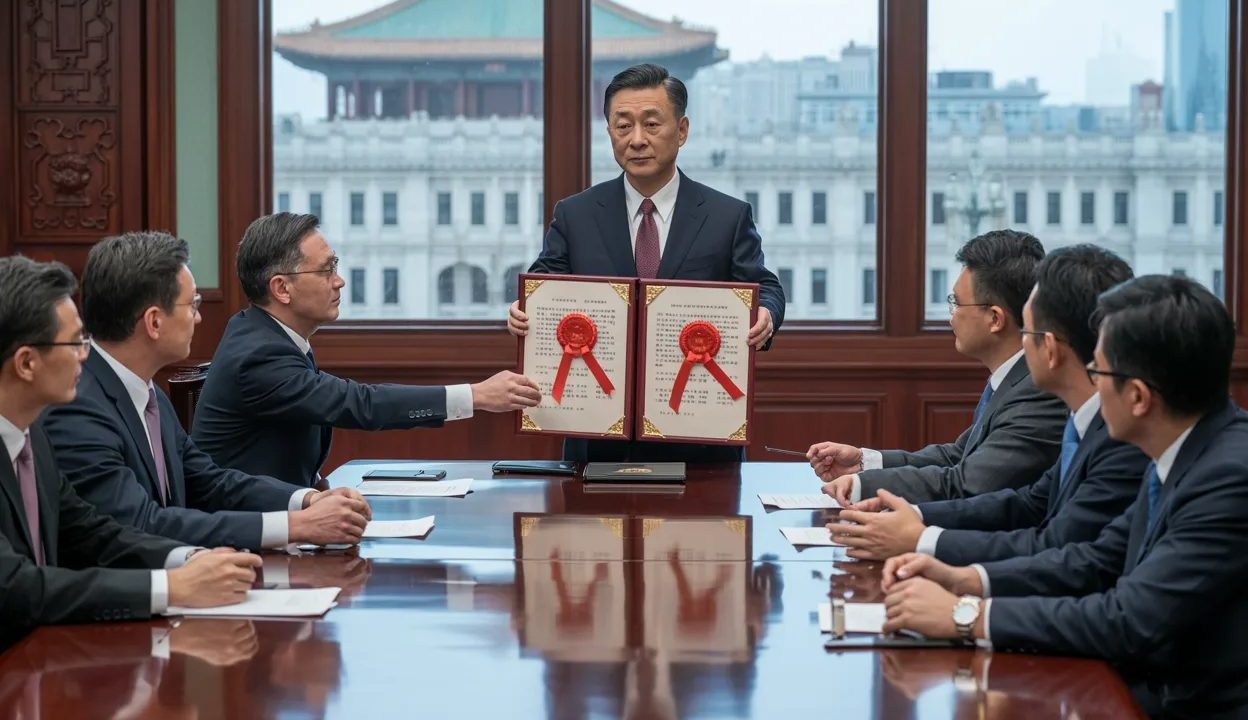
China has announced a package of 10 new policy measures designed to rebuild and strengthen cross-strait relations with Taiwan — a move that analysts have described as the most substantive outreach effort the mainland has made in years. The initiative spans economic cooperation, cultural exchange, and expanded tourism pathways, signaling a deliberate shift in strategy toward engagement rather than isolation.
The announcement marks a notable turning point in a relationship that has been defined by tension and uncertainty for decades. By weaving together economic incentives with cultural and people-to-people connections, mainland authorities appear to be betting that shared prosperity and shared heritage can do what political pressure alone has not.
For travelers, businesses, and families with ties on both sides of the strait, the implications are potentially significant — and worth watching closely.
What China Is Actually Proposing
The package of measures announced by mainland authorities is multifaceted by design. Rather than focusing on a single lever — such as trade policy or diplomatic language — the initiative takes a broader approach, targeting several dimensions of the cross-strait relationship simultaneously.
The three core pillars appear to be economic engagement, cultural exchange, and tourism connectivity. Each is intended to create new points of contact between people on both sides, gradually rebuilding the kind of everyday ties that can anchor a more stable relationship over time.
Officials have framed the measures as an invitation rather than a demand — a posture that represents a meaningful shift in tone, even if the underlying political goals remain unchanged. The emphasis on shared prosperity suggests the mainland is looking to make the case that closer ties carry tangible benefits for ordinary people in Taiwan, not just governments.
The 10 Measures at a Glance
While the full text of every measure has not been detailed in available reporting, the broad categories covered by the package reflect a comprehensive outreach strategy. Here is what is known about the scope of the initiative:
| Area of Focus | Reported Objective |
|---|---|
| Economic Cooperation | Expanding trade and investment ties to create shared prosperity across the strait |
| Cultural Exchange | Encouraging people-to-people connections through shared cultural heritage and programs |
| Tourism Pathways | Opening or expanding travel routes and reducing barriers for cross-strait visitors |
| Political Engagement | Framing the outreach as a broader strategic pivot toward dialogue and engagement |
The package is being described by maritime and regional analysts as a deliberate regional strategy shift — one aimed at reshaping the broader Pacific landscape by changing the texture of the China-Taiwan relationship from the ground up.
Why Cultural Exchange and Tourism Matter More Than They Seem
It would be easy to dismiss tourism and cultural programs as soft window dressing around harder political goals. But there is a strong argument that these elements are actually the most strategically important parts of the package.
When people travel, eat, study, and do business across a border — even an unofficial one — it changes how they see each other. Cross-strait tourism, at its peak before tensions rose in recent years, brought millions of mainland visitors to Taiwan annually and created real economic interdependence. Rebuilding those flows would not just benefit hotels and airlines; it would re-establish the human connections that make conflict feel less thinkable.
Cultural exchange programs operate on a similar logic. Shared history, shared language, and shared traditions are genuinely powerful forces — and the mainland’s decision to emphasize them suggests a recognition that soft influence can move mountains that hard pressure cannot.
Supporters of the initiative argue that economic integration and tourism recovery could lay the groundwork for more durable stability in the region, even in the absence of formal political agreements.
What Happens Next — and What to Watch For
The announcement of a policy package is only the beginning. What matters now is how Taiwan responds, whether the specific measures translate into real operational changes, and whether the broader geopolitical environment allows the initiative any room to succeed.
Taiwan’s government has historically been cautious about engagement that could be seen as legitimizing mainland political frameworks. Any response — whether a measured welcome, a skeptical rejection, or a wait-and-see silence — will shape how the initiative develops over the coming months.

For travelers and businesses, the practical question is simpler: will flights increase, will visa or entry processes ease, and will cultural and commercial programs actually launch? Those are the indicators worth tracking if you want to know whether this initiative is substance or symbolism.
The regional significance should not be underestimated either. How the cross-strait relationship evolves affects shipping lanes, supply chains, and the broader security environment across the Pacific — making this a story with consequences well beyond the two parties directly involved.
Frequently Asked Questions
How many measures are included in China’s new cross-strait package?
The package consists of 10 measures covering economic cooperation, cultural exchange, and tourism pathways between mainland China and Taiwan.
What are the main areas targeted by the new policy incentives?
The initiative focuses on three broad pillars: economic engagement, cultural exchange, and expanded tourism connectivity across the strait.
Has Taiwan officially responded to the announcement?
A formal response from Taiwan’s government has not been confirmed in available reporting at this stage.
Will cross-strait tourism actually increase as a result of these measures?
This has not yet been confirmed — the measures represent a policy announcement, and operational changes to travel routes and entry processes would need to follow.
Why is this initiative being described as significant by analysts?
Regional analysts have characterized it as the most substantive mainland outreach effort in years, given its breadth across economic, cultural, and political dimensions simultaneously.
How does this affect people outside China and Taiwan?
Cross-strait stability has direct implications for Pacific shipping lanes, regional supply chains, and the broader security environment, making the outcome relevant far beyond the two parties involved.




Leave a Reply