
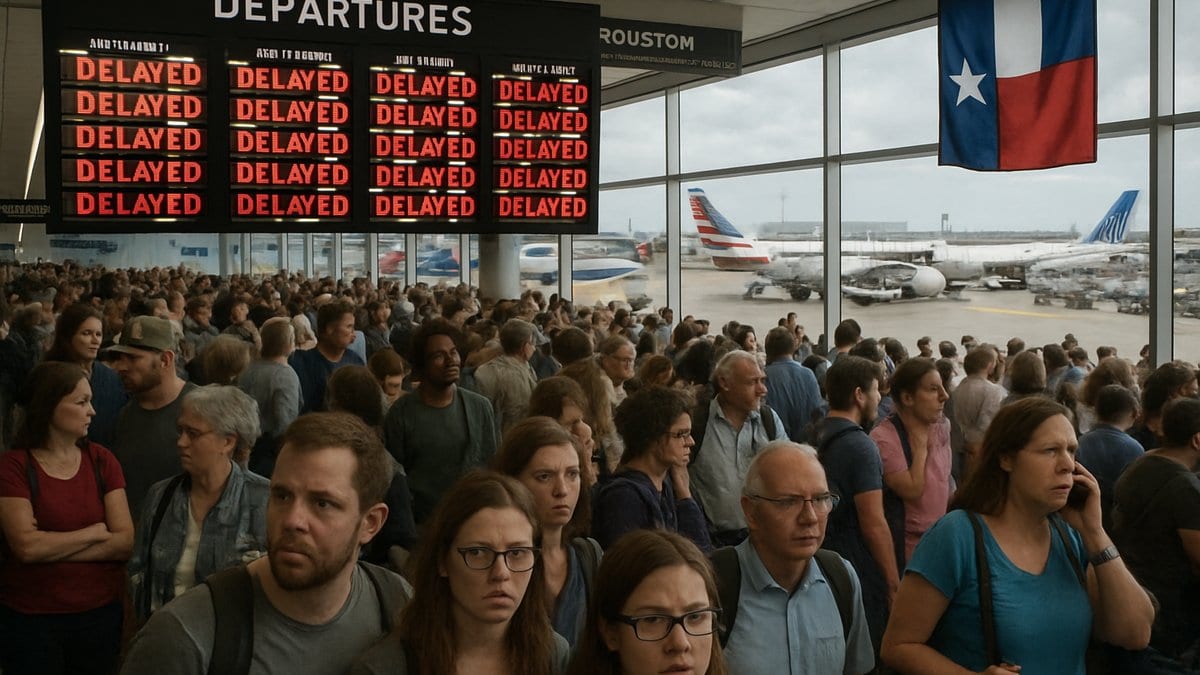
Hundreds of passengers moving through Texas’s two busiest aviation hubs found their travel plans thrown into chaos, with flight cancellations and widespread delays reported across Dallas and Houston airports. The disruption, involving carriers including PSA Airlines, Southwest Airlines, and Spirit Airlines, has left travelers stranded, rerouted, or waiting for hours with little certainty about when they might reach their destinations.
Texas is home to some of the most heavily trafficked airports in the United States, and disruptions at Dallas and Houston have an outsized ripple effect — not just for local travelers, but for passengers connecting through these hubs from across the country. When multiple carriers experience problems simultaneously, the knock-on delays can spread far beyond the original affected flights.
If you have a flight through Dallas or Houston today, here is what is confirmed and what you need to know right now.
What Is Happening at Dallas and Houston Airports
According to available reporting, more than a dozen flight cancellations have been recorded across the Dallas and Houston airport systems, alongside hundreds of delays affecting passengers on multiple airlines. The scale of the disruption has been described as significant, with the impact felt most acutely by travelers passing through these major hubs.
The carriers confirmed as involved in the disruptions include PSA Airlines, Southwest Airlines, and Spirit Airlines, along with several other unnamed carriers operating at these airports. PSA Airlines, which operates as a regional carrier primarily under the American Airlines Express banner, serves a large number of connecting routes that feed into the broader national network — meaning delays on PSA flights can cascade into missed connections on mainline services.
Southwest Airlines, which uses Dallas Love Field as one of its primary bases of operation, is particularly exposed to disruption at the Dallas airport system. Southwest’s point-to-point network model means that a delayed aircraft in Dallas does not just affect one route — it can delay the same plane’s next several flights across the country.
Airlines Affected and the Scale of the Disruption
| Airline | Type of Disruption Reported | Airports Affected |
|---|---|---|
| PSA Airlines | Cancellations and delays | Dallas, Houston |
| Southwest Airlines | Cancellations and delays | Dallas, Houston |
| Spirit Airlines | Cancellations and delays | Dallas, Houston |
| Several other carriers | Delays reported | Dallas, Houston |
The total confirmed figure stands at over a dozen cancellations and hundreds of delays across both airport systems. The source reporting does not break down the precise numbers per airline or per airport, but the breadth of carriers involved suggests a systemic issue affecting operations region-wide rather than a single airline’s internal problem.
Why Texas Flight Disruptions Hit So Many Passengers So Hard
Dallas-Fort Worth International Airport consistently ranks among the busiest airports in the world by total operations. Houston’s airport system — anchored by George Bush Intercontinental — handles tens of millions of passengers annually and serves as a major hub for United Airlines, among others. When disruptions hit both cities at the same time, the passenger impact multiplies quickly.
Travelers who are simply passing through on connecting flights are often the hardest hit. A cancellation on a short regional PSA flight into Dallas can mean missing a long-haul connection that only operates once or twice a day. For those passengers, a single cancellation can translate into an overnight delay or a full day lost.
Budget carriers like Spirit Airlines tend to operate with tighter aircraft utilization schedules and fewer spare planes available at any given airport. When a Spirit flight is cancelled, rebooking options are often more limited compared to larger legacy carriers with more frequent departures on the same routes.
Officials have noted that travel disruptions of this nature can affect not just leisure travelers but also business passengers, medical travelers, and people traveling for family emergencies — groups for whom a delay carries consequences well beyond inconvenience.
What Affected Passengers Should Do Right Now
If you are traveling through Dallas or Houston today, the most practical steps you can take are straightforward but time-sensitive.
- Check your flight status directly with your airline before heading to the airport. Most carriers update their apps and websites in real time during disruption events.
- Contact your airline proactively if your flight has been cancelled. Waiting in line at the airport is often slower than reaching an agent by phone or through the airline’s app.
- Know your rights. Under U.S. Department of Transportation rules, if your flight is cancelled, airlines are required to offer you a full refund if you choose not to travel — regardless of the reason for the cancellation.
- Ask about rebooking on partner airlines if your carrier operates within an alliance or has interline agreements. This is more likely to be available on legacy carriers than on budget airlines.
- Document your delay. If you incur additional expenses — meals, accommodation, or transportation — due to a significant delay or cancellation, keep all receipts. Some airlines offer compensation or travel vouchers for significant disruptions, though this is not universally guaranteed under U.S. law.
What Comes Next for Texas Air Travel
The source reporting does not specify a confirmed cause for the disruptions, nor does it provide a timeline for when full operations are expected to resume at Dallas and Houston airports. Weather, staffing issues, and air traffic control constraints are among the most common drivers of multi-carrier disruption events of this scale, but no specific cause has been confirmed in available reporting.
Passengers with travel planned through these airports in the coming days should monitor their airline’s communications closely. Disruptions of this kind can sometimes create residual delays that extend into the following day, particularly if aircraft positioning is affected overnight.
Airlines typically issue travel waivers during significant disruption events, allowing passengers to rebook without change fees. Checking your airline’s website for an active travel waiver for Dallas or Houston is a worthwhile first step if your trip is coming up in the next 24 to 48 hours.
Frequently Asked Questions
Which airlines are affected by the Texas flight disruptions?
PSA Airlines, Southwest Airlines, and Spirit Airlines have been confirmed as affected, along with several other carriers operating at Dallas and Houston airports.
How many flights have been cancelled or delayed?
Reports confirm more than a dozen cancellations and hundreds of delays across both the Dallas and Houston airport systems, though a precise per-airline breakdown has not been confirmed.
What is causing the disruptions at Dallas and Houston airports?
The specific cause of the disruptions has not been confirmed in available reporting at this time.
Am I entitled to a refund if my flight is cancelled?
Under U.S. Department of Transportation rules, passengers are entitled to a full refund if their flight is cancelled and they choose not to travel, regardless of the reason for the cancellation.
Will the disruptions affect flights in the coming days?
This has not yet been confirmed, but passengers with upcoming travel through Dallas or Houston should monitor their airline’s communications and check for active travel waivers that may allow fee-free rebooking.
Does Spirit Airlines offer rebooking on other airlines if my flight is cancelled?
Budget carriers like Spirit typically have more limited rebooking options compared to legacy airlines, and interline agreements with other carriers are less common. Contacting Spirit directly is the best course of action if your flight is affected.




Leave a Reply