
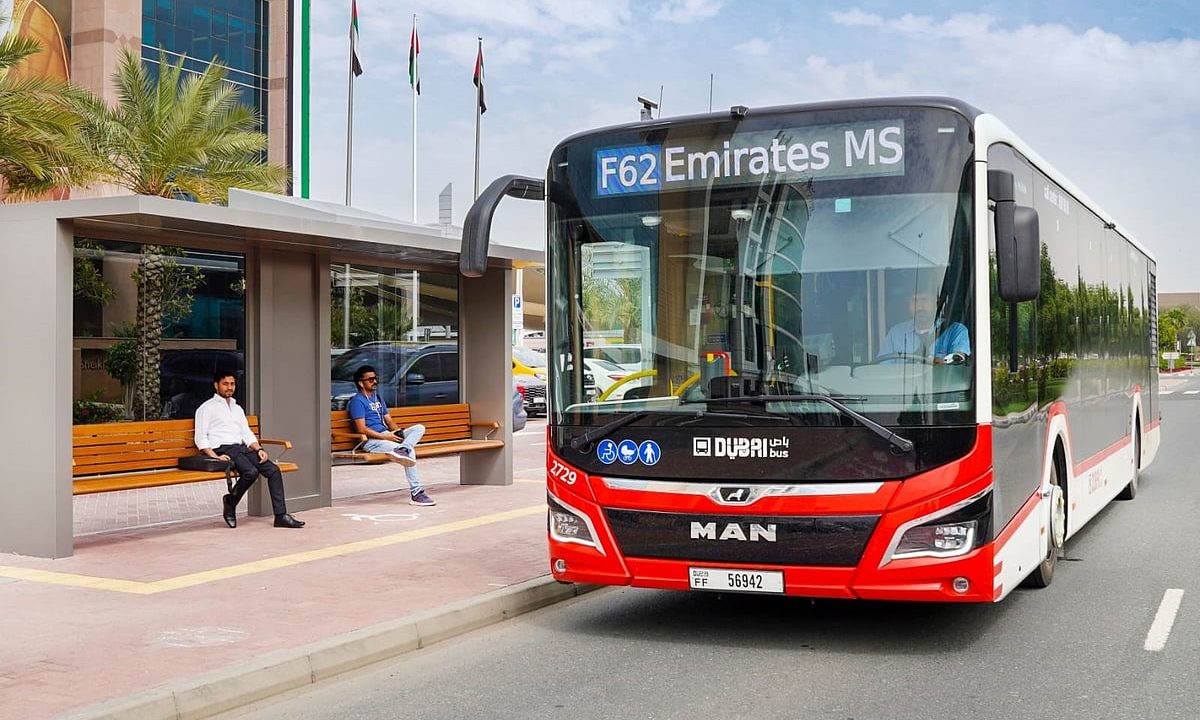
The deadline has already passed — and the transformation is already underway. As of early 2026, Dubai’s Roads and Transport Authority has quietly completed one of the largest public transit infrastructure projects in the Gulf region: 726 new bus shelters installed across the emirate’s highest-density corridors.
This isn’t a pilot program or a phased rollout still in committee. The shelters are built, operational, and serving riders today. If you travel through Dubai regularly, or plan to, the landscape of daily commuting has already shifted beneath your feet.
Here are five reasons this milestone matters — ranked from significant to genuinely transformative.
5 — The Raw Scale: 726 Shelters Deployed Across High-Density Dubai Districts
Numbers can lose meaning quickly. So let’s anchor this one. Installing 726 bus shelters isn’t just a construction milestone — it represents a deliberate, coordinated deployment across the districts where foot traffic is heaviest and transit needs are most acute.
According to City 1016, the RTA targeted key areas across Dubai rather than spreading installations evenly. That means planners identified pressure points first, then built around them. This kind of data-driven placement is unusual in public infrastructure projects of this size.
For context, Dubai’s population crossed 3.6 million in recent years, with millions more tourists passing through annually. A transit network that serves a city growing this fast needs infrastructure that anticipates demand, not one that chases it.
4 — Air-Conditioning in Desert Heat: The Feature That Changes Everything at Street Level
Dubai summers are not abstract inconveniences. Temperatures regularly exceed 40°C (104°F), with humidity pushing the heat index well past tolerable. Standing at an exposed bus stop in those conditions isn’t just uncomfortable — it discourages transit use entirely.
The new shelters address this directly. As reported by Gulf News, the installations include air-conditioning, which transforms waiting at a bus stop from an endurance test into a practical, manageable part of a commute.
This matters for ridership numbers beyond comfort. Transit systems in extreme climates consistently see depressed ridership when outdoor waiting conditions are harsh. Cooling a bus shelter is, effectively, an investment in getting more people onto public buses.
The ripple effect is real: more riders per route means better justification for frequent service, which in turn attracts more riders. Climate-controlled shelters aren’t a luxury in Dubai. They’re a prerequisite for a functional bus network.
3 — Real-Time Route Information Embedded in Every Shelter
One of the most friction-heavy parts of using public transit in an unfamiliar city is simply figuring out which bus goes where, and when it arrives. Dubai’s new shelters directly address this with integrated route information panels built into the design.
Khaleej Times described the shelters as smart infrastructure, noting their role in improving connectivity rather than simply providing shade. Real-time information transforms a passive waiting experience into an active one, where commuters can make decisions on the fly.
For tourists especially, this is significant. Dubai’s bus network has historically been underused by visitors who default to taxis or rideshares simply because the system feels opaque. Visible, clear route data at every shelter lowers that barrier considerably.
The broader implication: when people understand a transit system, they use it more. Information infrastructure and physical infrastructure are inseparable when you’re trying to shift commuter behavior.
| Feature | Old Shelters | New 726 Shelters |
|---|---|---|
| Climate Control | None | Air-conditioned interiors |
| Route Information | Static signage | Real-time digital panels |
| Metro/Taxi Connectivity | Incidental | Strategically placed near hubs |
| Accessibility Design | Variable | Inclusive by design standard |
| Annual Capacity Target | Unspecified | 192 million+ trips |
2 — Inclusive Design That Actually Includes People
Accessibility in public transit is often promised and rarely delivered uniformly. The new RTA shelters were built with inclusive design as a core specification, not an afterthought. That means structural accommodations for wheelchair users, people with mobility limitations, and elderly commuters.
Dubai’s population includes a significant proportion of workers in physically demanding industries, many of whom rely entirely on public transit. Designing shelters that accommodate a wide range of physical needs isn’t just an ethical consideration — it directly expands the functional user base of the transit network.
The RTA, led by Director General and Chairman Mattar Mohamed Al Tayer, has consistently framed infrastructure investment around the concept of universal access. The 726-shelter project appears to operationalize that commitment at scale.
Inclusive design in transit also has economic logic. Every potential rider who is excluded by poor infrastructure is a rider whose fare revenue, however modest, goes elsewhere. At 192 million annual trips, even marginal improvements in accessibility translate into meaningful ridership numbers.
1 — The 192 Million Trips Served: Why This Number Rewrites Dubai’s Transit Story
This is where the project moves from impressive infrastructure project to civic turning point. The new shelter network is designed to support more than 192 million commuter trips annually. That figure, cited by City 1016, isn’t hypothetical ridership — it’s a design capacity target that reflects real, documented transit demand in Dubai today.
To put 192 million in perspective: that’s roughly 526,000 trips per day, every day of the year. It means the bus network is not a secondary or supplemental transit option in Dubai. It is a primary artery of daily movement for hundreds of thousands of people.
“Dubai RTA installs 726 bus shelters to improve connectivity with metro, taxis.”
— Khaleej Times reporting on the RTA project scope
The connectivity angle is critical. These shelters weren’t placed randomly. They were positioned to create functional links between bus routes and Dubai’s metro stations and taxi stands, as Khaleej Times reported. The goal is a seamless handoff between transit modes — stepping off a metro train and finding a covered, cooled, clearly signed bus stop within logical walking distance.
Dubai’s metro is itself expanding. The current network redesign extends one line to 30 kilometers, with 15.5 kilometers running underground and 5 stations beneath the surface, plus 9 above-ground stations on the remaining stretch. Bus routes that feed into this expanded metro footprint become exponentially more valuable when waiting conditions are reliable and comfortable.
The deeper story here is about what kind of city Dubai is becoming. For decades, the dominant narrative placed the private car at the center of mobility in the emirate. Wide roads, abundant parking, and a car-centric urban layout reinforced that narrative physically. A single infrastructure project doesn’t rewrite that history. But 726 bus shelters serving 192 million annual trips, built with cooling, information, and accessibility as standard features, signals something different about where the city’s transit priorities are headed.
For commuters arriving today, the practical message is straightforward: the bus network in Dubai is more usable than it has ever been. The stops are cooler, clearer, and better connected to every other way of getting around the city.
What Dubai Commuters Should Do Right Now
If you live in or travel through Dubai, the immediate action is simple: recheck your bus routes. The placement of 726 new shelters in high-density areas likely means there are stops near your destinations that didn’t exist, or weren’t functional, before this project completed.
Visitors planning trips to Dubai should factor bus transit into their itineraries more seriously than before. With climate-controlled shelters, real-time information, and metro connectivity built in, the case for using public buses alongside the metro is considerably stronger than it was a year ago.
The RTA’s investment at this scale suggests the authority is betting on a future where more of Dubai’s daily movement happens outside private vehicles. Whether that bet pays off depends partly on how many commuters are willing to take a second look at what a Dubai bus stop now actually offers them.
An air-conditioned shelter with a digital screen showing your next bus in four minutes is a different proposition entirely from a sun-baked metal pole with a faded timetable. Dubai just built 726 of the former. The commute has changed — the question is whether riders will notice before they assume otherwise.
Frequently Asked Questions

You Might Also Like
British Airways and SWISS Add 1,000 Weekly Seats as Gulf Carriers Pull Back
A second daily flight between Delhi and Zurich, operated on a wide-body Airbus A330, is…
World Cup 2026: What Every Global Football Tourist Gets Wrong About America
World Cup 2026 spans 16 cities across 3 countries. Here's what global football tourists get…
Brilliant Lady Just Brought Virgin Voyages to LA and It Changes West Coast Cruising
For the first time in its history, Virgin Voyages is sailing from the West Coast…
Leave a Reply