
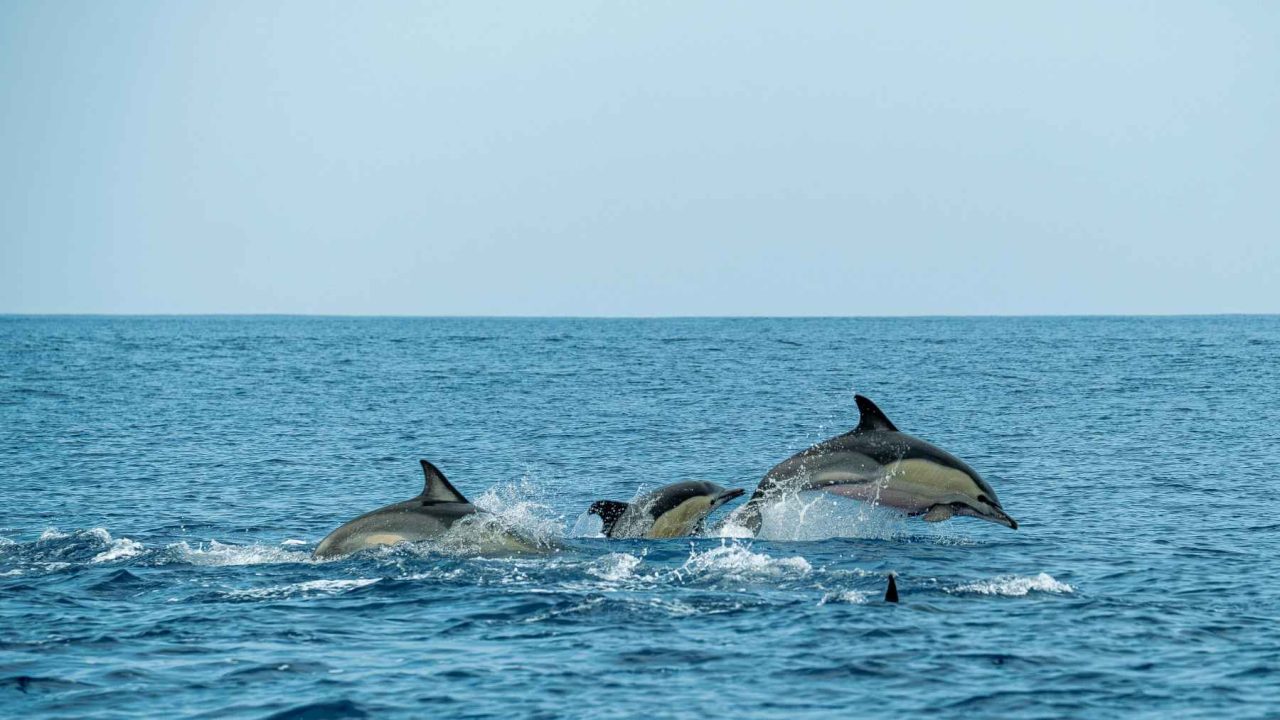
It was a quiet night on the research vessel, somewhere off the Florida coast. A bottlenose dolphin drifted in slow, lazy circles just beneath the surface. One eye was closed. The other was open, steady, watching. To a casual observer, the animal looked awake. But deep inside its skull, half of its brain was fast asleep.
The other half? Still running the show.
This is not science fiction. It is one of the most remarkable neurological discoveries of the twentieth century, and it took scientists decades to fully appreciate what it meant.
The Night Science Stopped Sleeping on Sleep
In 1964, researchers first documented what would later be called unihemispheric slow-wave sleep in dolphins. The discovery was almost accidental. Scientists monitoring brain activity in captive dolphins noticed something they could not easily explain. Slow electrical waves, the signature pattern of deep sleep, were appearing in one cerebral hemisphere while the other hemisphere hummed along in a wakeful state.
The two halves of the brain were doing completely different things at the same time.
This was not a glitch in the equipment. It was a biological superpower. The dolphin could rest one side of its brain, then switch, allowing the other side to recover, all while staying mobile, breathing at the surface, and keeping a literal eye on its surroundings.
For mammals, sleep is not optional. The brain needs it to consolidate memory, clear metabolic waste, and regulate hormones. So how do animals that must keep moving, keep breathing, keep surviving manage to get enough rest?
The dolphin answered that question by splitting the problem in half.
Fifteen Days of Continuous Sonar
Decades after the 1964 discovery, researcher Brian Branstetter at the National Marine Mammal Foundation decided to push the limits. He trained bottlenose dolphins to use their echolocation, the biological sonar system they use to detect objects underwater, continuously. Not for a few hours. Not overnight. For at least fifteen days straight.
The result was striking. The dolphins showed no measurable loss in sonar accuracy across the entire period.
Branstetter’s findings, published in a PLOS ONE study, suggested that unihemispheric sleep was not just a curiosity. It was a fully functional system capable of sustaining high-level cognitive performance over an extraordinary duration. The dolphin’s sonar depends on rapid, precise neural processing. If sleep deprivation were degrading brain function, the accuracy would have dropped. It did not.
This raises an obvious question. If dolphins can function this well on half-brain sleep, are there animals that skip sleep entirely?
That is where things get complicated.
The Bullfrog Problem
In 1967, researchers ran an experiment on bullfrogs that seemed, at the time, to settle the question. They delivered mild shocks to the frogs at regular intervals and measured their breathing reflex responses. The frogs reacted consistently whether tested during the day or night. The researchers concluded the frogs were always awake, their brains never entering a sleep state.
For a while, bullfrogs became a popular example of an animal that simply did not sleep.
Modern sleep researchers are far less convinced. The 1967 methodology had serious limitations. Breathing reflex responses are a crude measure of brain state. They do not capture the nuanced electrical activity that defines true sleep in mammals. Contemporary scientists say much more rigorous work would be needed before anyone could credibly claim bullfrogs spend their entire lives awake.
Then there is the bluefish, scientifically known as Pomatomus saltatrix. These aggressive, fast-moving predators have been observed swimming continuously through the day and night with no obvious rest periods. But continuous movement does not automatically mean continuous wakefulness at the neural level. Fish brains are not mammal brains, and the definitions of sleep get slippery when you move far enough down the evolutionary ladder.
The Case That Every Animal Sleeps
Neurologist Chiara Cirelli at the University of Wisconsin-Madison has spent years studying the evolutionary origins of sleep. Her position is direct: sleep has been found in every species that has ever been properly studied for it.
“No animal completely lacks sleep.”
— Chiara Cirelli, University of Wisconsin-Madison, as concluded with colleague Giulio Tononi in PLOS Biology
Cirelli and her colleague Giulio Tononi published findings in the journal PLOS Biology laying out this argument. Their conclusion was broad and bold. Even simple animals, including fruit flies and jellyfish-like creatures with no centralized brain, show behavioral and physiological states that match the functional definition of sleep.
#pvv_comparison_table_dolphin_fixed {
font-family: -apple-system, BlinkMacSystemFont, ‘Segoe UI’, Roboto, sans-serif;
margin: 2rem 0;
overflow: hidden;
border-radius: 12px;
box-shadow: 0 4px 24px rgba(0,0,0,0.08);
background: #fff;
}
#pvv_comparison_table_dolphin_fixed .pvv-ct-header {
background: linear-gradient(135deg, #1a1a2e 0%, #16213e 100%);
color: #fff;
padding: 1.25rem 1.5rem;
font-size: 1.15rem;
font-weight: 700;
letter-spacing: -0.01em;
}
#pvv_comparison_table_dolphin_fixed .pvv-ct-wrap {
overflow-x: auto;
-webkit-overflow-scrolling: touch;
}
#pvv_comparison_table_dolphin_fixed table {
width: 100%;
border-collapse: collapse;
min-width: 500px;
}
#pvv_comparison_table_dolphin_fixed th {
background: #f0f4ff;
padding: 0.85rem 1rem;
text-align: left;
font-weight: 600;
font-size: 0.85rem;
text-transform: uppercase;
letter-spacing: 0.04em;
color: #4a5568;
white-space: nowrap;
border-bottom: 2px solid #e2e8f0;
}
#pvv_comparison_table_dolphin_fixed td {
padding: 0.8rem 1rem;
border-bottom: 1px solid #f0f0f0;
font-size: 0.95rem;
color: #2d3748;
}
#pvv_comparison_table_dolphin_fixed tr:hover td { background: #f7fafc; }
#pvv_comparison_table_dolphin_fixed tr.pvv-highlight td { background: #fffbeb; }
#pvv_comparison_table_dolphin_fixed td:first-child { font-weight: 600; }
#pvv_comparison_table_dolphin_fixed .pvv-ct-footer {
padding: 0.6rem 1rem;
font-size: 0.75rem;
color: #a0aec0;
text-align: right;
border-top: 1px solid #f0f0f0;
}
@media (max-width: 640px) {
#pvv_comparison_table_dolphin_fixed th, #pvv_comparison_table_dolphin_fixed td { padding: 0.6rem 0.7rem; font-size: 0.85rem; }
#pvv_comparison_table_dolphin_fixed .pvv-ct-header { font-size: 1rem; padding: 1rem; }
}
| Species | Sleep Type | Brain Hemispheres Asleep | Hours of Sleep/Day | Eye Behavior |
|---|---|---|---|---|
| Bottlenose Dolphin | Unihemispheric | One at a time | ~8 hours (split) | One eye open |
| Killer Whale (Orca) | Unihemispheric | One at a time | ~5-6 hours | One eye open |
| Harbor Seal | Bihemispheric (on land) | Both (on land) / One (in water) | ~6 hours | Both closed on land |
| Sea Otter | Bihemispheric | Both | ~11 hours | Both closed |
| Sperm Whale | Bihemispheric (brief) | Both (vertical float) | ~7% of day | Both closed |
Sleep, in their view, is not a luxury evolution stumbled into. It is a deep biological necessity, one so fundamental that life has found extraordinary workarounds, like the dolphin’s split-brain trick, rather than abandoning it altogether.
| Animal | Sleep Strategy | Evidence Status |
|---|---|---|
| Bottlenose Dolphin | Unihemispheric slow-wave sleep; one eye closed, one hemisphere resting | Confirmed since 1964 |
| Bullfrog | Claimed sleep-free based on 1967 reflex study | Disputed; methodology considered insufficient |
| Bluefish (Pomatomus saltatrix) | Continuous swimming day and night observed | Neural sleep state unstudied |
| Migratory Birds | Unihemispheric sleep during long flights | Confirmed in multiple species |
What Half a Brain Awake Really Means for Us
Dolphins are not the only animals using unihemispheric sleep. Several species of migratory birds use the same trick during long transoceanic flights, resting one hemisphere while the other navigates. Certain seals can switch between unihemispheric sleep in water and conventional two-hemisphere sleep on land.
The pattern suggests evolution keeps arriving at the same solution when survival demands wakefulness but biology demands rest. You do not eliminate sleep. You redesign the schedule.
For humans, the implications are both humbling and instructive. We sleep in one long consolidated block, both hemispheres offline together, fully vulnerable for hours at a time. We evolved in environments where that was a viable strategy. Dolphins evolved in an ocean where stopping meant sinking and closing both eyes meant predators could approach unseen.
Their brain architecture reflects their world. Ours reflects ours.
But Cirelli’s broader argument points to something deeper. The fact that evolution has never, in millions of years across millions of species, produced an animal that simply does not sleep suggests sleep is not a design flaw or an inefficiency waiting to be engineered away. It is load-bearing biology. Remove it and something essential collapses.
The dolphin circling slowly in the dark, one eye open, one hemisphere dreaming, is not cheating sleep. It has found perhaps the most elegant solution nature has ever devised to a problem that never goes away.
The question is not whether you can survive without sleep. The question is what you become when you try.
.pvv-faq-section details summary::-webkit-details-marker{display:none}.pvv-faq-section details summary::marker{display:none;content:””}.pvv-faq-section details[open] summary .pvv-faq-arrow{transform:rotate(90deg)}




Leave a Reply