
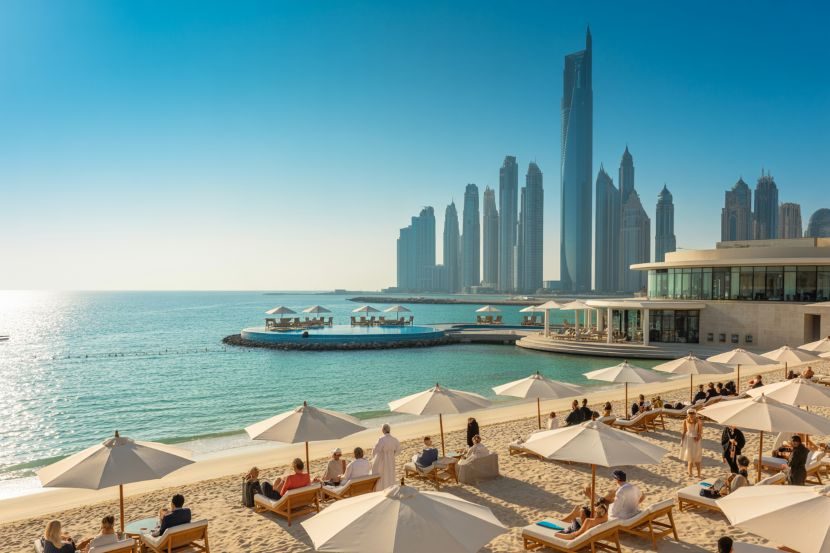
Six Gulf nations are sending a clear message to the world: the region is open, safe, and ready for visitors — and no amount of geopolitical turbulence is going to change that. The Gulf Cooperation Council’s tourism ministers have issued a collective reassurance to global travelers and industry stakeholders, confirming that the GCC’s travel sector remains secure and is continuing to move forward despite recent regional tensions.
The statement came after an extraordinary joint meeting of the GCC tourism ministers — representing Saudi Arabia, the UAE, Qatar, Kuwait, Bahrain, and Oman — who gathered specifically to address growing concerns about the region’s safety and travel outlook. The ministers strongly condemned recent attacks on civilian infrastructure attributed to Iran, but made clear that these events would not affect the region’s appeal to tourists or the day-to-day operations of its travel industry.
For anyone planning a trip to the Gulf — or working in the travel business — this is a significant moment of unified political will behind one of the world’s fastest-growing tourism corridors.
Why Six Nations Spoke With One Voice on Tourism Safety
It is rare for six sovereign nations to issue a coordinated statement on tourism at the same time. The fact that they did signals how seriously the GCC is taking the need to protect its travel reputation — and how much is at stake economically.
The Gulf region has been on an aggressive push to diversify its economies away from oil dependency, and tourism has become a central pillar of that strategy. Saudi Arabia’s Vision 2030 program, the UAE’s long-established status as a global hub, Qatar’s post-World Cup momentum, and the quieter but steady growth of Bahrain, Kuwait, and Oman have all contributed to a region that is increasingly competing for the world’s most valuable tourism market share.
When geopolitical tensions flare — as they have recently — the fear is that travelers will simply reroute to safer-seeming destinations. The joint statement was designed to interrupt that instinct before it could take hold.
What the GCC Ministers Actually Said — and What It Means
The ministers made two things clear in their collective statement. First, they condemned the attacks on civilian infrastructure. Second, and equally deliberately, they drew a firm line between those events and the question of whether the region is safe and welcoming for tourists.
Officials emphasized that strategic investments across the region’s tourism infrastructure remain on track. The message to travelers and industry partners was consistent: disruption elsewhere in the broader region does not translate to disruption on the ground in GCC destinations.
| GCC Member State | Tourism Focus | Key Strategic Initiative |
|---|---|---|
| Saudi Arabia | Mega-projects and heritage tourism | Vision 2030 tourism expansion |
| United Arab Emirates | Luxury, business, and transit travel | Established global hub status |
| Qatar | Sports tourism and cultural events | Post-FIFA World Cup tourism momentum |
| Kuwait | Regional business and cultural tourism | GCC-wide tourism coordination |
| Bahrain | Weekend and cultural tourism | GCC-wide tourism coordination |
| Oman | Eco-tourism and adventure travel | GCC-wide tourism coordination |
What This Means for Travelers Planning a Gulf Trip
If you have been watching the news and quietly reconsidering a planned trip to the Gulf, the GCC’s unified position offers some meaningful reassurance. These are governments with enormous financial and reputational stakes in keeping their tourism sectors running smoothly. A joint ministerial statement is not a casual gesture — it reflects coordinated policy and a shared commitment to maintaining traveler confidence.
Practically speaking, the GCC nations have continued investing heavily in the infrastructure, hospitality, and safety systems that underpin their tourism industries. Airports, hotels, attractions, and transport networks across the six countries have not reported operational disruptions related to regional tensions.
For travel businesses — tour operators, airlines, hotel groups, and event organizers — the statement also carries weight. It signals that government support for the sector is not wavering, and that planned investments and partnerships are expected to continue.
The Bigger Picture: Gulf Tourism’s Long-Term Resilience
What makes this moment notable is not just the statement itself but the pattern it reflects. The Gulf region has navigated geopolitical turbulence before, and each time its tourism sector has demonstrated a capacity to absorb external shocks without losing long-term momentum.
Saudi Arabia’s tourism ambitions alone represent one of the most significant economic transformation stories in the world right now. The UAE has spent decades building a travel brand that is genuinely global. Qatar proved with the FIFA World Cup that it can host the world at scale. Oman has quietly cultivated a loyal eco-tourism and adventure travel following. These are not fragile industries — they are deeply invested ecosystems with enormous government backing.
The extraordinary meeting of tourism ministers, and the speed with which the joint statement was issued, also reflects how seriously the GCC treats its collective tourism reputation. These governments understand that perception can move faster than reality — and they moved quickly to shape that perception.

What Happens Next for GCC Tourism
The immediate priority for GCC tourism authorities is maintaining traveler confidence during a period of regional uncertainty. That means continued communication with international partners, airlines, tour operators, and booking platforms to ensure that accurate information is flowing — and that the narrative around Gulf travel is grounded in the actual situation on the ground rather than broader regional anxieties.
Longer term, the six nations are expected to continue pursuing their individual tourism growth strategies while leveraging the collective strength of GCC coordination. The extraordinary meeting may also set a precedent for faster, more unified responses to future challenges — a kind of crisis communication playbook for Gulf tourism that did not exist in the same form before.
For travelers, the practical advice is straightforward: check official travel advisories from your home country, monitor updates from your airline and accommodation providers, and weigh those against the on-the-ground reality that GCC tourism ministers are actively working to keep the region open and welcoming.
Frequently Asked Questions
Which countries are part of the GCC tourism statement?
The statement was issued collectively by tourism ministers from Saudi Arabia, the UAE, Qatar, Kuwait, Bahrain, and Oman following an extraordinary joint meeting.
What triggered the extraordinary GCC tourism ministers’ meeting?
The meeting was convened in response to recent geopolitical tensions, including attacks on civilian infrastructure that the ministers attributed to Iran.
Did the ministers say tourism operations have been disrupted?
No. Ministers confirmed that the region’s tourism sector remains secure and that operational continuity has not been affected by the recent tensions.
Is it still safe to travel to Gulf countries like Saudi Arabia, UAE, and Qatar?
GCC tourism ministers reaffirmed that their destinations remain safe and welcoming, though travelers should always check current official travel advisories from their home governments.
Will strategic tourism investments in the GCC continue despite tensions?
Officials confirmed that the region’s strategic investments in tourism are progressing steadily and are not expected to be derailed by current geopolitical events.
Why did all six GCC nations issue a joint statement rather than individual responses?
The coordinated approach reflects the GCC’s collective interest in protecting the region’s shared tourism reputation and projecting unified confidence to global travelers and industry partners.

Leave a Reply