
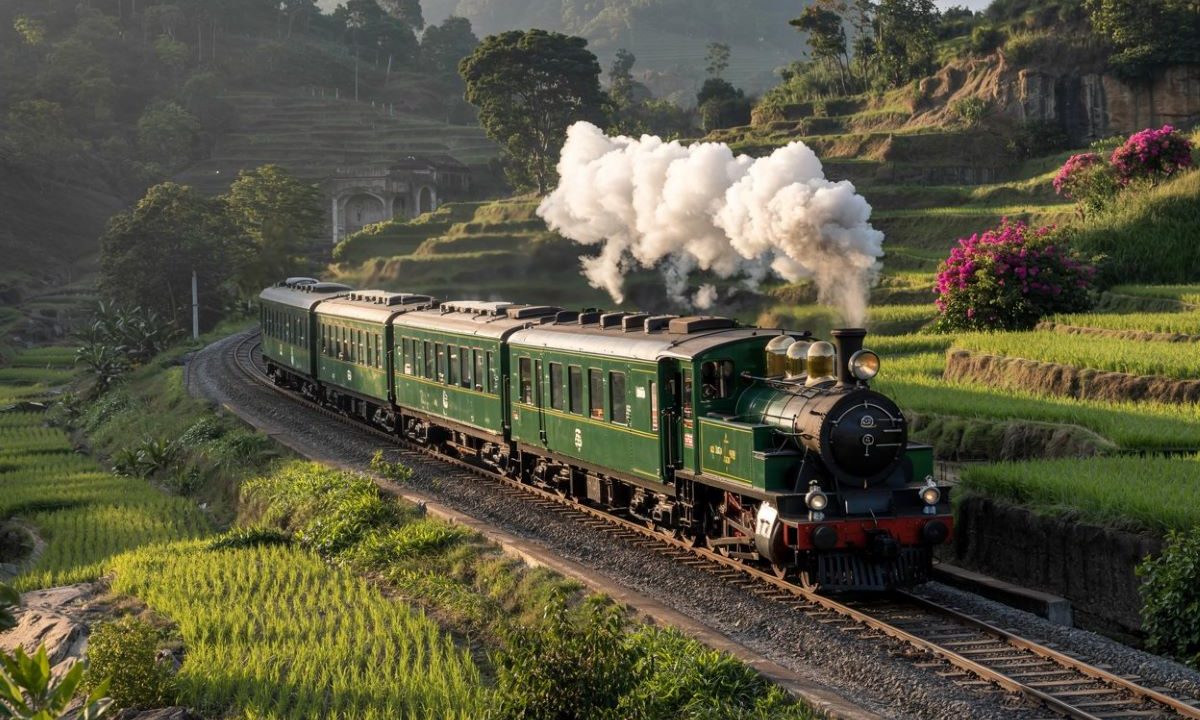
India’s railway story began in 1853 — and more than 170 years later, some of the trains that grew out of that colonial-era network are still running. Not as museum pieces or tourist novelties, but as working services carrying real passengers across the same routes they have served for over a century.
That is a remarkable fact in any context. Railways around the world have been modernized, shut down, or replaced entirely. Yet certain lines and services within the Indian Railways network have endured through independence, partition, economic upheaval, and technological transformation — connecting communities that have depended on them for generations.
For anyone interested in travel, history, or simply the way infrastructure shapes a nation, India’s oldest running trains offer something genuinely rare: a living connection to the past that still has a job to do today.
How British Rule Laid the Tracks That Still Exist Today
The British Empire introduced railways to India with a clear strategic purpose. The first passenger train ran in 1853, and from that point forward, the colonial administration expanded the network rapidly — not primarily for the benefit of Indian citizens, but to move goods and troops efficiently across a vast subcontinent.
What the British built for imperial logistics, however, quickly became something far more significant. The railways transformed how Indian people traveled, traded, and connected with one another. Cities grew around stations. Entire economies shifted. Communities that had been isolated by geography were suddenly linked to the rest of the country.
By the time India gained independence in 1947, the railway network was already one of the largest and most complex in the world. The newly independent nation inherited that infrastructure — and with it, some of the oldest continuously operating train services anywhere on the planet.
What Makes These Trains Historically Significant
The trains that have survived from the colonial era are not significant simply because they are old. Their endurance reflects something deeper about the role railways play in Indian society. These are not routes that could easily be replaced or rerouted — they serve populations, connect regions, and carry cultural weight that goes well beyond transportation logistics.
Several key factors define what makes India’s oldest running trains stand apart:
- Age of the route: Some lines were established in the mid-to-late 1800s and have operated continuously since then, surviving both the colonial period and the transition to Indian independence.
- Historical infrastructure: Bridges, tunnels, and station buildings along these routes often date back to the Victorian era, making the journey itself a form of living history.
- Unbroken service: Unlike heritage railways that run as tourist attractions, these trains have never stopped being working services — they have simply continued, decade after decade.
- Cultural memory: For many communities along these routes, the trains are woven into local identity in ways that newer transport links simply are not.
A Look at the Broader Indian Railways Network
To understand why these old services still matter, it helps to understand the scale of Indian Railways as a whole. The network is one of the largest in the world by almost any measure — route length, daily passengers, number of stations, and workforce.
| Key Fact | Detail |
|---|---|
| First passenger train in India | 1853 |
| Original purpose of colonial railways | Transport of goods and troops |
| Network description | One of the oldest and most extensive in the world |
| Role in Indian society | Connects diverse regions and cultures across the country |
| Current status of oldest trains | Still in active service, carrying passengers today |
The network has seen significant technological advancement over the decades — new rolling stock, electrification, high-speed corridors, and digital ticketing. Yet the oldest routes have not been abandoned in favor of modernity. They have been maintained alongside newer infrastructure, a reflection of how essential they remain.
Why These Routes Still Matter to Real Passengers
It would be easy to frame India’s oldest trains as a heritage story — interesting to historians, appealing to tourists, but not especially relevant to everyday life. That framing would be wrong.
These services continue to operate because they serve genuine transportation needs. For passengers in the towns and regions along these century-old routes, the train is often the most practical, affordable, and reliable way to travel. The colonial-era network was built to connect specific geographic points, and in many cases, those connections are still the most logical ones available.
There is also a tourism dimension that has grown in recent years. Travelers — both domestic and international — are increasingly drawn to the experience of riding routes with deep historical roots. The journey itself becomes the attraction, offering a perspective on India’s landscape and history that faster, more modern transport cannot replicate.
The Legacy These Trains Carry Forward
More than 100 years of continuous operation leaves a mark that goes beyond timetables and ticket prices. The oldest running trains in India carry a collective memory — of the colonial period that built them, of the independence movement that ran alongside their tracks, of the decades of ordinary life that have unfolded in their carriages.
Indian Railways has managed to preserve that legacy not by freezing these services in time, but by keeping them functional and relevant. The trains have evolved in various ways — safety improvements, updated equipment, changing schedules — while their essential routes and purposes have remained intact.
That balance between preservation and practicality is what makes India’s oldest running trains genuinely remarkable. They are not relics. They are still working.
Frequently Asked Questions
When did India’s first passenger train run?
India’s first passenger train ran in 1853, during the period of British colonial rule.
Why did the British build railways in India?
The British Empire established the railways primarily to aid the transport of goods and troops across the subcontinent, though the network quickly became essential for the broader Indian population.
Are India’s oldest trains still carrying passengers today?
Yes. Several train services with routes dating back over 100 years remain in active operation as working passenger services, not simply as heritage or tourist attractions.
How significant is the Indian Railways network overall?
Indian Railways is described as one of the oldest and most extensive railway networks in the world, playing a vital role in connecting the country’s diverse regions and cultures.
Have these old trains been modernized over time?
The Indian Railways network has seen significant technological advancements over the years, though specific details about upgrades to individual historic services have not been confirmed in the available source material.
Can tourists ride India’s oldest running trains?
These trains operate as regular passenger services, which means they are generally accessible to travelers — though specific booking details and route information should be verified directly with Indian Railways.



Leave a Reply