
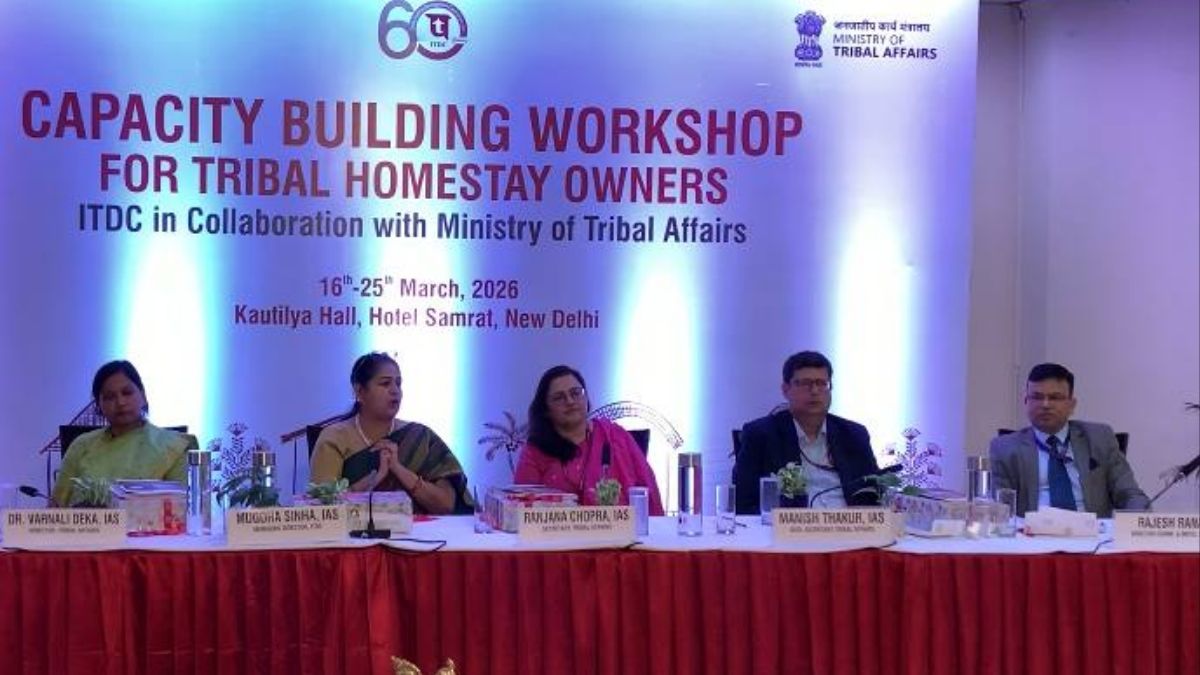
India’s tribal communities are sitting on some of the country’s most extraordinary cultural and natural assets — remote mountain villages, ancient traditions, and landscapes that most travelers never get to see. The challenge has always been connecting those communities to tourism in a way that actually benefits the people who live there. A new government-backed program is now taking direct aim at that gap.
The India Tourism Development Corporation (ITDC), working under the Ministry of Tourism and in collaboration with the Ministry of Tribal Affairs, has launched a Capacity Building Program for Tribal Homestay Owners. The inaugural session was held at Kautilya Hall, Hotel Samrat, in New Delhi. The program targets homestay operators in three states: Arunachal Pradesh, Sikkim, and Gujarat — regions where tribal communities are deeply embedded in the local landscape but have historically had limited access to formal hospitality training.
The goal is straightforward: raise the quality of the visitor experience, build sustainable livelihoods for tribal families, and give homestay owners the professional tools they need to compete in a growing community-based tourism market.
What the ITDC Tribal Homestay Program Actually Does
At its core, this is a structured training initiative. The program is being delivered through IHM Ashok and ITDC — two established names in India’s hospitality education sector — which means participants are receiving instruction grounded in real industry standards, not just general guidance.
The training is designed to improve service standards, elevate hospitality skills, and help homestay owners understand what visiting travelers expect from an authentic but comfortable stay. For many participants, this may be their first access to formal training in the sector.
Officials have noted that the program is intended to create a structured pathway for tribal homestay operators across the country — suggesting this inaugural session in New Delhi is the beginning of a broader national rollout, not a one-time event.
The initiative reflects a wider policy push in India to develop community-based tourism as both an economic tool and a way to preserve indigenous culture. When done well, homestay tourism keeps money circulating within local communities rather than funneling it toward large hotel chains or outside operators.
The Three States at the Center of This Initiative
The choice of Arunachal Pradesh, Sikkim, and Gujarat is telling. Each state represents a distinct type of tribal tourism opportunity — and a distinct set of challenges.
| State | Tourism Profile | Tribal Context |
|---|---|---|
| Arunachal Pradesh | Remote northeastern state with rich biodiversity and mountain landscapes | Home to dozens of distinct indigenous tribes with unique cultural traditions |
| Sikkim | Himalayan state known for eco-tourism and scenic trekking routes | Strong tradition of community-based tourism with growing visitor numbers |
| Gujarat | Western state with diverse landscapes including the Rann of Kutch | Significant tribal populations in regions like the Dangs and Dahod |
Each of these regions has genuine tourism potential. The missing piece, in many cases, has been the formal training and institutional support to help local operators deliver a consistent, high-quality experience that encourages visitors to return — and to recommend the destination to others.
Why Tribal Homestay Tourism Matters Beyond the Numbers
There is a broader argument here that goes beyond hospitality skills. When tribal communities can offer polished, well-run homestay experiences, they gain economic agency. Revenue stays local. Cultural heritage becomes a source of pride and income rather than something that erodes under pressure from outside development.
Supporters of programs like this argue that community-based tourism, when properly supported, is one of the more sustainable models available. Unlike large resort development, it requires minimal infrastructure investment and directly rewards the people whose land, culture, and knowledge make the experience possible in the first place.
The involvement of both the Ministry of Tourism and the Ministry of Tribal Affairs signals that this program is being treated as more than a tourism initiative — it sits at the intersection of livelihood support, cultural preservation, and rural economic development.
Training through IHM Ashok and ITDC also lends the program credibility. These are not pop-up workshops. The institutional backing suggests participants will walk away with skills that are recognized within India’s formal hospitality sector.
What Comes Next for the Program
The New Delhi launch marks the beginning of what appears to be a larger national effort. The program has been described as providing a structured pathway for tribal homestay operators nationwide, which implies further training sessions, likely in additional states and regions beyond the initial three.
For homestay owners in Arunachal Pradesh, Sikkim, and Gujarat who are already operating or considering starting a homestay, this program represents a direct opportunity to access professional development that was previously out of reach. The combination of government backing, institutional training partners, and a clear focus on sustainable livelihoods gives the initiative a foundation that many similar efforts have lacked.
Whether the program expands quickly to other tribal regions — and how many operators ultimately benefit — will depend on implementation. But the launch itself marks a meaningful step toward making tribal tourism in India more than just a niche category on a travel website.
Frequently Asked Questions
Who launched the Capacity Building Program for Tribal Homestay Owners?
The program was launched by the India Tourism Development Corporation (ITDC), under the Ministry of Tourism, in collaboration with the Ministry of Tribal Affairs.
Where was the inaugural session held?
The first session took place at Kautilya Hall, Hotel Samrat, in New Delhi.
Which states does the program currently focus on?
The program targets tribal homestay owners in Arunachal Pradesh, Sikkim, and Gujarat.
Who is delivering the training?
Training is being facilitated by IHM Ashok and ITDC, both established institutions in India’s hospitality education sector.
Will the program expand to other states?
The program has been described as providing a structured pathway for tribal homestay operators nationwide, suggesting further expansion is planned, though specific timelines have not been confirmed in available reports.
What is the main goal of the program?
The program aims to improve hospitality skills, raise service standards, and support sustainable livelihoods for tribal communities engaged in homestay tourism.



Leave a Reply