
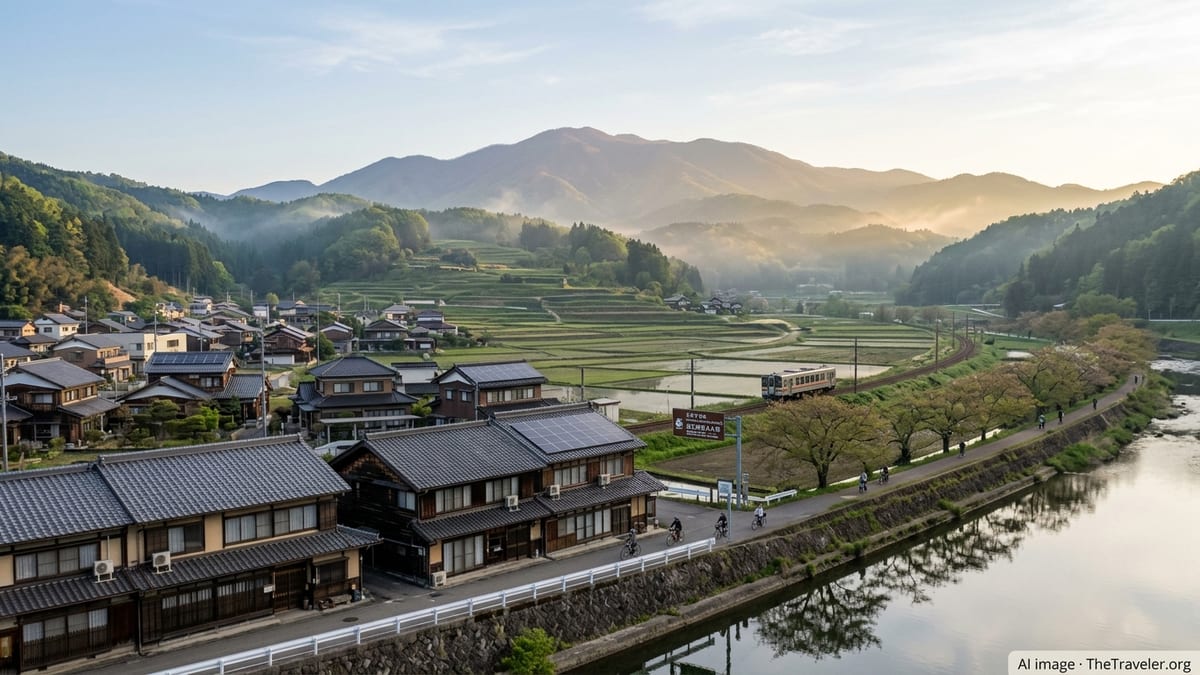
Japan welcomed a record surge of international visitors in recent years — and the cracks are showing. Overcrowding at iconic sites, environmental strain on protected landscapes, and growing friction between tourists and local communities have pushed the country toward a fundamental rethinking of what tourism should actually look like.
The answer Japan is building isn’t simply about limiting visitors. It’s about reshaping the entire experience — steering travel away from a race to see the most famous spots and toward something slower, richer, and more respectful of the places and people that make Japan worth visiting in the first place.
These aren’t small adjustments. Officials and planners have framed this as a long-term national effort to turn tourism into a force that actively preserves culture and supports local communities, rather than one that gradually hollows them out.
Why Japan Decided the Old Model of Tourism Had to Change
For years, the standard playbook for tourism success was simple: attract more visitors, fill more hotels, sell more tickets. Japan played that game exceptionally well. But the downsides accumulated quietly until they became impossible to ignore.
Overtourism brought environmental damage to fragile natural areas. Popular cultural sites became overwhelmed, turning meaningful experiences into crowded, transactional ones. And in some communities, the sheer volume of visitors began to create genuine tension with residents whose daily lives were being disrupted.
Japan’s 2024 White Paper on tourism gave formal weight to what many had already observed: the benefits of tourism were under threat from the very growth that was supposed to deliver them. Strong global interest in sustainable tourism was identified as both a challenge to manage and an opportunity to lead.
The response wasn’t reactive — it was strategic. Rather than simply capping visitor numbers at problem sites, Japan’s approach centers on building a different kind of tourism economy from the ground up.
The Framework Behind Japan’s Sustainable Tourism Push
At the heart of the new direction is the Japan Sustainable Tourism Standard for Destinations, known as the JSTS-D. This framework is designed to guide regions across the country in developing tourism that draws on their unique local resources — natural, cultural, and historical — rather than competing for the same pool of mass-market visitors.
The logic is straightforward: when a region has something genuinely distinctive to offer, it can attract travelers willing to engage more deeply, spend more thoughtfully, and leave a lighter footprint. Officials have described this as creating “virtuous cycles” — where premium, meaningful experiences generate economic value that flows back into communities and conservation.
Alongside the structural framework, Japan has also developed formal Travel Etiquette guidelines — a recognition that changing where tourists go is only part of the solution. How they behave when they get there matters just as much.
| Challenge Identified | Policy Response | Expected Outcome |
|---|---|---|
| Overtourism at popular sites | JSTS-D framework to develop regional appeal | More distributed visitor flows across the country |
| Environmental damage from tourism | Conservation integrated into regional tourism planning | Reduced strain on protected natural areas |
| Cultural tension with local communities | Travel Etiquette guidelines for visitors | Greater mutual respect between tourists and residents |
| Low-value mass tourism | Special experiences and premium content development | Higher spending per visitor with community benefit |
What This Means for Anyone Planning to Visit Japan
If you’re a traveler, this shift will eventually change what a trip to Japan looks and feels like — and in ways that most visitors will probably welcome.
The emphasis on regional development means more investment in experiences outside the most-visited cities and landmarks. Areas with compelling cultural or natural assets that previously received little tourist infrastructure are being positioned as genuine destinations, not afterthoughts.
The push toward “special experiences and premium content” signals a move away from generic sightseeing toward curated encounters — things you genuinely can’t replicate anywhere else. That’s good news for travelers who want depth over checkbox tourism.
The Travel Etiquette guidelines, meanwhile, reflect a broader truth that experienced travelers already know: the places that feel most alive and welcoming are usually the ones where visitors have learned to move through with awareness and care. Japan is making that expectation explicit rather than leaving it to chance.
What Happens Next for Japan’s Sustainable Tourism Strategy
The policies outlined in Japan’s 2024 White Paper are not a distant proposal — they represent an active national direction that regions across the country are being asked to implement through the JSTS-D framework.
The practical work involves identifying what makes each region distinctive, building the infrastructure and experiences to showcase those qualities, and attracting the kind of traveler who will engage with them meaningfully. That takes time, investment, and coordination between local governments, businesses, and communities.
Travel etiquette education is likely to become a more visible part of the visitor experience — appearing at entry points, on tourism platforms, and through materials aimed at international travelers before they even arrive.
The broader ambition is a tourism model that doesn’t just survive growth but is actually strengthened by it — where every visitor who comes contributes to preserving the very things that drew them there. Whether Japan can fully deliver on that vision will depend on how consistently these frameworks are applied across a country of enormous regional diversity.
Frequently Asked Questions
What is the JSTS-D?
The Japan Sustainable Tourism Standard for Destinations is a national framework designed to help regions develop tourism based on their unique local resources, reducing overcrowding and environmental strain.
What prompted Japan to change its approach to tourism?
Japan’s 2024 White Paper on tourism identified overtourism, environmental damage, and cultural tension with local communities as threats to the long-term benefits of the tourism industry.
What are Japan’s Travel Etiquette guidelines?
These are formal guidelines introduced to shape how visitors behave at destinations across Japan, addressing cultural respect and community impact alongside environmental concerns.
Will these changes affect where tourists can go in Japan?
The policy emphasis is on distributing visitors more evenly across regions rather than banning access to specific sites, though individual locations may introduce their own measures.
How will local communities benefit from these policies?
Officials have described a goal of creating “virtuous cycles” where premium tourism experiences generate economic value that flows directly back into local communities and conservation efforts.
Is this a confirmed policy direction or still a proposal?
The framework reflects an active national direction outlined in Japan’s 2024 White Paper, with the JSTS-D already being used to guide regional tourism development.




Leave a Reply