
Margaret Tollefson pulled her Subaru off U.S. Route 183 in Lindsborg, Kansas — population 3,438 — expecting nothing but a gas stop. She found hand-painted dala horses in every shop window, Swedish meatballs at a counter diner, and a town that felt like a secret Europe had mailed to the Great Plains in . She stayed four days.
America’s most extraordinary places are rarely the ones with billboards. They are the ones locals navigate by memory — where the diner has no Yelp page, the motel sign still uses neon tubes, and a stranger asking questions earns a suspicious squint. These twelve towns are precisely those places. Each one rewards the curious traveler with something mass tourism has stripped from everywhere else: authenticity that hasn’t been packaged yet.
These twelve towns — spanning Florida, Kansas, Texas, Arkansas, Arizona, North Carolina, South Dakota, Colorado, Washington, Mississippi, and New Mexico — average fewer than 8,500 residents each. Several have median home prices under $180,000. All offer something money genuinely cannot buy in Napa Valley or Bar Harbor: the feeling that you discovered something first.
Why Americans Keep Overlooking Their Best Towns
Read more: 15 Hidden American Towns Most Road-Trippers Never Find
The algorithm didn’t invent the hidden gem. Travelers were hunting them long before Instagram. But the modern travel machine — review aggregators, influencer itineraries, airline route maps — systematically funnels visitors toward the same forty cities. What gets left behind is extraordinary.
AFAR reports that travel experts are now actively sending clients to under-the-radar destinations “that will be on everyone’s travel list” within the next two to three years. The window to visit before the crowds arrive is narrowing. The towns below are still in that window — barely.
Kansas alone, according to travel writers at Only In Your State, is “the best road trip state for finding hidden gems in nature” — a claim most coastal travelers would find absurd until they actually drive it. That gap between perception and reality is exactly where these towns live.
9 U.S. states
in towns under 5,000
across all 12 towns
for featured towns
The 12 Towns: What Makes Each One Extraordinary
Read more: Why These 15 Tiny Towns Are the Real America (Under $195/Night)
1. Apalachicola, Florida — Population: roughly 2,300. Tucked in Franklin County on the Forgotten Coast, this oyster town runs on tidal rhythms, not tourism clocks. When Southern Living warns that beach vacations turn miserable when beaches are “overcrowded,” Apalachicola is the counter-argument. St. George Island — 9 miles offshore — has no chain hotels. A vacation rental here runs $180/night in shoulder season, compared to roughly $380/night at Clearwater Beach.
2. Marfa, Texas — Population: 1,789, Presidio County. Founded in as a water stop on the Southern Pacific Railroad. Now home to the Chinati Foundation — Donald Judd’s permanent art installation across 340 acres of desert. Hotel Paisano charges $145/night. The mysterious Marfa Lights have drawn scientists and skeptics since .
3. Eureka Springs, Arkansas — Population: 2,073. Carroll County, in the Ozark Mountains. Every street is original Victorian-era architecture — the entire downtown sits on the National Register of Historic Places. A bed-and-breakfast runs $110/night. The town was founded in around a believed-medicinal spring. Visitors drive 3 hours from both Kansas City and Memphis to reach it.
4. Lindsborg, Kansas — Population: 3,438. McPherson County. Kansas’s hidden-gem credentials are real, and Lindsborg is the exhibit. Swedish immigrants founded it in . The Birger Sandzén Memorial Gallery holds genuine works by a nationally significant Swedish-American painter. Main Street motel rooms run $79/night — about what you’d pay for a parking spot in Aspen, Colorado.
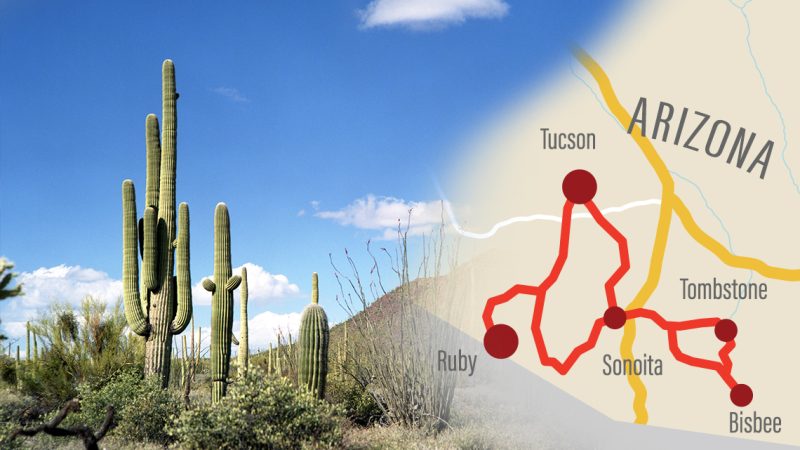
5. Bisbee, Arizona — Population: 5,193. Cochise County. Once the largest city between St. Louis and San Francisco, Bisbee produced $8 billion in copper before the mines went quiet. Now it’s a staircase town of painted Victorian houses on a steep canyon slope. The Copper Queen Hotel — open since — charges $130/night. The town sits 5,300 feet above sea level and 90 miles southeast of Tucson.
6. Beaufort, North Carolina — Population: 4,228. Carteret County. Third-oldest town in North Carolina, founded in . Wild horses swim to Shackleford Banks — visible from the waterfront — and no one advertises it aggressively enough. The North Carolina Maritime Museum admission is free. Rent a kayak for $35/half-day.
7. Hot Springs, South Dakota — Population: 3,627. Fall River County. The Mammoth Site here is one of the densest concentrations of woolly mammoth fossils ever discovered — an active dig, open to visitors, with adult admission at $14. The town sits at the southern edge of the Black Hills, 6 miles from Wind Cave National Park. This is not Rapid City. Nobody here is selling Mount Rushmore t-shirts.
8. Salida, Colorado — Population: 5,900. Chaffee County. Arkansas River Valley. Fourteen 14,000-foot peaks visible on a clear day. The median home price in was approximately $485,000 — steep, but still roughly $300,000 below Breckenridge. The downtown SteamPlant arts venue sits inside a restored 1887 electric plant. White-water kayaking on the Arkansas is world-class.
9. Port Townsend, Washington — Population: 9,113. Jefferson County. Victorian seaport on the northeast tip of the Olympic Peninsula. Jefferson County’s median household income is $62,400. The town was convinced in the 1880s it would become the dominant Pacific Northwest city. It did not. That failure left behind 150 years of intact architecture and no reason to bulldoze it.
10. Oxford, Mississippi — Population: 24,012. Lafayette County. Home to Ole Miss and William Faulkner’s Rowan Oak, preserved exactly as he left it. The principle — that best experiences hide from tourists — applies here just as the Sarasota Herald-Tribune noted about local restaurants:
Frequently Asked Questions

You Might Also Like

Kevin Bacon’s 3 Filming Locations You Can Visit Free Today
Kevin Bacon filmed in towns Hollywood abandoned — Lehi UT, a New Jersey Boy Scout…

$40,000 a Year: What Moving from San Jose to Tulsa Actually Freed Up
Rent is only 33% of your budget. A Tulsa 2-bedroom runs $895 vs $3,200 in…
Bisbee, Arizona: The Copper Ghost Town 90 Miles From Tucson Nobody Talks About
Bisbee, Arizona — a copper ghost town 92 miles from Tucson — offers Victorian architecture,…
Leave a Reply